"L'elisir d'amore" at Milan airport

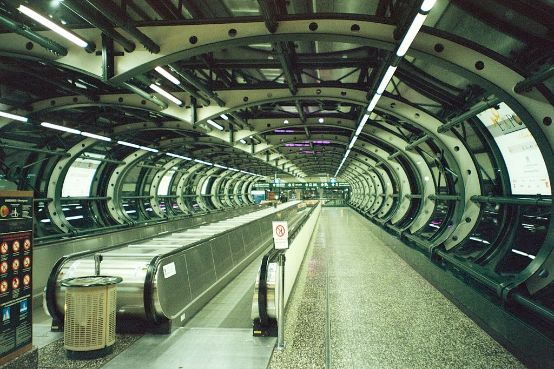
There was already opera in Zurich's main railway station in 2008, with a "Traviata" accompanied by television multimedia. The director of La Scala, Alexander Pereira, now wants to go one better and stage a similar opera at Malpensa Airport in Milan.

The opera "L'elisir d'amore" by Gaetano Donizetti is planned for September 2015. Pereira announced this on Monday at the inauguration of the airport's new premises, writes the Luxembourg trade magazine Pizzicato. Scenes from the Donizetti opera are to be performed in episodes in various areas of the airport; the entire opera is to be broadcast live on television, just as in Zurich.

Swiss television has staged a total of three such productions: After "La Traviata im Hauptbahnhof" in Zurich and "La Bohème im Hochhaus" in Bern, it presented "Aida am Rhein" in Basel. "La Bohème im Hochhaus" was awarded the prestigious Golden Rose television prize.

The SOZ becomes the Zurich Symphony Orchestra

Long-standing musicians from the former Zurich Symphony Orchestra have re-formed themselves into a supporting association and are daring to make a fresh start. The ensemble fell into disrepute two years ago due to wage dumping during a performance of Aida at the La Perla Festival in Pfäffikon.

Photo: andreurech.ch

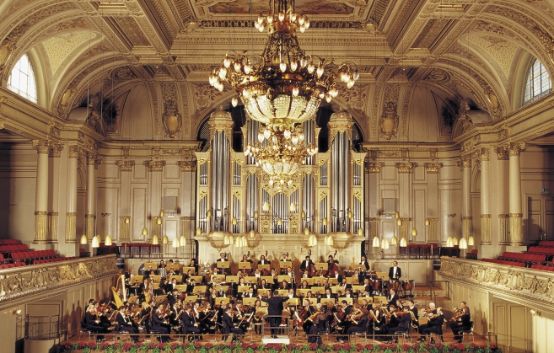
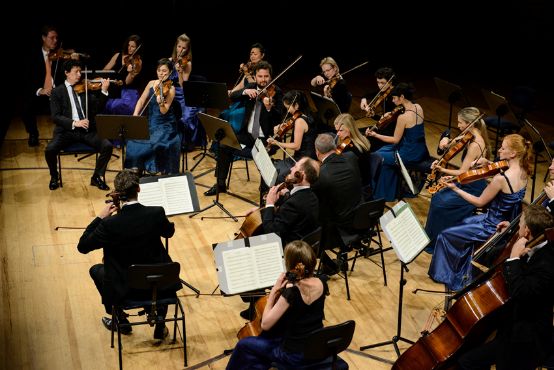
"The mismanagement by the agency that had been in charge of the orchestra's operations for around two years" had almost ruined it, the orchestra writes. The orchestra's core members, most of whom have been with the orchestra for many years, have now decided to start afresh "with other excellent musicians" and conductor Mario Beretta. Maria Solozobova will act as concertmaster. The Zurich Symphony Orchestra will present itself to the public for the first time at an opening concert on May 16.

The dumping wages offered by the then Zurich Symphony Orchestra during a performance of Aida in Pfäffikon in 2013 made waves and led to fierce protests from the Swiss Musicians' Association and fundamental debates in the media about musicians' working conditions. 

More info: www.zuercher-symphoniker.ch

Change of management at Solothurn Classics

The Solothurn Classics Festival is now under the direction of Peter Kofmel. The previous festival director, Iris Reardon-Kofmel, has handed over the reins for professional reasons.

Photo: Solothurn Classics

Iris Reardon-Kofmel has been president of the association in recent years and also held the position of festival director, according to the official press release on the change. She is now handing over the presidency of the association and festival management for professional reasons: She emigrated to the USA with her young family at the beginning of the year.

The festival will now be managed by Peter Kofmel as a long-standing co-organizer. The festival will take place as planned from 17 to 21 June under the motto "World stars in Solothurn", the organizers continue.
 

Girschweiler and From Kid honored in Chur

Chur awards a recognition prize to the musician and conductor Heinz Girschweiler and a sponsorship prize to the band From Kid. The cultural scientist, literary critic and author Corina Caduff and the actor and director René Schnoz also receive recognition prizes.

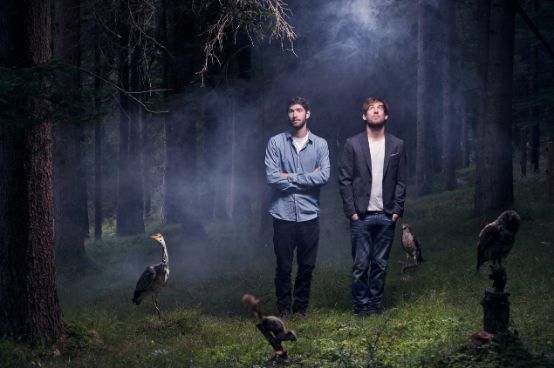
FROM KID: Andrin Berchtold and Gian Reto Camenisch. Photo: mx3

Heinz Girschweiler studied trumpet at the Zurich Conservatory and choral and orchestral conducting at the Zurich Kantorenschule. He works as a freelance musician and conducts several choirs. In 1994, he co-founded the Orchestrina string orchestra, which he conducted for sixteen years. He is president of the music commission of the Bündner Kantonalgesangsverband and co-director of the Postremise in Chur.

Girschweiler "deserves the recognition award for his versatile and great commitment as a musician and choir director as well as for his interdisciplinary and networking work". The band From Kid with Andrin Berchtold and Gian Reto Camenisch is being honored for the national breakthrough of their independent and harmonically convincing electro pop.

The recognition prizes are awarded in recognition of at least ten years of cultural work that is of importance to the city and its immediate region. The prizes are endowed with CHF 4,000 each and will be presented by City Councillor Doris Caviezel-Hidber at a public ceremony on May 6, 2015.
 

St. Gallen warms up to Kaltehand

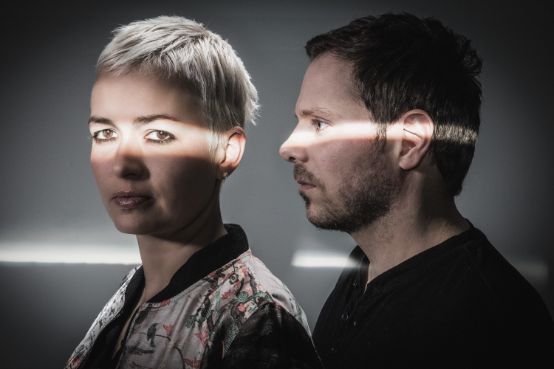
The St.Gallen Cultural Foundation is awarding the electropop duo "Kaltehand/Natasha Waters" (Davide Rizzitelli and Natasha Waters) a sponsorship prize worth 10,000 Swiss francs.

Natasha Waters and Davide Rizzitelli. Picture: Tobi Siebrecht

The duo has been "exploring the fibers of melancholy with impressive passion for eight years now", writes the canton. With each of its pieces, it weaves "atmospheric worlds of sound without constraint and without haste, in which Natasha's gently glowing voice combines with David's softly throbbing synthesizer to create moving stories". 

The St.Gallen Cultural Foundation has awarded the prize in recognition of the duo's artistic work. It would like to contribute to "adding many more chapters to their sensual story".

The Wattwil arthouse cinema Passerelle is being supported by the Cultural Foundation with a recognition prize of 20,000 francs. A further sponsorship prize (7500 francs) goes to Madame Tricot from Wil for applied art.


Thurgau sponsorship award for Rahel Kraft

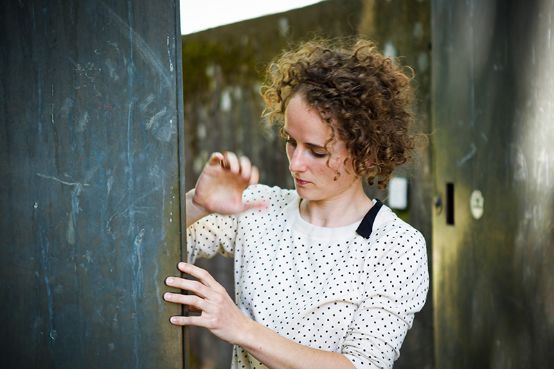
London-based musician Rahel Kraft is one of the recipients of this year's Thurgau sponsorship awards, each worth 25,000 francs.

Photo: Esther Michel

Rahel Kraft studied jazz singing and improvisation in Lucerne and completed a master's degree in music education. In 2011, she founded the experimental ensemble Stimmorchester, which consists of seven professional singers and cultivates free improvisation. It was awarded a work grant from the canton and city of Lucerne in 2013.

In 2015, the five grants from the Canton of Thurgau will go to artists from the fields of theater, music and visual arts. In addition to Rahel Kraft, the expert jury selected the following artists from 55 applications: Joëlle Allet (visual artist), Philippe Glatz (visual artist), Gabor Nemeth (actor) and Meinrad Schade (visual artist).

Music experts on the jury included music critic Anja Bühnemann, Dominik Deuber (Managing Director Lucerne Festival Academy), musician and recording studio supporter Pat Kasper and cultural journalist and musician Martin Preisser.


Growing from biblical images

On March 22, the Toccata Wil chamber orchestra hosted an encounter between organ and string orchestra. The main item on the program was the world premiere of the "Sinfonia concertante" for organ, oboe and strings by Bernhard Sieber.

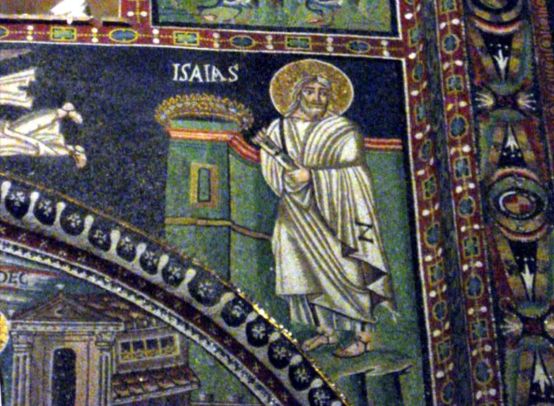
The Prophet Isaiah, mosaic in the Basilica of San Vitale, Ravenna. Photo. Sibeaster, wikimedia commons

The first work of this concert in the Kreuzkirche Will was the Concertino by Karl Christian Hoyer ((1891-1936). The composer had labeled his work "in the old style". In the three movements, however, he does not "copy" the Baroque style one-dimensionally, but contrasts it with the tonality and harmony of the early 20th century. Antonio Vivaldi's Concerto for two violins, strings and basso continuo is not yet really a solo concerto, as the two violins are still very much oriented towards the continuo. Esther Böck and Brigitte Mayer harmonized wonderfully, with the second movement, Larghetto e spirituoso, standing out in particular.

The main work of the concert, however, is certainly the Sinfonia concertante by the organist and composer Bernhard Sieber, who lives in Oberuzwil. Sieber based the four movements on quotations from the Bible. The words of Isaiah "The people who walk in darkness see a great light" were placed above the first movement. The composer drew this movement with a muffled organ bass in the lowest register, accompanied by dry string pizzicati, while the bright light contrasted the darkness with sharp organ tones.

In the scherzo movement, the music describes the liberation from the yoke of oppression: martial sounds ended with extatic convulsions in a blaze of fire. The turbulent scherzo finally ends abruptly in a single, high violin note when all enemies have crumbled to ashes.

The third movement answers the question of why all the roar of war ends in fire with the coming of the Prince of Peace: the oboe (Christian Voss) stands out conciliatory from the sound of the strings. The magnificent fugue of the fourth movement depicts the immeasurably glorious justice and everlasting reign of the Prince of Peace. Bernhard Sieber says of his work that it is not really program music: "The constructive elements predominate by far." However, the audience could not help but place the imagery of the music in the context of the biblical quotations on which it is based; indeed, it literally demanded a confrontation with them and thus testified to the composer's deep faith.

Commission wants to cut the federal government's culture budget

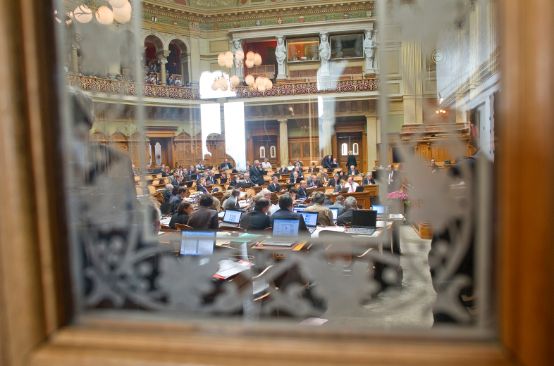
The Finance Committee of the National Council (FK-N) wants to cut the federal government's planned cultural expenditure for the years 2016 to 2020 by around CHF 65 million "in view of the difficult financial policy situation".

Bleak prospects for culture in the National Council? Photo: Parliamentary Services, 3003 Bern

In the dispatch on the promotion of culture for the years 2016 to 2020, the Federal Council is requesting funding of around CHF 1,126 million. In the co-report to the Committee for Science, Education and Culture (WBK-N), the majority of the Finance Committee (FK-N) requested that the funding be reduced by around CHF 65 million.

The proposal aims to reduce expenditure in the area of culture to the level envisaged in the financial plan of August 20, 2014. The proposal of the FK-N thus deviates from the decision of the Council of States, which even increased the Federal Council's proposal by 3 million.

As part of the parliamentary co-reporting procedure, the Finance Committee drafted numerous co-reports to legislative committees, according to the federal government's press release. In these reports, it draws attention to the new fiscal policy situation, which foresees considerable structural deficits in the coming years. This new starting position is caused by a sharp drop in tax revenue.

A music festival for Andermatt

The Swiss Chamber Music Circle association aims to turn Andermatt into a venue for cultural events with international appeal. The first series of concerts will take place over Easter.

The Festival Strings Lucerne open the Swiss Chamber Music Circle. Photo: Tomasz Trzebiatowski

Nine concerts will take place in the acoustically outstanding Andermatt parish church from April 2 to 12. Five are so-called prizewinners' concerts, which offer young ensembles and soloists the opportunity to perform in a sophisticated setting (Nexus Reedquintet, April 4; Belenus Quartet with Pablo Barragàn, April 5; Ensemble Batida, April 6; Trio Rafale, April 10 and Duo Cámara-Köhnken).
The Festival Strings Lucerne, together with soloist Reinhold Friedrich and presenter Sabine Dahinden, will open the festival on High Thursday. On Good Friday, the Lucerne Boys' Choir and the Collegium Musicum Lucerne will perform Johann Sebastian Bach's St. John Passion. On April 8, the horn quartet Ivo Gass & Friends will play and the final concert on April 12 will feature Brasssurround, the brass quartet of the Karlsruhe University of Music.

The date for the first concert series was deliberately set over the Easter holidays so as not to interfere with the Lucerne Festival at Easter. A sponsorship association and a patronage committee support the Swiss Chamber Music Circle, which aims to support young musicians from Swiss music academies at the start of their careers. Together with Pro Helvetia, it also brings the work of Swiss composers to the fore, whether through the premiere of commissioned compositions or through the performance of other works by Swiss composers.

The Swiss Chamber Music Circle project was launched in fall 2014. It is headed by artistic director Jörg Conrad and cultural manager Danièle Florence Perrin. The plan is to expand the festival on a modular basis throughout the year. The following cycles are planned:

Swiss Chamber Circle (April/May, starting with the Easter Festival from April 2 to 12, 2015)
Swiss Organ Circle (December, from December 2015)
Swiss Jazz Circle (January/October, planned from January 2016)
Swiss Folklore Circle (February/June, planned from June 2016)
Swiss Baroque Circle (July, planned from 2017)
Swiss Symphonic Circle (March, August, September, November, from September 2017 at the earliest)

www.swisschamber-musiccircle.ch

New Swiss national anthem

The Schweizerische Gemeinnützige Gesellschaft (SGG) wants to create a new Swiss national anthem. Out of 208 competition entries, the best six were put to a public vote. Voting is open until May 15.

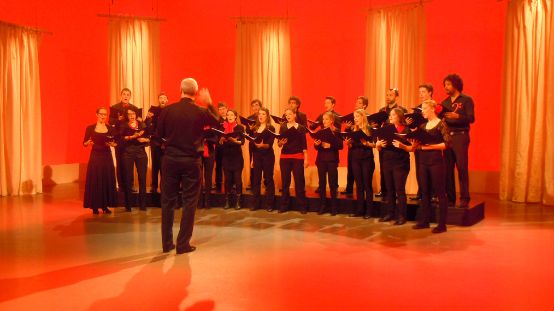
The Swiss Youth Choir interprets the six versions. Photo: SGG

"I hope for a nationwide discussion about values that are important to us in Switzerland and that we therefore want to sing and hear in the future national anthem," says Jean-Daniel Gerber, President of the Swiss Society for the Common Good (SGG) and the person responsible for the anthem project.

According to the SGG, the text of the competition entries is based on the preamble to the Federal Constitution. The preamble contains central values such as democracy, diversity, freedom, peace and solidarity. A jury of 30 experts selected six entries from a total of 208 submissions. A section of the Swiss Youth Choir interpreted the six new anthems and will also perform the three best at the final.

From March 30 to May 15, 2015, the six new hymns will be available online at www.chymne.ch for the election. The contributions can be listened to and viewed in all four national languages (German: www.chymne.ch; français: www.hymnenational.ch; italiano: www.innonazionale.ch; rumantsch: www.imninaziunal.ch)

The first online vote will select the three finalists. These will be announced at the end of May and will enter the second online voting from June 8 to September 6.

On September 12, 2015, from 6.10 p.m. to 7.15 p.m., the public can watch the TV show Potzmusig can watch the final on SRF1 and choose the winning entry by text message and telephone. The votes from the second online voting and the final votes will be added together. The authors of the competition entries, who will remain anonymous up to this point, will be announced after the vote.

As soon as the winning entry has achieved the necessary popularity among the population, the relevant federal authorities will be asked to select the winning entry as the new national anthem.

The Swiss Society for the Common Good (SGG)which has been committed to a Switzerland of solidarity and cohesion between the language regions since 1810 and manages the Rütli, among other things, wants to use the new anthem text to promote Switzerland's core values and popularize the preamble, which forms the guiding principle of modern Switzerland.

 

A special page has been created for music teachers and school musicians:


www.chymne.ch/de/musikunterricht

Organ week in summer

The Stade Organ Academy invites organists between the ages of 12 and 19 to a week of further training in July.

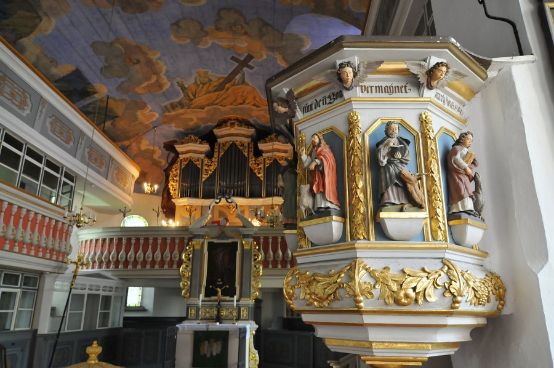
Silbermann organ in Helbigsdorf/Saxony, visited at the 6th Youth Organ Forum 2014 Photo: Ch. Schönbeck,SMPV

At the European Symposium ORGEL 2011, which took place in Zurich at the University of the Arts, Annegret Schönbeck, the initiator, reported impressively on her positive experiences during her weeks aimed at young organ players, which were financially endangered at the time. Now we have the good news:

The Stade Organ Academy invites you to the 7th Stade Youth Organ Forum this year!
It takes place from July 23 to 29, 2015 and offers young organists between the ages of 12 and 19 who have already had organ lessons (for a short time or longer) the opportunity to play together with their peers on the famous historical organs in Stade. Young people who have only had organ lessons for a short time are also welcome to take part. Information, conditions of participation and the registration form can be found at www.jugendorgelforum.de

It is also open to young people from abroad and offers daily organ lessons in small groups. The teachers are: Sibylle Groß, Martin Böcker and Annegret Schönbeck. There is an opening and closing concert, joint devotions, singing and an excursion to Cuxhaven. The costs, including accommodation in the youth hostel and meals, are modest at €250.00. International contacts between young people who can form friendships are invaluable.
 

Eight awards in three categories

The competition for young people between the ages of 9 and 19 was launched in 2003 by the Camerata Zürich and takes place every two years.

Photo: Mexrix - Fotolia.de

Ten works were submitted this year, eight of which were awarded prizes. The jury consisted of Roland Moser, Alfred Zimmerlin and Droujelub Yanakiew. On March 29, the Camerata Zurich, conducted by Droujelub Yanakiew, performed the best compositions in the Great Hall of the Zurich Conservatory of Music.

The following prizes were awarded:

Category I: born between 2005 and 2003
2nd prize: Rubén Ramos, Dream of sounds
2nd prize: Gila Kilcher, Snake and giant

Schwyz honors Nadja Räss and Roland Bucher

The cantonal government of Schwyz honors yodeler, singing teacher and composer Nadja Räss with the 2015 Cantonal Recognition Award. The percussionist and sound artist Roland Bucher was awarded a cultural promotion prize, as was the animated filmmaker Roman Kälin.

Photo: andibrunner.com

With the award of the Schwyz Culture Recognition Prize, endowed with 10,000 Swiss francs, the Culture Commission and Cantonal Council are honoring the Einsiedeln yodeler Nadja Räss, who "has been providing important impulses in Schwyz culture for many years with her artistic work and commitment", according to the canton's press release. She has made a name for herself as a yodeller, singing teacher/yodelling teacher and composer far beyond the canton of Schwyz.

According to the canton of Schwyz, her winning way of combining old and new music has enabled her to inspire traditional yodelling circles as well as new, more urban audiences for the traditional Swiss way of yodelling. She has also been the artistic and operational director of Klangwelt Toggenburg since 2012.

Born and raised in Küssnacht am Rigi in 1977 and now living in Lucerne, musician and sound artist Roland Bucher is a percussion teacher at the Küssnacht Music School. Among other things, he develops instruments in the field of live electronics. With his "Noise Table" he samples acoustic instruments and everyday objects. The resulting sound collages oscillate between the sounds of the acoustic source material and electronically modified "sound clouds". The prize is endowed with 5000 francs.


Focus on music in Winterthur

In its recently published cultural mission statement, the city of Winterthur acknowledges its music and museum scene. These should set the priorities without neglecting the diversity of cultural life.

Winterthur Music Festival 2014 Photo: Thomas Gerstendörfer

The museums with their top-class art collections and exhibitions have characterized the cultural city of Winterthur since the 19th century, according to the cultural mission statement. This also applies to the Musikkollegium Winterthur orchestra, which emerged from the Musikkollegium founded 250 years earlier. The music festivals are also core elements of Winterthur's cultural life.

Since the 1990s, the city has also made a name for itself with the Center for Photography, which has a national reputation. Technorama, Gewerbemuseum, Naturmuseum and other exhibition venues complement the focus on museums.

In the long-term perspective, the mission statement commits to the music festivals of various musical genres and the Musikkollegium Winterthur. The latter should retain its status as a professional orchestra.

The new cultural mission statement of the city of Winterthur can here can be downloaded.

Solothurn seeks president of the board of trustees

For the first time, the Canton of Solothurn is putting the chairmanship of the Board of Trustees for Cultural Promotion out to public tender, thereby contributing to the transparency of state art funding processes.

Solothurn with St. Ursen Cathedral. Photo: Roland Zumbühl, picswiss

People interested in culture from the canton of Solothurn can apply to succeed the retiring President Heinz L. Jeker-Stich. The position starts on July 1. The presidency is not an appointment, but the chairmanship of a cantonal commission.

The Executive Committee is supported operationally by an office. The expenses are compensated with attendance fees and travel expenses as well as project-oriented remuneration. The electoral authority is the Government Council.

More info: www.so.ch

get_footer();