A classic about the classic

"Beethoven - His Music. His Life" by Lewis Lockwood still offers a wide range of information in generally understandable language.

Beethoven monument by Robert Weigl (1902-10), Heiligenstädter Park, Vienna. Photo: HeinzLW / wikimedia commons

The biography Beethoven. The Music and the Life by Lewis Lockwood, Professor of Musicology at Harvard University, made it to the final round of the Pulitzer Prize after its publication in 2003. The German translation was published by Bärenreiter/Metzler in 2009 and has been available as a special edition (paperback in large octavo format 24 x 16 cm) at a bargain price since 2012. Although it is therefore no longer new, this important standard work should be referred to again here.

Lewis Lockwood succeeds in structuring the musical and biographical in a meaningful way. Within the broad division into the three periods of Beethoven's life, the biographical facts and the music are described in separate sub-chapters, whereby the links between work and life are maintained. Descriptions of the musical, intellectual, political and social environment are included without making the reader's head spin. Numerous further details can be found in the extensive notes section. A chronology, index of works and persons make it easier to navigate through the book, and the bibliography is also an overview of the immense Beethoven literature.

The author is aware of Ludwig van Beethoven's "Promethean" significance, but never lapses into rapture. His descriptions of his works, which are limited to the essential details, are factual and, apart from the basic music-theoretical vocabulary, written in generally understandable language. This 456-page biography conveys a comprehensive picture of Beethoven's life and music. The translation by Hamburg musicologist Sven Hiemke reads like an original German text - the book is a technical and linguistic masterpiece!

Image

Lewis Lockwood: Beethoven - His Music. His life, special edition, 456 p., € 19.95, Bärenreiter/Metzler, Kassel/Stuttgart 2012, ISBN 978-3-7618-2288-3

A cheerful birthday present

Aleksey Igudesman has transformed five well-known pieces by Beethoven into humorous violin duets.

Beethoven figures in Bonn 2011, photo: © Axel Kirch / wikimedia commons

The Moonlight Sonata with fine pizzicati, the harmoniously spiced up Turkish march (Turkish alla Ludwig), an intimate Elise (For a Lease), the first movement of the Spring Sonata with a virtuoso piano score (the moderately difficult passages are distributed fairly between the two voices) and the beginning of the 5th Symphony ("Banananaa") extended in five-four time into a Latin, jazz and swing piece - Aleksey Igudesman has reworked five "Beethoven hits" into a witty duet. "With this delicious menu ... our musical taste buds are guaranteed to get their money's worth," writes Patricia Kopachinskaja in the foreword.

Image

Aleksey Igudesman: Beethoven & more, 5 violin duets, UE 33 658, € 17.95, Universal Edition, Vienna

Beethoven as arranger of himself

In addition to the recordings of all the piano trios, the Swiss Piano Trio offers arrangements of the 2nd Symphony op. 36 and the String Quintet op. 4, which Beethoven probably wrote himself.

Joël Marosi, Martin Lucas Staub, Angela Golubeva. Photo: Neda Navaee

Recording all of Beethoven's piano trios is not such a mammoth project as a complete overview of his string quartets or sonatas. However, this instrumentation is good for a few surprises, especially with Beethoven. In addition, the piano part is surprisingly dominant and emancipated from the basso continuo, as Beethoven liked to present himself as a pianist in aristocratic company.

The Swiss piano trio, based in Winterthur, took six years to make its integral recording. All five planned CDs were released by the German label Audite in time for the anniversary year, when the ensemble with pianist Martin Lucas Staub, violinist Angela Golubeva and cellist Joël Marosi surprised everyone with an additional CD.

It is dedicated to two unknown piano trios, which Beethoven most probably arranged himself. The Piano Trio in E flat major op. 63 is based on his String Quintet op. 4, and Beethoven also arranged a version of his successfully premiered Symphony No. 2 in D major for piano trio for domestic use. These two rarities are now documented for the first time as part of a complete CD series.

The recording of the trio version of the 2nd Symphony reveals particularly clearly how well the three musicians know Beethoven by now. The reduction of the large orchestra to three instruments makes the structural originality of the work as if under a magnifying glass. The trio plays the sparse Adagio statics in unison with wonderful calm, only to then play out Beethoven's joy of contrast with brilliant rhythmic homogeneity and dramatic verve.

The Swiss piano trio has conceived the individual CDs with a good sense of dramaturgy; the pieces are not recorded chronologically, but are cleverly coordinated with each other in terms of content. This sophisticated light music reveals a wealth of ideas and surprising twists and turns, which the ensemble knows how to savor in great detail. It plays the early trios with a great deal of esprit, Mozartian slenderness and transparency, but it can also be dramatically gripping and romantically indulgent. The joy of the three performers is infectious.

Image

Beethoven: Complete Works for Piano Trio, Vol. I-V. Swiss Piano Trio. audite 97.692-97.696, available individually.
Plus Vol. VI, arrangement String Quintet op. 4 and Symphony No. 2, audite 97.771

Korngold's oeuvre in an edition

The Mainz Academy of Sciences and Literature is taking on the realization of an edition of Erich Wolfgang Korngold's oeuvre as a long-term project. Arne Stollberg, who taught in Bern and Basel until 2015, is one of the project managers.

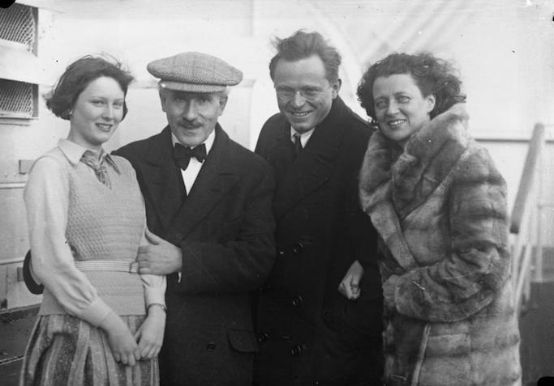
Erich Wolfgang Korngold (1897-1957). Photo: George Grantham Bain/Library of concress (see below),SMPV

Alongside the edition of the complete works of Arnold Schönberg and the Bernd Alois Zimmermann Complete Edition, the Korngold Works Edition is the third musicological edition project on a composer of the 20th century to be coordinated by the Mainz Academy of Sciences and Literature.

The project, which is being carried out jointly with the Berlin-Brandenburg Academy of Sciences and Humanities, will run for 25 years and is funded with 388,000 euros per year. The three workplaces are located at the Humboldt University in Berlin, the Rostock University of Music and Drama and the Goethe University in Frankfurt. The project is headed by Arne Stollberg (Humboldt-Universität zu Berlin) and Friederike Wissmann (Rostock University of Music and Drama).

Zeal & Ardor awarded

The 2020 Basel Pop Prize, now endowed with CHF 20,000, went to Zeal & Ardor; Anthony "Tony" Thomas received the Recognition Prize and Steffi Klär the 1st Spotlight Prize.

Zeal & Ardor received the RFV Basel Pop Prize for the second time. Photo: Samuel Bramley,Photo: Mathias Mangold,Photo: Samuel Bramley

How the RFV Basel - Promotion of pop music and music network in the Basel region announced that the awards ceremony on November 19 was streamed live for the first time in its eleven-year history. The Basel Pop Prize went to Zeal & Ardor for the second time since 2017. The jury (James Gruntz, Marion Meier, Tim Renner, Bettina Schelker, Alfonso Siegrist) explained their decision by saying that the band had "further strengthened their international appeal" since then. Four bands were nominated from 250 suggestions: Anna Rossinelli, Klaus Johann Grobe, Mehmet Aslan and Zeal & Ardor.

Image
Steffi Klär


The 2020 recognition prize is endowed with 6,000 francs. It went to Anthony "Tony" Thomas "for his many years of continuous music-making".

Finally, Steffi Klär was awarded the newly created Spotlight Prize. She received the 2,000 francs in recognition of "her many years of professional work for the regional pop scene, which she has often done and continues to do in the background".

The live stream of the award ceremony is still available: www.rfv.ch/live


Image
Anthony "Tony" Thomas

Elegant singing

Beethoven every Friday: to mark his 250th birthday, we take a look at one of his works every week. Today it's "Elegischer Gesang" for choir and string orchestra.

How one can be deceived. For Franz Schubert by no means quickly took a few counterpoint lessons shortly before his death, nor did Alban Berg anticipate the Bach chorale in his last work, the Violin Concerto It is enough quoted. This is the inverted logic of posterity, which seeks meaning in the face of the sequence of events, constructs biographical coherence and assumes a larger world plan - although, when viewed soberly, rarely does anything in one's own life seem truly logical. Even Beethoven's Elegant singing op. 118, published posthumously in August 1827, was not spared such aberrations in reception. Adolf Bernhard Marx noted in a succinct review in the same year: "Beethoven's last tone poems sometimes express such a tender, intimate, transfiguring emotion that one is tempted to hear a sense of imminent departure; they are dreams and forebodings that float over the strings, as soon as over the earth, with a gentle breeze ... awakening its sound and fading away with it" (Berliner Allgemeine Musikalische Zeitung).

Today we know that the widely unknown and only very rarely performed Elegant singing was composed 13 years earlier, presumably in connection with the third anniversary of Eleonore von Pasqualati's death on August 5, 1814. It is about the second wife of Beethoven's friend, lawyer and long-time landlord Johann Baptist Freiherr von Pasqualati, who died at the age of 24, probably in childbirth. The work was probably never intended for large choir and orchestra (as it is usually recorded), but rather for a performance as part of a private devotion or memorial service. In any case, the scoring indicates this, as the four vocal parts are only accompanied by a string quartet (expressly without bass): "with accompaniment of 2 violins, viola and violoncello". Performed in this way, singing already appeared to pragmatically oriented contemporaries as a "Masterpiece, which one can make excellent use of, without great means, with good practice for the most worthy celebration of funerals of beloved deceased persons with undoubtedly effective success" (Leipziger Allgemeine musikalische Zeitung, 1827).


Listen in!

District Five Quartet becomes Companion ZHdK

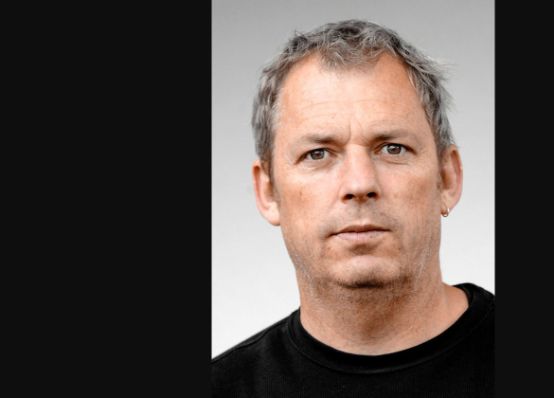
Zurich University of the Arts (ZHdK) honors five alumni for their achievements. The jazz ensemble District Five Quartet, consisting of Tapiwa Svosve, Vojko Huter, Xaver Rüegg and Paul Amereller, receives the Companion ZHdK. The Honorary Companion ZHdK goes to the multimedia artist Olaf Breuning.

District Five Quartet. Photo: Simon Zangger

This year, for the first time, the honorary title of Companion goes to an ensemble. The ZHdK writes that the District Five Quartet "impressively succeeded in breaking new ground beyond traditional jazz music with a great deal of experimentation and inventiveness". The ZHdK alumni Tapiwa Svosve, Vojko Huter, Xaver Rüegg and Paul Amereller represented "contemporary and daring jazz with their multi-layered and direct sound art".

This year's Honorary Companion goes to Olaf Breuning. The paintings, videos, installations, sculptures, photographs and performances by the New York-based artist have been shown internationally in numerous exhibitions and are represented in the collections of renowned museums.

The ZHdK awards honorary degrees for outstanding achievements at a young age once a year on University Day. They are not linked to any financial support. Members of the ZHdK can nominate award winners. The Executive Board of the University, advised by a committee, decides on the award.

Music secures millions of jobs

According to a study by the IFPI, the music sector provides two million jobs in the 27 EU member states and the United Kingdom (EU28) and contributes 81.9 billion euros to the economy every year.

Photo: James Owen/unsplash.com (see below)

Goods and services worth 9.7 billion euros are exported to countries outside the EU28. This is according to the study "The Economic Impact of Music in Europe" conducted by Oxford Economics on behalf of the International Federation of the Phonographic Industry (IFPI). IFPI is the international umbrella organization of the German Music Industry Association (BVMI).

The study, which is based on data from 2018, underlines that music is a relevant economic factor in the European Union and the UK, providing a large number of jobs, increasing gross domestic product and tax payments and driving exports.

At the heart of this are the 7400 European labels. Not only do they employ almost 45,000 people in the EU, they also invest heavily in other parts of the music sector and make an important contribution to European exports.

More info:
https://www.ifpi.org/music-supports-two-million-jobs-contributes-e81-9-billion-annually-to-economy-of-eu-and-uk-study-finds/

Culture lobby meets Federal Councillor Berset

Federal Councillor Alain Berset received a delegation from various cultural sectors for talks. The meeting focused on the consequences of the Covid-19 pandemic.

Federal Councillor Alain Berset. Photo: Swiss Federal Chancellery

The meeting provided an opportunity to discuss the challenges and prospects for cultural policy in the face of the pandemic. It confirmed that an easing of the situation for the cultural sector is not foreseeable, especially in light of the second wave of the pandemic.

On September 25, Parliament approved the continuation of measures under the Covid-19 Act and allocated funds of CHF 130 million for 2021. It remains to be seen whether these funds will be sufficient to overcome the economic difficulties in the cultural sector, as Federal Councillor Berset explained.

The federal government has already put measures in place and in the first cantons, the portals for applications from cultural enterprises for loss compensation and transformation projects are open. Cultural practitioners and cultural associations in the non-professional sector can already submit applications for emergency aid to the relevant authorities.

Original article:
https://www.admin.ch/gov/de/start/dokumentation/medienmitteilungen.msg-id-81163.html

Extension of emergency aid

Emergency aid via Suisseculture Sociale will continue under the Covid-19 Act. In the current situation, with no income opportunities and the loss of compensation for cultural workers, the situation is becoming increasingly critical for many and emergency aid is therefore all the more urgent.

Photo: Konstantin Planinski/unsplash.com (see below)

Based on the Covid-19 Cultural Ordinance, which came into force on September 26, 2020 and is valid until December 31, 2021, Suisseculture Sociale (SCS) awards support grants for cultural workers in need on behalf of the federal government. As it can take several weeks to process an application, Suisseculture Sociale recommends that all eligible cultural practitioners who are in a financial emergency submit an application now and not wait until all reserves have been used up.

Regardless of canceled engagements and fees, emergency aid is aimed at cultural professionals who find themselves in a financial emergency due to the current situation. The new Covid-19 Cultural Ordinance has now closed some important loopholes. In addition to the self-employed, "freelance" cultural professionals are now also enshrined in law. According to the ordinance, all full-time cultural workers residing in Switzerland in the performing arts, design, film, visual arts, literature, music and museums are eligible.

A financial emergency generally arises when income no longer covers expenditure. Emergency assistance thus calculates the financial deficit, not the defaulted commitments, which are usually much higher. It is based on the SKOS guidelines and is therefore comparable to social assistance, but unlike social assistance it is not subject to reimbursement. It is subsidiary to other state measures, in particular the Corona income replacement and any unemployment insurance benefits.

Emergency aid is generally paid out for a period of two months and will be continuously adjusted in line with the financial emergency until December 31, 2021 at the latest. Due to the rapidly deteriorating conditions at the current time, emergency aid will be calculated once for three months, from October to December 2020, until the end of the year.

The application form and all information on submitting applications, an FAQ and a guide can be found on the following website http://nothilfe.suisseculture.ch. Applications and all communication must be submitted electronically.

The association Suisseculture Sociale was founded in August 1999 as the sponsor of the social fund to support professional cultural workers in social and economic emergencies. Since April 1, 2020, SCS has been awarding emergency aid on behalf of the federal government based on the Covid-19 Cultural Ordinance.

More info: www.suisseculturesociale.ch

Piano Sonata No. 18 "The Hunt"

Beethoven every Friday: to mark his 250th birthday, we take a look at one of his works every week. Today it's the Sonata for Piano No. 18 in E flat major "The Hunt".

After his worries about the progressive loss of his hearing, social isolation and suicidal thoughts that had already been overcome had reached a climax and catharsis in the "Heiligenstadt Testament" (it is a letter to his two brothers written on October 6, 1802, but never sent), Beethoven also began anew creatively. He is said (according to Carl Czerny's recollection) to have confessed to his friend Wenzel Krumpholtz: "I am not satisfied with my previous work. From now on, I want to take a new path." Czerny already referred this statement to the Piano Sonatas op. 31, in which Beethoven actually rethinks the genre in a new and different way. This applies not only to the Storm Sonata (op. 31/2), but also the Sonata in G major (op. 31/1), both of which were published together in April 1803 by Hans Georg Nägeli in Zurich as volume 5 of the Répertoire des Clavicinistes appeared in print. It was not until November 1804 that the Sonata in E flat major op. 31/3 followed as volume 11 together with a reprint of the Pathétique op. 13, as Beethoven no longer delivered the fourth sonata Nägeli had expected. - The Répertoire des Clavicinistes incidentally formed the modern counterpart to the series of Musical works of art in the strict style of writingwhich nails with the Well-tempered piano had opened.

Alongside Clementi, Cramer, Dussek and Steibelt, Beethoven was in the best of company with his sonatas. The musical standards of the series were set high, as can be seen from an advertisement published on various occasions: "First of all, I am interested in piano solos in a grand style, of great scope, in manifold deviations from the usual sonata form. These products should be characterized by detail, richness and fullness of voice." The edition was engraved in Paris, so that the postal route to Vienna was too far and too long for a proper proofreading. Beethoven's sonatas therefore appeared with numerous errors, Opus 31/1 even with an unauthorized four-bar insertion. Beethoven is said to have reacted indignantly and only a short time later arranged for a new edition to be published by Simrock in Bonn with the significant addition "Edition tres Correcte".

All three works are unusual. In Opus 31/3, after a whole series of formal experiments, Beethoven returns to the four-movement structure - only to leave it until the Hammerklavier Sonata op. 106. At the same time, he disregards the usual order of the two middle movements. The musical parameters of the slow movement and dance movement are also paired, intertwined, interchanged and yet set against each other: In second place is a wonderfully sonorous scherzo, often in the baritone register, in idiosyncratic 2/4 time (Allegretto vivace), followed by a calmly flowing Menuetto of an older style in 3/4 time (Moderato e grazioso). The beginning of the first movement is also ambiguous: what initially seems like a tempo-reduced introduction turns out to be the main theme of the movement. According to Carl Czerny, the brilliant finale, virtuosically traversing the piano's ambitus, goes back to an improvisation when Beethoven "saw a rider galloping past his window". In view of the frenzied tempo (Presto con fuoco) and the surprising harmonic swerves, one gets the impression that it must have been more of a wild par force ride.


Listen in!

Franziska Welti travels to Genoa

The city of Winterthur has awarded a scholarship for a studio residency in Genoa as part of its cultural promotion program. The scholarship was awarded to the musician Franziska Welti. The three-month residency is planned for the turn of the year 2021/22.

Franziska Welti (Image: zVg)

Born in 1965, Franziska Welti is a singer, choir director and artist. She lives in Winterthur and Berlin. Welti performs music from the 12th to 21st centuries as well as freely improvised music. She works regularly with ensembles for early and contemporary music, such as the "Sonar Quartett Berlin" and teaches solo singing and vocal improvisation at the Winterthur Conservatory. In 2009 she was awarded the Cultural Prize of the City of Winterthur and in 2018 the Music Recognition Prize of the Canton of Zurich.

The studio in Genoa is periodically advertised for a three-month stay for artists from Winterthur. A total of six people applied for the scholarship. Cultural practitioners from all disciplines who have lived in the city of Winterthur for at least three years without interruption or who have a special relationship with cultural life in the city of Winterthur through their artistic work were eligible to apply.

Chur honors Andrea Thöny

This year, the city of Chur is awarding a recognition prize to the art historian Leza Dosch, the double bass player Andrea Thöny, the journalist Margrit Sprecher and the Galeria Cuadro22.

Symbolic image: eggeeggjiew/adobe.stock.com

Double bassist Andrea Thöny grew up in Chur and Haldenstein. He came to music by singing at home, at elementary school and at teacher training college through contact with highly committed music teachers. In Chur, the musician made a name for himself as a founding member of the Chamber Philharmonic Orchestra, and the City Council is now awarding him the recognition prize in particular for his great commitment to music education.

The recognition prizes are awarded in recognition of at least 10 years of cultural work that is of importance to the city and its immediate region. Both the recognition and sponsorship prizes are endowed with CHF 4000 each. Every three years, in addition to the recognition and sponsorship prizes, the city of Chur can also award a cultural prize worth CHF 8,000 to honor significant and long-standing cultural work. In 2020, this prize went to the architect Peter Zumthor from Haldenstein.

Enriching exchange across generations

Orpheum, the foundation for the promotion of young soloists, has been in existence for thirty years. The anniversary was celebrated with chamber music at the Druckerei Baden.

David Nebel, Oliver Schnyder and Dorukhan Doruk. Photo: Michael Steiner/Orpheum

The times are not exactly favorable for lavish celebrations. The Orpheum Foundation, which wanted to celebrate its 30th anniversary at the Tonhalle Maag, also had to learn this. However, the concert hall remained closed due to coronavirus regulations. Nevertheless, the event was held twice on November 7, each time in front of an audience of 50, not in Zurich but at the Baden printing works. The organizer Piano District Baden had made the concert possible and repeated it twice a day later.

The podium was not occupied by an orchestra, as is usually the case at Orpheum, but by the pianist Oliver Schnyder, once also an Orpheum soloist, together with the young violinist David Nebel and the cellist Dorukhan Doruk. They played the Spring Sonata op. 24 and the Cello Sonata op. 102/2 by Beethoven, as well as his Gassenhauertrio - success was certain for the motivated musicians.

Inspiring each other

"It is a not insignificant effort that most concertizing musicians are currently willing to make," commented Oliver Schnyder. "The times demand it, especially the associated commitment to the importance of cultural diversity in a society that is just realizing the upheavals it is facing as a result of the pandemic." It was a chamber music concert with a signal effect.

This intimate setting was one of the most significant moments in the history of the foundation, which was once established with the idea of "giving young musicians the opportunity to perform in front of a large audience accompanied by prominent conductors and orchestras", as Foundation President Hans Heinrich Coninx defined it. This maxim has remained true, but since then "we have opened up new musical formats for our soloists, but also for our audience".

A concert like this with two young and one established musician broadens perspectives for both sides, as Schnyder explained: "The musical exchange between established and aspiring artists is not about teaching the other something, but about being inspired and questioning one's own views. The youngsters live in a different world than I did back then. They see it with different eyes, including music. I learn at least as much from that as they learn from me."

However, a chamber music concert cannot outweigh the magic of performing with an orchestra. Violinist Simone Zgraggen, for example, who was sponsored by the foundation in earlier years, has held a professorship in Freiburg i. Br. since 2012 and is concertmaster of the Basel Sinfonietta, enthuses: "In addition to the concert by Dvořák, which I was able to play in the Tonhalle Zurich, I was also able to perform with the Orpheum soloists Christian Poltéra, David Riniker and Florian Krumpöck in Salzburg, Moscow and again in the Tonhalle, including Beethoven's Triple Concerto."

Important stepping stone

Around 200 young musicians have enjoyed major concerts so far, including names such as Sol Gabetta, Truls Mørk, Alice Sara Ott, Renaud and Gautier Capuçon, Martin Grubinger, Vilde Frang and, more recently, Marc Bouchkov and Christoph Croisé. Fortunately, there are a large number of Swiss players among the participants, not all of whom have made the leap into the elite - that's also part of it.

For many, however, it was an important stepping stone, as cellist Maximilian Hornung says: "Orpheum was an inspiring experience in the truest sense of the word, incredibly motivating and instructive." Coninx offers an interesting addition: "When we realize that many of our soloists were not yet born when Orpheum was founded, then we are on the way to becoming an intergenerational project."

 Howard Griffiths. Photo: Michael Steiner/Orpheum

Orpheum has adapted and created new formats in order to be able to offer newcomers something special. Artistic Director Howard Griffiths describes the change: "In the beginning, CDs were important and a label looked after an artist for years, which is no longer the case. As a result, they are now often alone with their future, they have to use social media. In return, we have a larger selection of musicians, although the top has still remained pointed. But we always try to select performers with a great musical personality."

Nevertheless, the CD medium will continue to be used with the support of the foundation, for example with the recording of the cello concerto by Paul Wranitzky (1756-1808) with Chiara Enderle. There are already four recordings, and Griffiths says two more are planned for next year with solo concertos by Bernhard Romberg (1767-1841) and Georg Goltermann (1824-1898). They deliberately choose lesser-known works so as not to expose the up-and-coming musicians to comparison with the stars.
Radio SRF 2 recorded the anniversary concert in Baden, and the streaming version is available on the Orpheum website.

Art academies turn their attention to Zurich

From November 17 to 20, 2020, art academies from all over the world will be coming to Zurich's Toni-Areal - at least virtually. Zurich University of the Arts (ZHdK) is hosting the Biennial Conference 2020 of ELIA (European League of Institutes of the Arts).

Steering Group of the Biennial Conference 2020 (Photo: ZHdK)

Due to the coronavirus situation, the 16th Biennial Conference will not be held physically in the Toni-Areal as planned, but digitally. At the conference, students, lecturers and members of the ELIA member institutions will explore the following questions: How can the arts collaborate with other disciplines to help solve environmental, economic, social and cultural challenges? What roles do art colleges play in this debate? And are transdisciplinary art academies the model of the 21st century?

ELIA has more than 260 member institutions from around 50 countries and represents more than 300,000 students.

get_footer();