Renovation work at the Grand Théâtre de Genève

The Grand Théâtre on Place de Neuve will close its doors until the end of June 2027 to carry out work, including replacing the stage machinery, improving the acoustics of the orchestra pit, and enhancing the acoustics.

Grand Théâtre de Genève. Photo: MaykovNikita/depositphotos.com

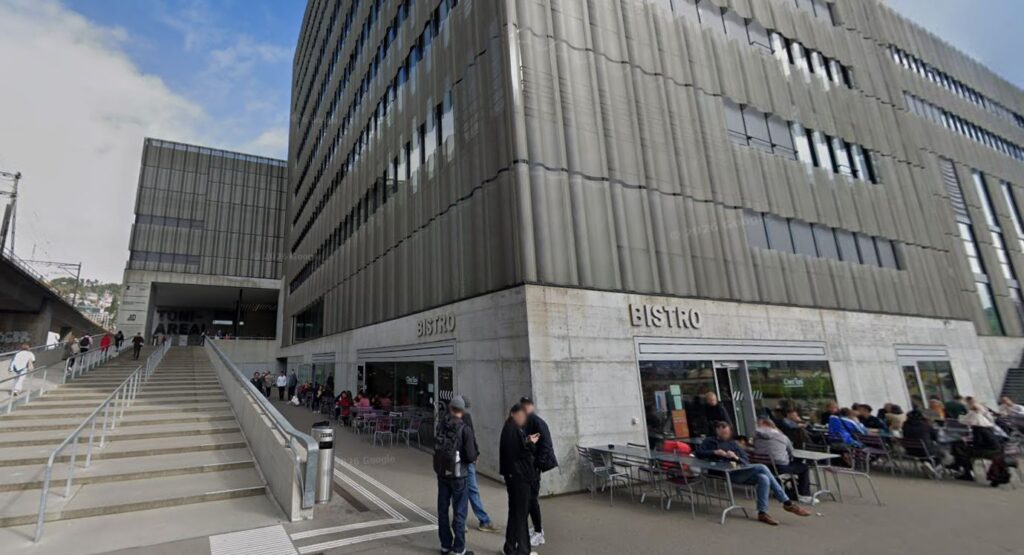
From now on, all opera and ballet productions of the Grand Théâtre will take place on the stage of the Bâtiment des Forces Motrices (BFM), Place des Volontaires 2, in Geneva. Activities related to the La Plage program will take place at various locations in collaboration with other local institutions. Ticket sales and the reception of the Grand Théâtre will remain in the current building on Place de Neuve.

During a renovation of the Grand Théâtre de Genève in the 1990s, a new stage was built in the machine hall of a former hydroelectric power station in downtown Geneva. The 945-seat hall is called the Bâtiment des Forces Motrices or Salle Théodore Turrettini, after the builder of the hydroelectric power station. Initially planned as a temporary stage, this hall is now normally used for ballet performances, chamber operas, and baroque operas.


Death of Swiss flutist Peter-Lukas Graf

According to international media reports, Swiss flutist Peter-Lukas Graf has died in Binningen at the age of 97.


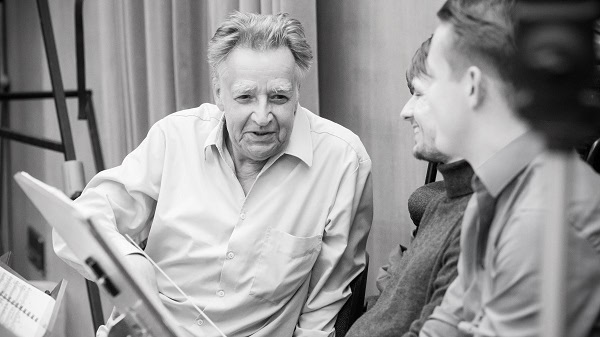
Peter-Lukas Graf (Image: Yamaha/Schott)

Graf studied flute with André Jaunet in Switzerland and at the Paris Conservatory with Marcel Moyse and Roger Cortet. In addition to his instrumental studies, he also trained as a conductor. He was particularly attached to the French flute tradition influenced by Moyse, but also maintained strong ties to German-speaking musical culture.

As an educator, he was a lecturer at the Basel Academy of Music for many years, where he trained generations of flutists who went on to pursue international careers. His discography as a flutist and conductor includes recordings of the core flute repertoire as well as lesser-known works. In addition to numerous prestigious international awards, he was also presented with a Lifetime Achievement Award by the National Flute Association in the United States in recognition of his lasting influence on flute playing and flute education worldwide.


Fischer to remain in São Paulo until 2031

Swiss conductor Thierry Fischer has extended his contract as music director and principal conductor with the São Paulo Symphony Orchestra until the end of 2031.

Tierry Fischer (Photo: Marco Borggreve)

According to Fischer's announcement on his own website, he intends to place particular emphasis on strengthening the international presence of the Orquestra Sinfônica do Estado de São Paulo (Osesp) through tours, artist residencies, and strategic collaborations with leading soloists, conductors, composers, and cultural institutions worldwide. Experimenting with new concert formats and closer dialogue with digital platforms will also play a role in expanding the orchestra's reach.

Fischer began his musical career as principal flutist in Hamburg and at the Zurich Opera House. As music director of the BBC National Orchestra of Wales, he performed annually at the BBC Proms. He was music director of the Nagoya Philharmonic Orchestra and the Utah Symphony Orchestra, as well as principal guest conductor of the Seoul Philharmonic Orchestra. He has been Music Director of the Osesp since 2020 and of the Orquesta Sinfónica de Castilla y León since 2022.

The Osesp was founded in 1954 and was led by Brazilian conductor John Neschling from 1997 to 2008. Neschling was succeeded in 2009 by Yan Pascal Tortelier, who led the orchestra until 2011. He was followed by Marin Alsop and, from 2016, Thierry Fischer, initially as guest conductor. Since 1999, the orchestra has played in the Sala São Paulo, which has since become the orchestra's home venue and is renowned for its outstanding acoustics.


Saviet teaches Creative Interpretation in New Music in Basel

American violinist Sarah Saviet will become professor of creative interpretation in new music at the Institute of Classical Music at the Basel Academy of Music.

Sarah Saviet (Image: FHNW)

Sarah Saviet is a violinist who specializes in performing contemporary music, according to the Basel Academy of Music. She performs as a soloist and chamber musician and is a member of the Saviet/Houston Duo and the Ensemble Mosaik. Her most recent performances include the world premiere of a 90-minute full-length duo by Sarah Hennies at the Donaueschingen Music Days and at hcmf//, as well as concerts at Eclat Stuttgart, Ultraschall Berlin, the Witten Days for New Chamber Music, Eavesdropping, and the Aldeburgh Festival.

Saviet has been a guest artist at the Berlin University of the Arts, the Hanover University of Music, the University of Huddersfield, the University of Chicago, and the University of California, San Diego. In addition to her artistic activities, she teaches violin at the Darmstadt Summer Courses and holds a teaching position at the Lucerne University of Applied Sciences and Arts – Music in the Institute for New Music, Composition, and Theory. She will begin teaching in Basel in the fall semester of 2026/27.

Viotti becomes General Music Director in Zurich

The Zurich Opera House has announced that Lorenzo Viotti will take over as musical director for the 2028/29 and 2029/30 seasons.

Zurich Opera House (Image: Torbjorn Toby Jorgensen)

Born in Lausanne into a Franco-Italian family of musicians, Viotti first studied piano, voice, and percussion in Lyon before continuing his conducting studies in Vienna and Weimar. He gained international recognition by winning several major competitions, including the Nestlé Young Conductors Award at the Salzburg Festival, the MDR Symphony Orchestra Conducting Competition, and the Cadaqués International Conducting Competition.

In 2021, Viotti took on the dual role of chief conductor of the Netherlands Philharmonic Orchestra and the Dutch National Opera in Amsterdam. At the start of the 2026–2027 season, he will assume the position of music director of the Tokyo Symphony Orchestra. In Zurich, he will succeed Gianandrea Noseda, who has held the position since 2021.

HSLU develops hearing training programs

A research group at Lucerne University of Applied Sciences and Arts is developing auditory training approaches that activate and maintain hearing ability in old age.

(Image: zVg/HSLU)

The methodological developments, which are co-funded by the Swiss National Science Foundation, are being implemented in collaboration with nursing homes in Kriens. According to a statement from the Lucerne University of Applied Sciences and Arts (HSLU), the nursing homes already offer music-based activities and are open to new experiments, which is a stroke of luck for the project. Singing and making music together are already part of everyday life at the nursing homes. The project wanted to go a step further: to bring people into contact with each other through creative, acoustic moments.

The tried-and-tested offerings were expressly aimed at all interested residents, regardless of their previous musical experience and their reasons for living in the Kriens homes.

Original article:
https://www.hslu.ch/de-ch/hochschule-luzern/ueber-uns/medien/medienmitteilungen/2025/12/18/zuhoeren-als-intervention/

Database on musical life in Vienna around 1800

As part of the project «Concert Life in Vienna 1780–1830,» a database has been created of all musical performances that took place in the European music metropolis at that time.

Stefan Weinzierl and his team at the Audio Communication Department of the Technical University of Berlin have set themselves the task of digitally resurrecting the musical events of past eras. (Image: Ulrich Dohl)

Experts in Berlin and a team from the Institute of Musicology at the University of Vienna have examined contemporary reports from newspapers, music magazines, and private diaries, and analyzed etchings, engravings, floor plans, and blueprints of concert halls. In the process, they also discovered music events that were previously unknown.

As part of the project «Concert Life in Vienna 1780–1830,» funded by the German Research Foundation, a database of all musical performances that took place in the European music metropolis at that time has been created. In addition to texts and historical images, it also contains 3D models of the individual performance venues.

More info: 
https://www.tu.berlin/news/pressemitteilung/musikalische-zeitreisen

Catherine Huth receives Lucerne Culture Promotion Award

The canton of Lucerne is awarding Catherine Huth the Culture Promotion Prize, worth CHF 15,000, for her diverse and long-standing cultural work.

Catherine Huth (Image: zVg/Canton of Lucerne)

Catherine Huth is distinguished by her extensive and diverse cultural engagement in a wide range of cultural fields, writes the canton. With her commitment to cultural policy issues and concerns, the cultural mediator, production manager, artist, and cultural organizer has played a key role in shaping and influencing Lucerne's cultural landscape for many years.

In addition to her own artistic work in her studio, Catherine Huth has always been actively involved in the Lucerne cultural scene. During her long tenure as managing director of IG Kultur from 2009 to 2014, Huth worked tirelessly to represent the interests of independent artists and cultural workers. In 2012, she founded her own office, «fürimfall,» where she has managed various cultural projects and taken on mandates on a freelance basis. Since 2024, she has been involved in the Stanser Musiktage festival as a member of the festival management team.

Each year, the Cultural Promotion Commission awards this prize to individuals who have made a special contribution to cultural life in the canton of Lucerne through their work, activities, or in other ways.

Schwyz cultural promotion to be expanded

The Schwyz Cantonal Council has decided to provide greater support for culture from 2026 onwards. Cultural associations and institutions are to be strengthened and the sharp increase in the number of applications addressed.

Town hall in Schwyz. Photo: Tobyc75

The cultural landscape of Schwyz has developed enormously, writes the canton. Whereas cultural life used to be dominated by folk theater, concerts, individual readings, and music clubs in the villages, many new local and regional cultural associations have emerged in recent years. Well-trained cultural professionals strengthen the cultural associations and create new offerings.

Additional funds come from the lottery fund. The government has continuously increased this contribution in recent years. At the beginning of 2026, there will be another significant adjustment to CHF 2 million per year. The Cultural Commission uses a substantial portion of these funds for the large number of applications that are submitted. The amount allocated to cultural associations and artists has more than doubled in recent years and now stands at around CHF 1 million.

The additional funds will also make it possible to strengthen cooperation with larger event organizers and cultural associations. Service agreements will specify the services that these cultural providers must render for the benefit of Schwyz culture. This expanded regulation will benefit cultural institutions that the Cultural Commission considers to be of strategic importance to Schwyz's cultural scene, such as the Music Club Mauz in Einsiedeln, the Gaswerk in Seewen, the Theater Arth, and «Der Herbst» in Brunnen/Gersau.

Trade in pernambuco wood is not banned

At the 20th Conference on International Trade in Endangered Species of Wild Fauna and Flora (CITES), Brazil's proposals to completely ban the trade and transportation of pernambuco wood failed to pass.

Pernambuco tree (Image: CC BY 2.5/the colonist)

Pernambuco wood has been used to make bows since around 1750 and, according to bow makers, is virtually irreplaceable in violin making. Musicians feared having to obtain complicated special permits when traveling with pernambuco bows, which would have jeopardized tours.

The pernambuco tree, Brazil's national tree since 1978, was added to the country's official list of endangered plant species in 1992. In 2007, Brazil achieved its inclusion in Appendix II of the CITES Convention, with an exemption for finished products such as bows.

In proposing to list Pernambuco in Appendix I of CITES, Brazil emphasized that more than 90 percent of the harvested wood is discarded during the production process, as it is considered unsuitable for the production of professional bows due to strict quality standards. In addition, this wood is subject to extensive illegal trade, which increases the pressure on this tree, which only grows in the Brazilian Atlantic Rainforest, and undeniably threatens the species in an already very weakened ecosystem.

Pernambuco is therefore retained in Appendix II with a compromise text that provides for enhanced measures to better protect this species with a felling ban.

Clément and Bialobroda teach in Geneva

The Haute École de Musique de Genève (HEM) in Geneva has appointed Noémie Bialobroda and Hélène Clément as professors of viola. They will take up their posts in September 2026.

From left: Noémie Bialobroda and Hélène Clément (Image: HEM)

Hélène Clément was born in 1988 and studied with Jean Sulem at the Conservatoire National Supérieur de Paris, then with Hariolf Schlichtig at the Musikhochschule München and finally with Tabea Zimmermann at the Musikhochschule Hanns Eisler in Berlin. She is a member of the Quatuor Doric. She is Professor of Viola and Chamber Music at the Royal Academy of Music in London until the end of the academic year 25/26 and will move to the HEM in September 2026.

Noémie Bialobroda is professor and coordinator for chamber music at the Geneva Conservatory of Music. She also teaches viola at the CNSMD in Lyon. She has also been a member of the Aviv Quartet since 2014. In 2020, she founded the Geneva International String Academy together with violinist Sergey Ostrovsky, of which she is the artistic director. There she offers promising young musicians the opportunity to spend a summer studying and playing with experienced artists. In 2024, she received the cultural scholarship from the Fondation Leenaards.

Structural contributions for Lucerne cultural institutions

From 2027, medium-sized cultural institutions in the canton of Lucerne will be able to benefit from fixed structural contributions. The cantonal government has drawn up a dispatch on this.

Lucerne (Image: Andyindia)

According to the canton's press release, the aim of the new proposal is to provide binding structural support for medium-sized cultural institutions, with the canton and local municipalities each bearing half of the costs. The structural promotion of medium-sized cultural enterprises in the canton of Lucerne is to be reorganized. The cantonal government is presenting a new, revised dispatch on this. This follows the Cantonal Council's rejection of Message B 126 "Further development of regional cultural promotion" to the Government Council in spring 2023.

At the heart of the new proposal is the new structural funding, which provides for financial contributions from the canton to recurring structural and operational costs of selected cultural institutions. On the basis of clear criteria and in cooperation with the local or sponsoring municipalities, the canton concludes trilateral performance agreements with selected cultural institutions. The prerequisite for a cantonal contribution is that the respective host municipality makes a structural contribution of at least the same amount.

More info:
https://news.lu.ch/html_mail.jsp?id=0&email=news.lu.ch&mailref=000lyg00000ti0000000000000bsk6ec

Liza Lim honored with Grawemeyer Award

The Australian composer Liza Lim, whose work will be performed at the Lucerne Festival as part of the Roche Commissions 2026, has been awarded the prestigious Grawemeyer Award.

Liza Lim (Image: Nik Hunger)

Born in Perth, Australia, in 1966, Liza Lim is Professor of Composition and holds the first Sculthorpe Chair in Australian Music at the Sydney Conservatorium of Music, where she also directs the Composing Women program. She has received commissions from some of the world's leading orchestras and ensembles, including the Los Angeles Philharmonic, Ensemble intercontemporain, Ensemble Modern, Arditti Quartet and Klangforum Wien. Lim last appeared at the Lucerne Festival in November 2023 with the world premiere of her work Multispecies Knots of Ethical Timea composition for 15 musicians, gestural performers and video.

The Grawemeyer Awards, currently endowed with 100,000 dollars, are presented once a year by the University of Louisville in Kentucky. Winners are nominated in the categories of education and teaching, ideas that improve the world order, music composition, religion and psychology. In 2015, one award went to Wolfgang Rihm, then director of the Lucerne Festival Academy.

Chailly remains head of the Lucerne Festival Orchestra

Riccardo Chailly has extended his contract with the Lucerne Festival Orchestra until the end of 2028. In addition, tour projects abroad and future projects with the Lucerne Festival Contemporary Orchestra (LFCO) are also planned.

Riccardo Chailly (Picture: Priska Ketterer)

According to the festival's press release, Chailly will continue to conduct concerts in spring and summer, including the official opening. Riccardo Chailly has been Chief Conductor of the Lucerne Festival Orchestra since 2016, succeeding Claudio Abbado. With the founding of the Lucerne Festival Orchestra, which was presented to the public for the first time in August 2003, conductor Claudio Abbado and Festival Director Michael Haefliger took up where the Lucerne Festival left off in 1938, when Arturo Toscanini formed an elite orchestra with the Concert de Gala.

The orchestra members perform as soloists outside of the festival season, take up positions with renowned orchestras, teach at universities or come from the ranks of the Mahler Chamber Orchestra and the Filarmonica della Scala. Claudio Abbado was the orchestra's artistic director until his death in January 2014.

German music schools sound the alarm

A study by German music education associations paints a dramatic picture of a future shortage of music teachers. Half a million children in Germany and Austria could no longer have access to lessons.

(Image: CC)

According to the study, around 14,700 music school staff will retire by 2035 (projection based on current figures from the Association of German Music Schools and the German Music Information Center). In contrast, there are only around 4,000 students of instrumental and vocal pedagogy and elementary music pedagogy. This means that in ten years' time, around three quarters of vacancies could not be filled by suitably qualified music school teachers. In view of constantly rising demand, this means that at least 500,000 children will no longer be able to receive music school lessons.

The study was a joint initiative of the Arbeitsgemeinschaft der Leitenden pädagogischer Studiengänge (ALMS) and the Committee for Artistic-Pedagogical Study Programs of the Rectors' Conference of Universities of Music (RKM). With the participation of numerous universities of music and study institutions as well as the Association of German Music Schools (VdM), causes, challenges and approaches to action were examined in a broad-based crowd research project with over 50 research groups.

More info:
https://www.musikrat.de/fileadmin/redaktion/news/2025/11_2025/DMR_PM_MiKADO-Musik-Studie_belegt_existenziellen_Nachwuchsmangel_an_Musikschulen.pdf

get_footer();