Toth represents Switzerland at Eurovision Young Musicians

Manoush Toth, a student at the Basel University of Music, will represent Switzerland at the Eurovision Young Musicians competition in Yerevan on June 6, 2026.

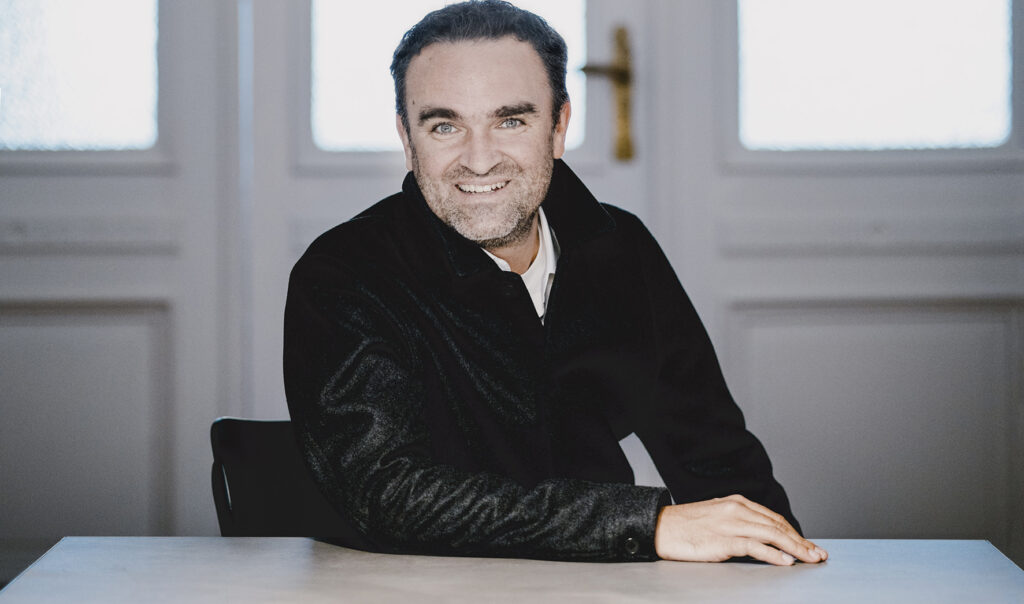
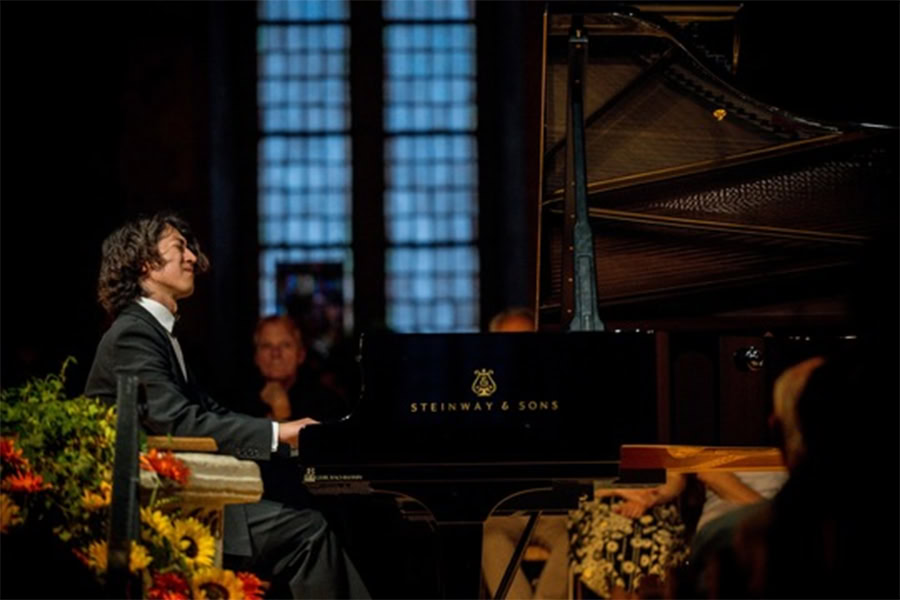
Manoush Toth (Image: FHNW)

Manoush Toth completed her Bachelor's degree in piano performance in the classes of Zoltán Fejérvári and Claudio Martínez Mehner at the Basel University of Music FHNW and is currently continuing her studies in the Master's Performance program in the class of Claudio Martínez Mehner. She received a prize for the best BA recital for her bachelor's degree in 2025.

Founded in 1982, the competition Eurovision Young Musicians (EYM) is organized by the European Broadcasting Union (EBU) for young Europeans between the ages of 12 and 21. It is held every two years and broadcast on television. In contrast to the Eurovision Song Contest and Junior Eurovision Song Contest, the Eurovision Young Musicians is decided by an international jury of experts.

Addendum on April 21, 2026: Link to the SRF press release of April 13

Jinhee Kim takes over a guitar class at the ZHdK

From the coming fall semester 2026, Korean Jinhee Kim will be teaching guitar as a major subject at Zurich University of the Arts.

Jinhee Kim (Image: ZHdK)

Jinhee Kim was born in Seoul and studied at the Musikhochschule Freiburg and the Musikhochschule Basel. In addition to her concert exam, she completed two master's degrees with top marks (Master Performance, Master Music Pedagogy).

Her work as a teacher also led her to study music physiology at the Zurich University of the Arts. There she acquired extensive knowledge of functional anatomy and brain physiology in connection with music-making with a Diploma of Advanced Studies in Music Physiology. She has won numerous international competitions and has been a professor of guitar at the Trossingen University of Music since April 2021.


.

Finnish study on everyday music listening

With the help of a research app, a Finnish team wants to investigate how teenagers and young adults across Europe listen to music to regulate their emotions.

MuPsych« research app. Participants are still being sought for the study. (Image: Munich University of Music and Performing Arts)

The «Music & Emotions» project is part of the study Musiconnect: Music and emotion regulation at the University of Jyväskylä in Finland and investigates listening to music in everyday life and its connection to emotions and well-being. With the help of the cell phone app MuPsych musical, individual and situational factors that influence this phenomenon are identified. Data is being collected across Europe. The partner in Germany is the University of Music and Performing Arts Munich (HMTM)

The study will run until the end of 2026 and the anonymized data will be used to publish a large international comparative study as well as detailed country-specific sub-studies. The first results will already be visible this year, including in a leading peer-reviewed journal, flanked by national sub-studies in relevant journals and at the Musiconnex Conference in Finland. The research project is supported by the European Research Council ERC and the Research Council of Finland.

We are still looking for participants. Spotify memberships will be raffled among them, and everyone will receive a personal music listening diary with curated music recommendations.

Access to the app: https://musicstudy.eu/de/


Austria gets its first music strategy

Now that the Austrian National Council has approved the development of a national music strategy, the first steps have been taken.

(from left to right): Eva-Maria Bauer, Günther Wildner, Tyma Kraitt, Tatjana Domany, Stefan Hahn, Harald Huber (Photo: Sabine Walter)

The Austrian Music Council (ÖMR) hosted an information and discussion event on the «Music Strategy for Austria» as part of its General Assembly on February 26, 2026. The meeting was preceded by a working meeting with the Austrian music universities, where the burning issues of teacher shortages, teacher training, curricula, teacher training courses and plans to reform school teaching were discussed.

The current process for an Austrian music strategy is being coordinated by the Federal Ministry of Housing, Arts, Culture, Media and Sport (BMWKMS). It is based on a unanimous resolution passed by all parties in the National Council in July 2025. The process began in fall 2025 with a broad-based online survey in which 6,000 music professionals took part. In addition, five stakeholder workshops have been held since the beginning of 2026 to consolidate and validate the survey results.

The topics of the workshops were training, professionalization and talent development, live events, creation & production, media and national visibility as well as distribution & marketing. A further workshop on AI & streaming is being planned. Cross-cutting topics such as inclusion in the music sector will also be discussed in more detail. The final music strategy is to be presented in fall 2026.

Paavo Järvi takes over the London Philharmonic Orchestra

Paavo Järvi has been appointed Chief Conductor and Artistic Advisor of the London Philharmonic Orchestra for the 2028/29 season. He succeeds Edward Gardner in this position.

Paavo Järvi (Picture: Kaupo Kikkas)

With a contract initially limited to five years, Järvi's appointment marks an important new phase for the orchestra, which will celebrate its centenary in 2032, according to the press release.

Paavo Järvi has been Music Director of the Zurich Tonhalle Orchestra since the 2019/2020 season and until 2029. He studied percussion and conducting in his home town of Tallinn. In 1980, the whole family emigrated to the USA. He continued his studies with Leonard Bernstein in Los Angeles. In 2001, he became chief conductor in Cincinnati, where he still maintains links today as Music Director Laureate.

­

Mojca Lavrenčič wins La Maestra 2026

The Slovenian conductor Mojca Lavrenčič, who is currently studying with Andrea Marcon at the Schola Cantorum Basiliensis, has won the La Maestra competition in Paris.

Mojca Lavrenčič (Image: Darja Stravs Tisu)

Mojca Lavrenčič was born in Vienna in 1993 and grew up in Slovenia. She studied conducting at the University of Ljubljana with Marko Letonja and gained her first professional experience at the SNG Opera and Ballet Ljubljana, where she assisted guest conductors and conducted opera and ballet productions. To deepen her artistic approach, she is continuing her training in Switzerland with Andrea Marcon at the Schola Cantorum Basiliensis, where she is refining her interpretative voice in a stimulating international environment.

The international conducting competition La Maestra was launched in 2019 by the Philharmonie de Paris and the Paris Mozart Orchestra. The competition is complemented by an academy that provides professional support to the prizewinners for two years. It is co-directed by Claire Gibault (Artistic and Musical Director of the Paris Mozart Orchestra) and Olivier Mantei (General Director of the Philharmonie de Paris).

Despite progress, writes the competition, the proportion of women at the helm of permanent orchestras is still very low. While only 4.3 percent of orchestras worldwide were led by women in 2018, this figure is now only 8 percent. In France, the number of women at the helm of permanent orchestras rose from 2.7% in 2019 to 12.5% in 2023: a spectacular leap, but we are still a long way from equality.

Bach Foundation St. Gallen honored with Leipzig Bach Medal

The City of Leipzig awards its 2026 Bach Medal to the J. S. Bach Foundation St. Gallen

Johann Sebastian Bach monument in Leipzig. Photo: SMZ/ks

With this award, the city of Leipzig is honoring «a long-term project that is unique in the international cultivation of Bach», according to its press release: since 2006, the foundation has been pursuing the goal of performing the complete vocal works of Johann Sebastian Bach in monthly concerts. The award will be presented as part of the Leipzig Bach Festival 2026.

For twenty years, the foundation's choir and orchestra have set the highest artistic standards under the direction of Rudolf Lutz, the city of Leipzig continues. With this consistently long-term project, the foundation has set standards in the mediation and performance of Bach's vocal music. The combination of historically informed performance practice, a scientifically sound introduction to the work and modern media dissemination has made the St. Gallen-based company a model of sustainable music education in the 21st century.

The Bach Medal of the City of Leipzig has already been awarded to Marcel Ponseele (2025), Andreas Staier (2024), the Thomanerchor Leipzig (2023), Sir András Schiff (2022), Hans-Joachim Schulze and Christoph Wolff (2021), among others, for special services to the cultivation of Bach's works, Angela Hewitt (2020), Robert Levin (2018), Masaaki Suzuki (2012), Herbert Blomstedt (2011), Philippe Herreweghe (2010), Nikolaus Harnoncourt † (2007), Ton Koopman (2006), Sir John Eliot Gardiner (2005) and Helmuth Rilling (2004).

Music sales in Germany increased slightly in 2025

In Germany, music worth EUR 2.42 billion was sold in 2025, 2.3% more than in 2024.

(Image: Petr Kratochvil/publicdomainpictures.net)

According to the statement from the German Music Industry Association, the figures relate to retail revenue from the sale of music on CDs, vinyl LPs and downloads as well as in the streaming sector. As in previous years, music streaming was again the driver of growth in 2025, with retail sales growing by 4.1 percent to 84.4 percent of industry revenue. This means that streaming alone generated more than 2 billion euros in revenue. The split between physical (CDs and vinyl) and digital (streaming and downloads) business in Germany is now 14.2 percent to 85.8 percent.

The physical market segment declined by 5.9% overall and generated 345 million euros. Within this segment, vinyl was also able to grow last year (up 2.8%); however, with a 44.2% share of the physical market, vinyl has not yet caught up with CDs despite a decline of 11.3%. The CD was therefore still the second-strongest sales segment in 2025.

Original article:
https://www.musikindustrie.de/presse/presseinformationen/musikindustrie-in-deutschland-2025

Lufthansa changes rules for instruments from March

After violinist Caroline Widmann was forced to carry her Guadagnini violin in the cabin of the plane without a case, Lufthansa is now changing the rules for instruments as hand luggage.

Lufthansa check-in Frankfurt (Image: Wikimedia Commons, Public domain)

According to several international press reports, Widmann was forced to carry her violin, which cost millions, unprotected in the cabin on a Lufthansa flight from Helsinki to Leipzig last November. The ground staff had forbidden her to take the violin case with her, in accordance with the rules, because at 80 centimetres long it did not comply with the permitted dimensions. Previously, Lufthansa staff had always been accommodating.

Following discussions with the musician, Lufthansa (and with it Swiss) is now changing the rules for musical instruments in the cabin from March. The height plus width plus depth of the packed instrument may now not exceed 125 centimeters in total. This means that instruments that are longer than the regular maximum of 55 centimeters can also be taken on board.


Zoppi succeeds Mettler in Chur

Romano Zoppi will head the City of Chur's cultural department from April 2026. He succeeds Helena Mettler in this position. The position of project manager at the cultural department will be advertised.

Romano Zoppi (Image: City of Chur)

Romano Zoppi began his professional career with an apprenticeship as a businessman. He subsequently completed various training and further education courses and graduated with a Master of Advanced Studies in Cultural Management from Lucerne University of Applied Sciences and Arts in 2014. He is already working as a project manager for cultural strategy at the city's cultural department and has implemented various complex and cooperative projects such as the development of the cultural space network, the cultural portal chur-culture.ch or the renewal of the city's cultural strategy.

From 2016 to 2025, he became known as the initiator and chairman of the Churer Werkstatt. He was also active first as co-project manager and later as a board member of Long Saturday and as owner of the music agency Sonic Service GmbH.

Helena Mettler will leave the city at the end of March, but will continue to support the cultural department in selected projects until summer 2026. The position of project manager at the cultural department will be advertised.

Kaisa Žigurs wins French harp competition

Kaisa Helena Žigurs, who studies in Zurich with Sarah O'Brien, won first prize at the 15th Concours Français de la Harpe in Limoges.

Kaisa Žigurs (Image: Kaupo Kikkas)

This year, Kaisa Helena Žigurs from Estonia unanimously won first prize in the highest category, Excellence (level 12). Žigurs is currently studying at the Zurich University of the Arts with Sarah O'Brien, having graduated from the Estonian Academy of Music and Drama in 2025. As winner of the first prize, Žigurs will give a concert at the Festival International Harpe en Avesnois and an opening concert at the next Concours Français de la Harpe.

Anna-Helena Hamann (Finland) and Denitza Dimitrova (Bulgaria) also won first prize in the highest division. Siyu Chen (China) won second prize, Anastasiya Uvarava (Belarus) and Meret Maria Meier (Switzerland) third prize.

The 15th edition of the Concours Français de la Harpe took place from February 13 to 15, 2026 in Limoges, France. The international competition comprised 12 repertoire categories. The jury members of this year's competition included Isabelle Perrin, Dominique Lacôte, Sylvain Blassel and Véronique Chenuet (who organizes the competition together with Marie-Monique Popesco).

Urbański's contract in Bern is extended until 2032

The Bern Symphony Orchestra is continuing its collaboration with Chief Conductor Krzysztof Urbański for a further five seasons until 2032.

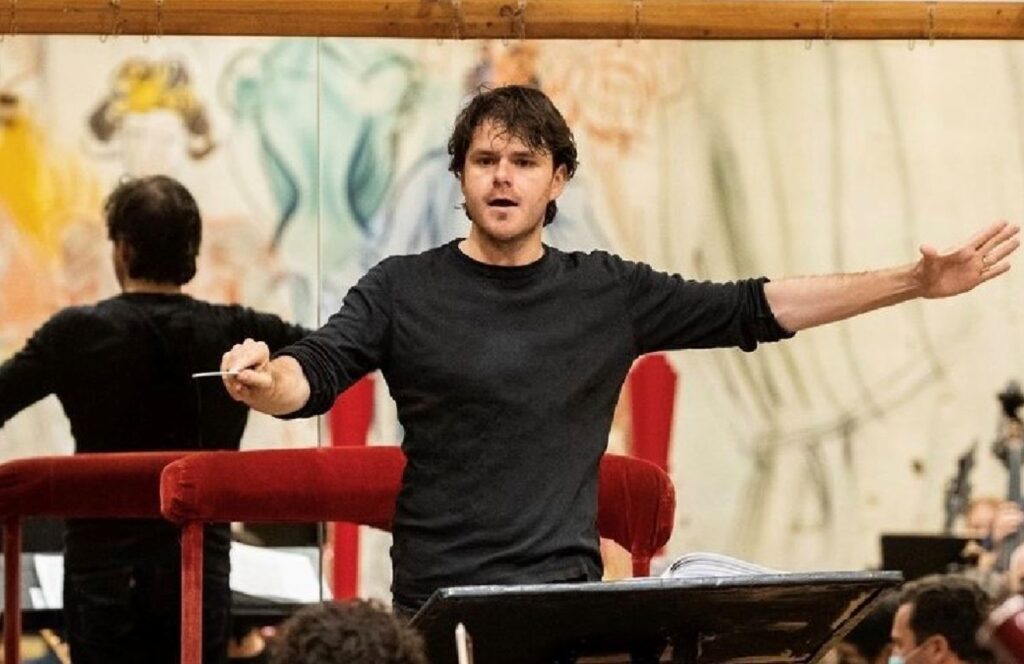
Krzysztof Urbański (Image: Christian Kaufmann)

Krzysztof Urbański has been Chief Conductor of the Bern Symphony Orchestra since the 2025/26 season. He is also Music Director and Artistic Director of the Warsaw Philharmonic Orchestra and has been Principal Guest Conductor of the Orchestra della Svizzera Italiana since 2022.

Under the direction of Urbański, the Bern Symphony Orchestra has continuously expanded its artistic and thematic range, the ensemble writes in its press release. Well-known works from the late Romantic repertoire are juxtaposed with combined rediscoveries and new discoveries as well as exciting works from classical modernism and the present day. In addition, the orchestra will continue to expand its international touring activities together with Krzysztof Urbański in the coming seasons.

Valais funding model is a success

The canton of Valais draws a positive balance with trilateral pilot agreements that were concluded with the Ernen Music Village Association, among others.

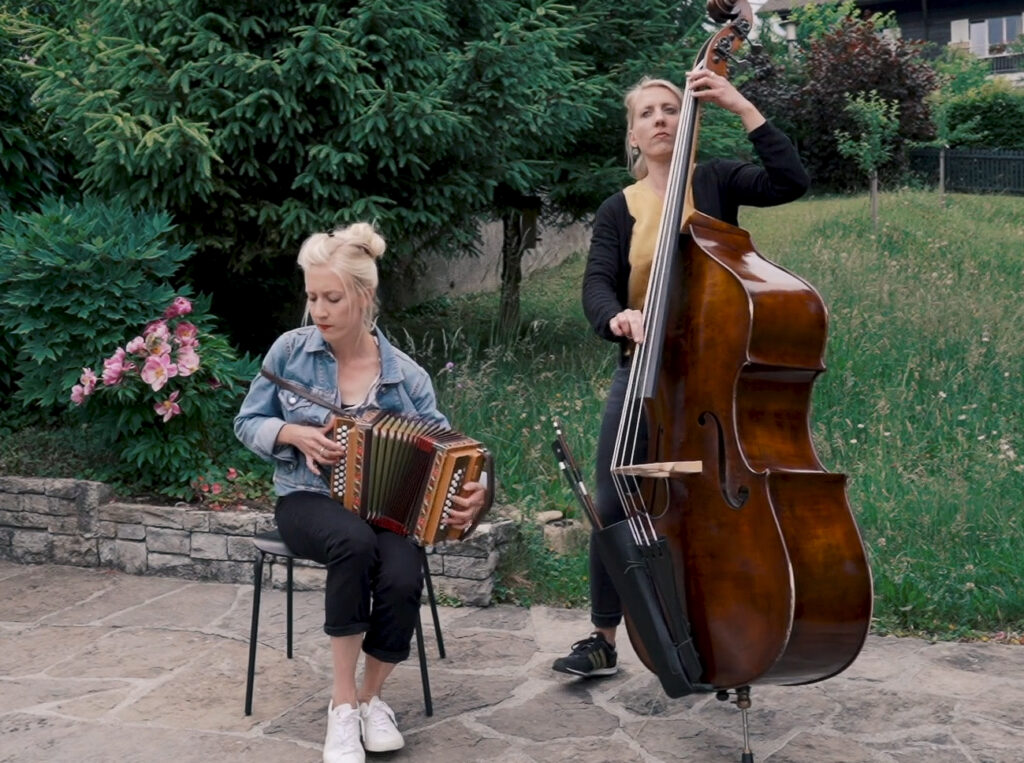
The double bass player Jordi Carrasco Hjelm in Ernen. Photo: Music Village Ernen

The funding model, which brings together the canton, the host municipalities and the cultural institutions concerned, has «proven its validity in terms of funding stability, medium-term development and administrative simplification», writes the canton. An expansion to other structures is planned from this year.

The trilateral agreements between the canton, the municipalities and cultural institutions launched as a pilot project in 2023 are intended to strengthen cultural institutions in the long term by securing them a fixed, predictable funding framework. This is based on clear objectives and offers measurable indicators such as artistic activity, attendance figures, cultural mediation, working conditions, equal pay and sustainability. According to the canton, the controlling carried out after three years has shown clear positive effects.

More info:
https://www.vs.ch/de/web/communication/e/com-et-media/10108/45375476

Guidelines for diversity-oriented cultural promotion

Kultur Stadt Bern has published a «Guide to diversity-oriented cultural promotion». It summarizes the most important findings on diversity-oriented opening.

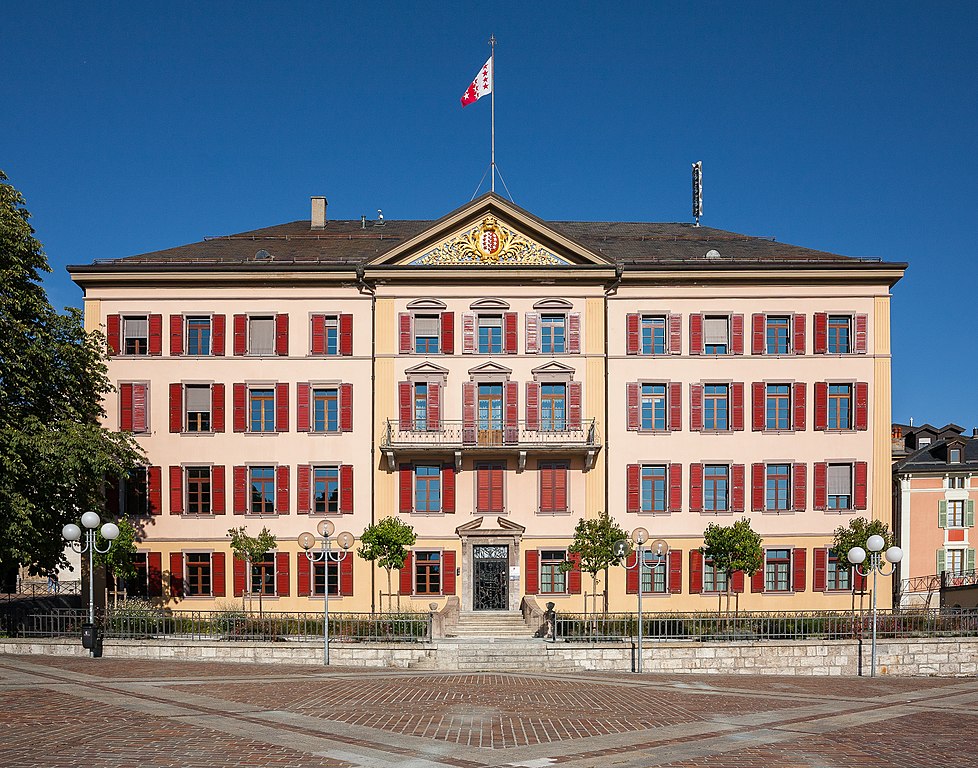
City of Bern (Image. Wikipedia/Public Domain)

According to the press release, Kultur Stadt Bern is guided by the principle of participatory justice. In a city with a diverse population, cultural promotion services should be as widely accessible as possible and reflect the reality of this diversity. The guidelines record the knowledge gained and should also be able to be used by other public and private cultural funding bodies. The main focus of the guide is on project funding and working with commissions and juries.

In light of social change, the city's cultural promotion department initiated a multi-year transformation process in 2020. Based on the key question «What can we do to promote diversity?», the attitudes and working methods of both the Culture Department and the commissions were analyzed and measures were developed and implemented.

These guidelines reflect the knowledge and experience gained by Kultur Stadt Bern. The reflection process was accompanied by external experts Anisha Imhasly and Rahel El-Maawi, who also wrote the guidelines on behalf of Kultur Stadt Bern. The process was financially supported by the Swiss Arts Council Pro Helvetia as part of the «Intercultural Society» initiative (now Innovation and Society) from 2020 to 2024.

Link to the guide:
https://www.bern.ch/mediencenter/medienmitteilungen/aktuell_ptk/neuer-leitfaden-fuer-eine-diversitaetsorientierte-kulturfoerderung/dokumente/leitfaden-diversity.pdf/download

The impact of new classical music concert formats

A team from the Max Planck Institute for Empirical Aesthetics (MPIEA) and the University of Cologne has shown that different concert formats influence the experience, behavior and physical reactions of the audience.

(Image: Pixnio/Marko Milivojevic)

A total of 802 people took part in the study, which consisted of eleven chamber music concerts with the same three string quintets, but with different format components. Questionnaires, physiological measurements and cameras were used to record individual experience and behavior. Among other things, the team measured the heart rate, evaluated emotions that were shown through facial expressions and recorded the evaluation, community experience and other dimensions of experience.

The study is part of the comprehensive research project «Experimental Concert Research», which aims to gain insights into the musical experience at concerts. With the results of several experimental live and streamed concerts, the team aims to establish a larger, empirically supported model of the music experience in concert.

More info:
https://www.aesthetics.mpg.de/newsroom/news/news-artikel/article/wie-konzertformate-das-musik-erleben-beeinflussen.html

get_footer();