For the first time, the Office of Culture of the Canton of Bern is inviting applications for the 2021 residencies abroad across all disciplines. This means that artists can now apply for a scholarship abroad every year instead of every five years, depending on their creative period and life situation.
Music newspaper editorial office
(translation: AI)
- Feb 04, 2020
Photo: MEAX on Unsplash
The 2020 call for applications (2021 residency) is aimed at professional Bernese artists with a convincing track record and of all ages in the fields of design, art, photography, architecture, literature, music, theater and dance. This does not include filmmakers, for whom two further education grants are offered each year.
The Canton of Bern has studios and workshops in New York, Berlin (every two years) and Paris. The scholarships for several months abroad include living and working space as well as a contribution towards living and travel expenses. The artists are given the opportunity to work in a different context for several months, gain new impetus and network with the respective local cultural scene and often also internationally.
A jury made up of delegates from the cantonal and intercantonal cultural commissions and the expert committee of the Bernese Design Foundation evaluates the applications. The detailed call for applications provides information on the application criteria and admission requirements.
From April 1 to 4, 2020, Europe's largest trade fair for the music industry will celebrate its 40th anniversary. Thanks to the wide range of accompanying events, it is a lively meeting place for the music scene.
Music newspaper editorial office
(translation: AI)
- Feb 03, 2020
Messe Frankfurt Exhibion GmbH / Pietro Sutera,Messe Frankfurt Exhibion GmbH / Pietro Sutera,Messe Frankfurt Exhibion GmbH / Petra Welzel,Messe Frankfurt Exhibion GmbH / Jean Luc Valentin,SMPV
In 2020, the Music Fair the best possible conditions for professional exchange. On the first two days of the trade fair (Wednesday, Thursday, April 1 and 2), trade visitors will be the focus of the event. On Friday and Saturday (April 3 and 4) there will be special tickets for private visitors. On these days, the Musikmesse Plaza pop-up experience market will enter its second round as an additional offer. Here, end consumers interested in music can buy instruments, sound carriers and lifestyle products directly and take part in a packed entertainment program. Also on Friday and Saturday, the Community Hub "Home of Drums" will premiere on the exhibition grounds. The event combines product presentations by key players in the drums sector with knowledge transfer, networking and performances by well-known drummers. The accompanying Musikmesse Festival is also celebrating a small anniversary in its fifth edition. From March 31 to April 4, it offers concert highlights on the exhibition grounds and throughout Frankfurt and also invites companies to present their artists and brands.
Delivery of free tickets
Readers of the Swiss Music Newspaperwho would like to visit Musikmesse 2020 should send an e-mail with the subject "Musikmesse 2020-Schweizer Musikzeitung" to the following e-mail address by March 19, 2020: sk@tf-solutions.ch (Contact person: Ms. Susanne Kiene). You will receive admission vouchers - while stocks last.
This anniversary marks four decades of partnership between Messe Frankfurt and the international music industry. 2020 marks an important evolutionary step for Musikmesse. "We are creating an overall event that activates all participants in the value chain - from instrument manufacturers to concert promoters, from dealers to music lovers, from long-standing industry experts to interested newcomers. More than ever, we are relying on attractive content that we create together with exhibitors, organizations from education and research as well as think tanks and innovation leaders," says Michael Biwer, Group Show Director of the Entertainment, Media & Creative Industries division of Messe Frankfurt Exhibition GmbH.
A key aim of the 2020 trade fair concept is to give companies of all sizes and sectors a home at the event. The spectrum of exhibitors who have already announced their participation in Musikmesse ranges from international key players to small manufacturers and hidden champions, including AER Music, APC Instrumentos, Aquila Corde, Arnold Stölzel, Beltuna, Bosporus Cymbals, C.A. Götz, Cooperfisa, D'Addario, Dörfler, Enrique Keller, Franz Sandner, Godin, Hal Leonard, Kawai, Miraphone, Music Distribution Services, Musictech, PetzKolphonium, Pirastro, Saga Musical Instruments, Schilke, Suzuki and Thomastik Infeld.
The two-day special event "Home of Drums" will also feature numerous important brands in the drums sector, including DW, GEWA, Gibraltar, Gretsch, Latin Percussion, Mapex, Millenium, Natal, Paiste, PDP, Pearl, Protection Racket, Remo, Roland, Sabian, Sonor, Toca Percussion, Vic Firth, Yamaha, Zildjian and Zultan.
Networking & Education Area
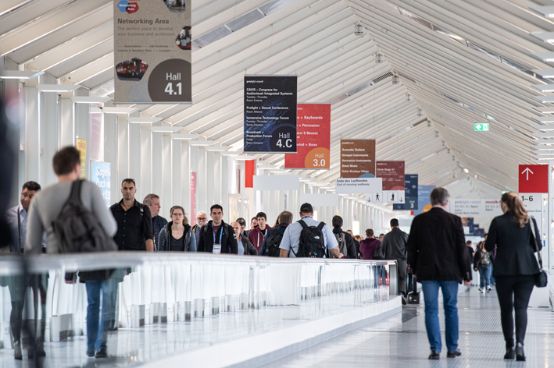
Once again, the Musikmesse will take place on the east grounds of Messe Frankfurt. Hall 3 is the focal point of the event. Level 3.0 presents innovations in the fields of pianos and keyboards, drums and percussion, electric guitars and basses as well as woodwind and brass instruments. Level 3.1 is home to acoustic guitars, string and harmonica instruments as well as publishers and associations.
Messe Frankfurt Exhibion GmbH / Pietro Sutera
Hall 3
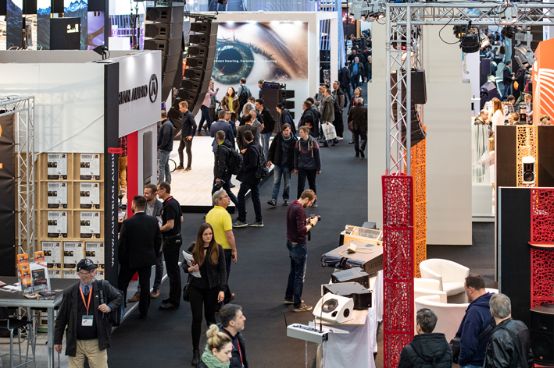
In addition, the "Networking & Education Area" will be a central meeting and further education platform. It offers specialized lecture stages on topics related to music trade and marketing (Networking Forum) as well as music education and therapy and cultural policy topics (Education Forum). Trade fair participants will also find a lounge for professional discussions with business partners, speakers and industry experts. Companies that wish to participate in this setting and do not wish to present products can show their presence in this area with a reduced stand package. In addition, various all-inclusive packages are available for fully equipped exhibition stands in the exhibition halls - so even small companies and start-ups can take part in the event with little cost and organizational effort.
Circle Stages and other topics
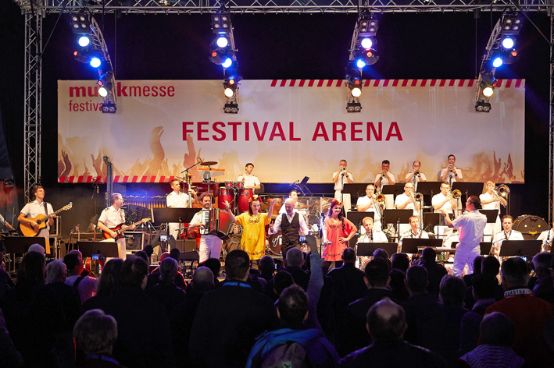
With the Circle Stages, Messe Frankfurt is continuing another successful premiere from last year's Musikmesse. On all days of the fair, visitors will experience a packed program of workshops, product demos and live performances, which will be organized together with exhibitors. The round stages are equipped with state-of-the-art event technology and are located in direct proximity to the exhibition areas on hall levels 3.0 and 3.1. Exhibitors are also invited to help shape the program and showcase their brands in and around the Festival Arena on the outdoor area.
Messe Frankfurt Exhibion GmbH / Petra Welzel
Circle stage 2019
In recent years, Musikmesse has already opened up to new subject areas and will continue to do so in 2020. The program highlights of Musikmesse include: - German Musical Instrument Award with festive award ceremony - European Songwriting Awards: The live final at Musikmesse - Class Music Day: Lecture series especially for music teachers - Frankfurt Music Prize for outstanding musical personalities - International Vintage Show: Guitars with tradition and history - Music Tech Fest: Innovation Lab for creative developers - Music4Kids: a space for young musical explorers - Musikmesse Campus: Experts coach the professionals of tomorrow - Musikmesse International Press Award for the best products of the year - SchoolJam: Musikmesse is looking for "Germany's best school band" - New Therapy Instruments" competition for international instrument makers, therapists and artists
Musikmesse Plaza: Pop-up experience market
Under the name "Musikmesse Plaza", content for an experience-oriented B2C target group will be bundled on April 3 and 4 in parallel with the other offerings: from musicians of all levels of knowledge, collectors and instrument lovers to fans and newcomers. The centerpiece is the pop-up market in Hall 4.1, where suppliers can sell their products directly to end consumers. Visitors can also look forward to an extended event program with a festival atmosphere on the outdoor area. Music lovers can discover some treasures at a huge record and CD exchange. The special International Vintage Show exhibition will feature an extended program including a Fender and Gibson workshop and a Vintage Guitar Party with star guitarist Thomas Blug as musical director. The Music4Kids area is also open to families.
During Musikmesse Plaza, the international drum industry is initiating a meet-up concept for drummers and percussionists from all over the world with the "Home of Drums". The event focuses on practical use cases and personal interaction between manufacturers and musicians. Visitors experience the latest innovations from top brands and can also compare drum kits from different manufacturers in various categories at mixed test stations. Numerous exhibitors will bring themselves and their artists directly into the event program. On the accompanying online platform homeofdrums.com, drum enthusiasts are invited throughout the year to network, take part in video lessons with well-known artists and keep up to date with the event.
Musikmesse Festival: cultural and concert highlights
After the record-breaking 2019 event with over 100 concerts in around 60 locations, the fifth edition of the Musikmesse Festival is casting its shadow ahead. This year, from March 31 to April 4, it will once again bring great concerts to the city and event highlights to the Frankfurt exhibition grounds. There are countless opportunities for companies to reach an urban, music-loving target group and promote their brand. Messe Frankfurt offers support in organizing an event on the grounds or in one of the participating clubs or can arrange a local promoter. Companies can also sponsor events and stages. Visitors to Musikmesse will receive a festival wristband with which they can attend all events free of charge or at a reduced price.
Messe Frankfurt Exhibion GmbH / Jean Luc Valentin
Festival Arena 2019: Big Band of the German Armed Forces
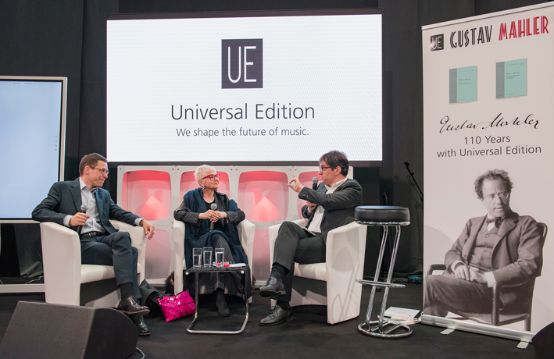
Rediscovered Ammann Mass
On the occasion of the canonization of Niklaus von Flüe, a twelve-part mass by Swiss composer Benno Ammann was premiered in Rome in 1947. The work, which subsequently fell into oblivion, was rediscovered by the Balser Madrigalisten.
Music newspaper editorial office
(translation: AI)
- Feb 03, 2020
Benno Ammann comes from Gersau/SZ. Photo: JoachimKohlerBremen/wikicommons
Ammann's mass (1904-1986) was premiered in Rome on the occasion of the canonization of Niklaus von Flüe. According to the Basel madrigalists, its significance is "extremely highly valued both in Switzerland and internationally and has been discussed in specialist journals". After the discovery of Frank Martin's Mass, this is the most significant find of recent years in terms of mass settings in Switzerland in the mid-20th century.
The Basler Madrigalisten are now realizing the Swiss premiere of Ammann's Missa "Defensor Pacis" ad 6-12 voces inaequales in honorem Sancti Nicolai Helvetii Eremitaewhich, in the Palestrina style, is regarded as the high point of his church music.
Anyone who has completed a doctorate in the last two years and has a Swiss connection can apply to the Swiss Music Research Society for the Handschin Prize 2020 until March 20.
Music newspaper editorial office
(translation: AI)
- Jan 31, 2020
Since 2009, the Swiss Music Research Society (SMG) has awarded the Handschin Prize for young musicologists every two years. The prize money amounts to CHF 3000. Doctoral students who completed their doctorate between January 1, 2018 and December 31, 2019, including the defense, and who - have Swiss citizenship or - have completed a doctorate at a Swiss institution or - have been employed at a Swiss musical institution with a workload of more than 25% for more than one year or - make a relevant contribution to Swiss music history with their dissertation; citizenship and academic affiliation play no role here.
Applications will be accepted by the SMG office until March 20, 2020; electronic applications can be sent to the secretary Benedict Zemp (benedict.zemp@musik.unibe.ch) should be addressed. The award ceremony will take place on September 17, 2020 as part of the first study day of the SMG fThe event is held for young scientists. The application must be accompanied by: - Dissertation (electronic) - Letter of motivation - Curriculum vitae
Sonata for Piano No. 28
Beethoven every Friday: to mark his 250th birthday, we take a look at one of his works every week. Today it's his A major Piano Sonata from 1815/16.
Michael Kube
(translation: AI)
- Jan 31, 2020
Elementary particle physics has its standard model, which is used to describe the important interactions. In mathematics, on the other hand, standard deviations are used to determine the distance from a mean value. And in music, there is the sonata form. Coined by Adolph Bernhard Marx in the middle of the 19th century and still preached in schools today, it is all too easy to forget that this model only works in a few, usually particularly boring cases without exception. There is perhaps only one reason why terms such as exposition, transition, secondary theme and final group are still in use and seem indispensable: they serve as abstract ciphers that can be used to describe the characteristics of a composition - at least most of the time.
Unsurprisingly, Beethoven composed his Piano Sonata op. 101 "differently" in 1815/16. He breaks through the still young conventions of the genre on several levels, so that even Marx must dryly state that here "the name sonata is used for a composition that differs significantly from the usual sonata construction" (Beethoven. Life and work2nd ed. 1863, vol. 2, p. 216). First of all, this concerns the sequence of movements with a formally changing first movement, a lively march and a slow movement which seems like a large-scale introduction to the finale (including a reminiscence of the first movement).
This also applies to the structure of the development - with elements of fantasy, recitative or toccata - as well as to the texture with its distinctly contrapuntal procedures: The trio of the march is laid out as a canon, the development section of the finale as a broadly dimensioned fugue. Furthermore, Beethoven opens up a completely new expressive horizon with the German-language tempo and character markings, differentiated in detail, which, like the cyclical structure of the work, points far beyond the year of its composition.
Since January 1, 2020, the works of Richard Strauss have been in the public domain. The Saxon State and University Library Dresden (SLUB) is therefore digitizing extensive source materials on the composer's oeuvre and making them freely available online.
Music newspaper editorial office
(translation: AI)
- 30. Jan 2020
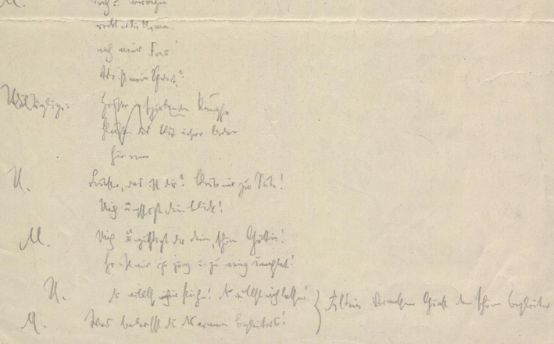
"Egyptian Helen", excerpt from the libretto draft. Picture credits see below,SMPV
The collection contains autograph sketches that have received little attention to date, including for the stage works Intermezzo, The Egyptian Helen and The Silent Woman. Strauss' letters to the General Music Director Ernst von Schuch and the Kapellmeister Hermann Kutzschbach can also be viewed. Alfred Roller's stage sketches and costume designs bring to life the stage action at the premiere of Der Rosenkavalier in Dresden.
Central sources are also the orchestral materials used since the premieres and first performances of ten stage works to date, including Salome, Elektra, Der Rosenkavalier, Die Frau ohne Schatten. These materials in the possession of the Staatskapelle Dresden were processed and published by the SLUB as part of the State Digitization Programme for Science and Culture of the Free State of Saxony.
Bettina Skrzypczak is awarded the Heidelberg Women Artists' Prize for the year 2020. The award ceremony will take place on February 19, 2020 as part of a Concert of the Heidelberg Philharmonic Orchestra. The award was established in 1987 and is the only prize in the world to be awarded exclusively to female composers. The prizewinners include Sofia Gubaidulina (1991), Younghi Pagh-Paan (1995), Olga Neuwirth (2008), Isabel Mundry (2011) and Chaya Czernowin (2016).
The concert on February 19 - with a repeat performance on February 20 - will feature the orchestral work Initial by Bettina Skrzypczak. It was premiered by the Orchestre de Chambre de Lausanne at the Festival Les Amplitudes in La Chaux-de-Fonds in 2007. Since then, it has been performed several times internationally, for example at the Warsaw Autumn Festival and the Biennale Musica in Venice.
Bettina Skrzypczak is Professor of Composition and Theory at the Lucerne School of Music. She has been involved in Swiss cultural life for many years; until 2016 she directed the Ensemble Boswil for contemporary music, and in 2015 she curated the Tage für Neue Musik Zürich. She is in demand as a juror, expert and guest lecturer at international composition courses. She is the author of numerous texts on contemporary music. She is currently working on an orchestral composition for the Lucerne Festival, which will be premiered by the Basel Sinfonietta on September 6.
Cantonal level tests in Lucerne
In February 2020, the Lucerne Cantonal Level Test will take place for the first time at Lucerne Music School. In this voluntary assessment, around 130 students will play or sing in front of a specialist and take a theory test.
PM/Codex flores
(translation: AI)
- 29 Jan 2020
(Image: City of Lucerne/zvg)
Comparable tests have already been successfully established in other cantons, writes the city of Lucerne. The Department of Primary Education of the Canton of Lucerne, the Lucerne Music School Association and selected instrumental and vocal teachers and music school directors have jointly developed a Lucerne version of these level tests.
The tests have six levels with increasing requirements. The first level can be passed after just a few years of lessons, while the sixth level is based on the admission criteria for professional studies at music colleges. Depending on performance, the next level can be passed every two to three years. The level tests help to make your own performance transparent, set goals and shape your personal learning plan.
At all levels, a compulsory piece is chosen from a compulsory list and a further piece is chosen by the student. There are also questions on music theory and rhythm as well as a written test. Instrumental and vocal teachers from music schools in the canton of Lucerne are on hand as experts.
The level tests are a further step towards regional cooperation in the field of music education in the canton of Lucerne. However, the focus is on the optimal promotion of pupils' musical development, which receives additional support through the level tests.
Public certificate concert The certificate concert will take place on Saturday, February 8, 2020. At this public event, selected participants with excellent performances will perform and all successful candidates will receive their certificate.
Certificate concert of the cantonal level test Lucerne
Saturday, February 8, 2020, 4 p.m. Südpol, Arsenalstrasse 28, 6010 Kriens, Great Hall Free admission Further information: www.musikschuleluzern.ch
Asuto Kitamura wins the Rahn Music Prize 2020
The auditions for the Rahn Music Prize took place at the ZKO House in Zurich from January 15 to 17, 2020. The jury awarded four of the eight finalists a prize each.
Music newspaper editorial office
(translation: AI)
- 29 Jan 2020
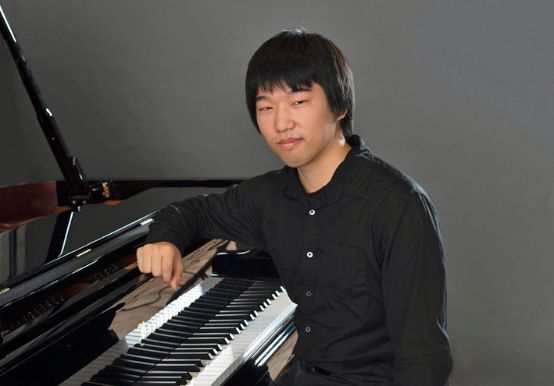
Asuto Kitamura. Photo: Rahn Music Prize / Priska Ketterer,Photo: Rahn Music Prize / Priska Ketterer,Photo: Rahn Music Prize / Priska Ketterer
Eight of the 29 piano students from Switzerland and abroad, who had to be enrolled at a Swiss music academy and born after September 1, 1992, qualified for the final. In the first and second rounds of the competition, they had to perform pieces from a repertoire defined by the jury (Benjamin Engeli, Adrian Oetiker, Walter Prossnitz and Oliver Schnyder).
The first prize (12,000 Swiss francs) went to Asuto Kitamura from Japan, born in 1996, and the second prize (8,000 Swiss francs) to Georgiana Pletea from Romania, born in 1993. The two third prize winners, Jérémie Conus from Switzerland, born in 1994, and Yilan Zhao from China, born in 1995, each received 4,000 Swiss francs.
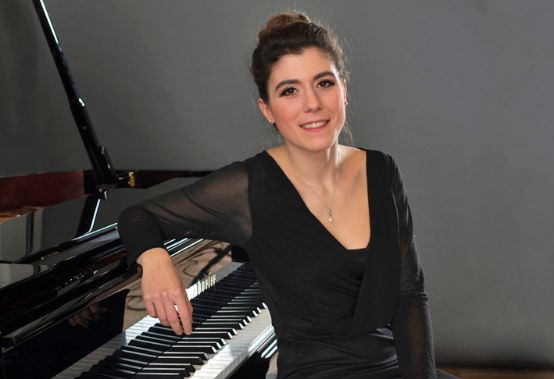
Photo: Rahn Music Prize / Priska Ketterer
Georgiana Pletea
Prizewinners' concert at the Tonhalle Maag
The first and second prize winners also receive a performance as a soloist at the Rahn Prizewinners' Concert with the Basel Chamber Orchestra under the direction of Andrew Joon Choi. The live video and audio recording of the concert will also be made available to you as a streaming link. The Rahn Prizewinners' Concert will take place on March 30, 2020 at 7.30 pm in the Tonhalle Maag in Zurich. Asuto Kitamura will perform Schumann's Piano Concerto in A minor op. 54, Georgiana Pletea Mozart's Concerto in D minor KV 466.
Following the resignation of the previous president Rolf Keller, the Aargau cantonal council has publicly advertised the presidency of the Aargau Board of Trustees. Daniela Berger from Baden has now been elected.
Music newspaper editorial office
(translation: AI)
- Jan 28, 2020
Daniela Berger. Photo: zVg
Daniela Berger was a member of Baden City Council from 2002 to 2015, where she headed the Culture / Children Youth Family department. Among other things, this period saw the establishment of new professional cultural funding in the city of Baden and the launch of the renovation and extension of the Kurtheater Baden. Daniela Berger is a founding and managing director of Badener Tanzcentrum AG, where she also works as a dance teacher.
The Aargau Board of Trustees promotes in particular professional contemporary art in or with a close connection to the canton. As an expert committee, the eleven-member board makes final decisions on funding contributions within the scope of the approved funds. The individual funding areas - including art in all disciplines, intangible cultural heritage, specific further training for artists, awards - must be adequately represented by the eleven members of the Board of Trustees.
Zimmermann receives Ernst von Siemens Prize
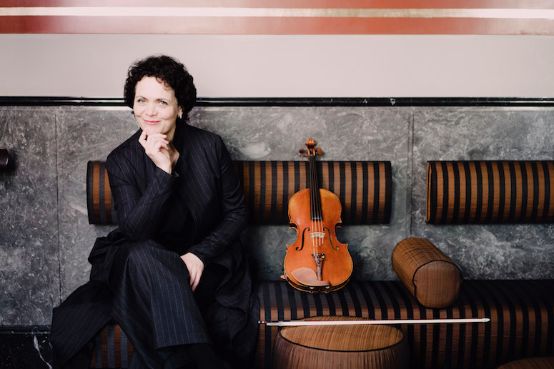
Also known as the Nobel Prize in Music, this year's award from the Swiss-based Ernst von Siemenes Music Foundation goes to violist Tabea Zimmermann.
Music newspaper editorial office
(translation: AI)
- 27 Jan 2020
Photo: Marco Borggreve
Tabea Zimmermann studied with Sandor Végh at the Mozarteum in Salzburg, among others, and won the international competition in Geneva in 1982. From 1987 until his death in 2000, she performed regularly with her husband David Shallon.
She lives in Berlin and has three almost grown-up children. Tabea Zimmermann has already held professorships at the Saarbrücken University of Music and the Frankfurt University of Music; since October 2002 she has been a professor at the Hanns Eisler University of Music. She has also aroused the interest of many contemporary composers for the viola and introduced numerous new works to the concert and chamber music repertoire.
The award from the Ernst von Siemens Music Foundation is endowed with 250,000 euros and is one of the most important music prizes in the world.
Lobbying and entrepreneurship as a role model
The Swiss Association of Music Schools hosted the 9th edition of the Forum Musikalische Bildung (FMB) at the Trafo Baden on January 17 and 18. The theme was "Paths to the goal - opportunities in a changing society".
Niklaus Rüegg
(translation: AI)
- 27 Jan 2020
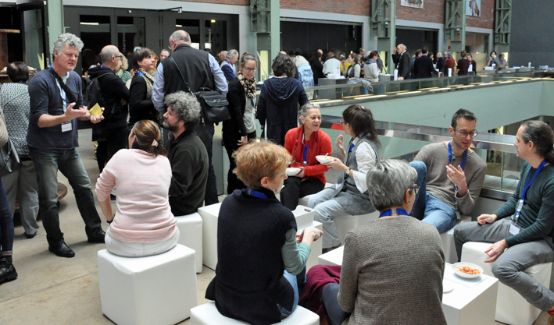
A lively exchange of ideas is central to the FMB. Photo: Niklaus Rüegg
The FMB has been held every two years since 2012 and is a firm fixture on the agenda of many education managers. Christine Bouvard Marty, President of the Swiss Music Schools Association (VMS), welcomed an impressive number of visitors this year, the majority of whom were present on both days: well over 400 day tickets were sold.
In 2007, the then President of the VMS, Hector Herzig, launched the FMB in order to anchor music education in society's consciousness as an important part of overall education. This concern culminated in the grandiose victory of the referendum on "Musical Education" in 2012. In the first five forums (2007 to 2012, initially still held annually), the political aspects of education were consequently given strong emphasis alongside music education and future topics. As the implementation of Article 67a of the Constitution "Music Education" is now based on the four-year cycle of the Culture Dispatch, the third period of which (2021-2024) is entering the decisive phase of parliamentary deliberation this year, it made sense to focus on politics this time too.
Human right to music
Markus Ritter, President of the Swiss Farmers' Association and CVP National Councillor (SG), gave an informative and entertaining presentation on the mechanisms of power in Bern. Under the title "Being politically successful - what you can learn from farmers", he presented a seven-point guide. As an extremely successful and self-confessed lobbyist, Ritter has repeatedly proven that his recipes lead to success: "Doing the right thing, at the right time, in the right form, with the right person, in the right place, is fundamental to success," he stated.
Max Fuchs, Honorary Professor of Education at the University of Duisburg-Essen, also has a wealth of political knowledge. Fuchs was awarded the Federal Cross of Merit for his achievements as former Chairman of the German Cultural Council and as a member of the Federal Youth Board of Trustees. In his lecture, he derived a "human right to music" in a scientifically stringent manner, based on the UN's "Universal Declaration of Human Rights" (1948).
David Vitali from the Federal Office of Culture (BAK), whose responsibilities include music education, stood in as speaker for the Director of the BAK, Isabelle Chassot, who was injured in an accident. Vitali explained the cultural message currently being discussed in parliament and highlighted the plans to implement the promotion of talented musicians. The speaker then took part in a "table ronde" chaired by Jodok Kobelt together with Christine Bouvard Marty, Max Fuchs and the Director of the Swiss Association of Municipalities, Christoph Niederberger.
Under the spell of digitalization
The FMB traditionally sees itself as a source of inspiration for future concepts in education. The second day began with Jan Rihak, start-up founder and developer of "Classtime", a web-based participation and examination platform for modern teaching that has already been successfully implemented in various countries. In his presentation "An entrepreneurial spirit with model character for educational institutions?", he presented learnings from the program development and offered them to the audience as an aid for possible projects of their own.
In place of Peter Röbke, who was ill, Michaela Hahn, Professor of Music School Research at the University of Music and Performing Arts Vienna, spoke on the topic of "Aspects of contemporary music education". She took a look at the roots and development of the music school movement up to the present day, outlined the social mission of music education institutions and presented some inspiring European model projects.
One of Germany's leading sociologists, Armin Nassehi, full professor at the Ludwig Maximilian University of Munich, spoke about the importance of digitalization in his presentation "Shaping education in the digital society". He discussed the question: "For which problem is digitalization the solution?" and placed this epochal achievement alongside other world-changing inventions such as the printing press or the steam engine. As in all areas of life, digitalization is also a fact of life in education. However, technology should be placed at the service of educational goals.
Well framed and good practices
As always, the musical program was of exquisite quality. The Quadrifoglio clarinet quartet had already won first prizes with distinction in the Thurgau and Swiss Youth Music Competitions (SJMW). These highly musical young people therefore also earned a special VMS prize. The second VMS prize went to the rock band Weird Fishes. They had already caused a sensation at the SJMW Jazz&Pop and blew the audience away with their progressive sound. The hit parade habitué Gustav brought the first day to a close. He has been known for years for his educationally motivated school concerts.
For the third time, the VMS held its competition for pioneering music school projects. This time there were no runners-up, but three first places: The "Ecole de Jazz et de Musique Acutelle" (EJMA) earned one of them for its "Département de musique assistée par ordinateur (MAO)" project, according to the expert jury chaired by Felix Bamert. The next prize went to the Swiss Jazz School Bern (SJS) for the project "iMPro-Webapp: The digital teaching tool for improvisation". The Audience Award went to the Olten Music School with "Open Music School Olten - More Space and Time for Music".
The next FMB will take place on January 21 and 22, 2022 in Baden.
25 Scottish songs
Beethoven every Friday: to mark his 250th birthday, we take a look at one of his works every week. Today it's his 25 Scottish Songs.
Michael Kube
(translation: AI)
- Jan 24, 2020
"To Scotland! When are we leaving? Do I still have time to finish my cigar?" Yes, there was time, including a steamer for which the important composer Jonathan Savournon had been sponsored to write two ship passages. No musical works by Savournon have survived, as he was inspired by the wonderful imagination of Jules Verne. With his novel of the Journey with obstacles to England and Scotland he is still at the cutting edge today, especially with his wise conclusion: "They touched everything, but in reality they saw nothing!" Incidentally, Verne was not inspired by Mendelssohn's journey to the Highlands or his Scottish Symphonybut an excursion of his own in 1859, which he undertook together with the French composer Aristide Hignard (1822-1898).
And Beethoven? It is well known that he never saw the Seine or the Firth of Forth. But then George Thomson (1757-1851) from faraway Edinburgh contacted him in 1803 after he had already ordered chamber music arrangements and concise introductions to Scottish tunes from Haydn, Pleyel and Koželuh: for voice(s), piano, violin and cello. By 1820, Beethoven had made almost 170 arrangements of this kind, and it can be assumed that it was not just a lucrative bread-and-butter business for him. These arrangements replace the series of original piano trios in his oeuvre, which came to an end in 1811 with the large-scale work in B flat major op. 97. Thomson's desire for instrumental preludes and postludes opened up a compositional space for Beethoven - a space which, however, remained misunderstood in Edinburgh. It was all the more clearly understood by an anonymous reviewer of the German edition published by Schlesinger in Berlin in 1822: "No dormant bard is awakened here from the ruins of a misty past: it is Beethoven's independent spirit that walks here over the hills of slumber in a land of his own dreams, which he calls Scotland." (General musical newspaper, Vol. 30, 1828, p. 284)
A study by the University of Basel shows that information about a work of art has no influence on the aesthetic experience. The results are also likely to be relevant for the experience of music.
Music newspaper editorial office
(translation: AI)
- 23 Jan 2020
Picture: SMZ,SMPV
The aesthetic experience is a complex interplay of modes of perception and cognitive processes: Features of the artwork such as the color scheme and the content depicted play a role, as do individual characteristics of the viewer such as their expertise and contextual factors - such as the title of a work of art.
Researchers at the University of Basel led by psychologists Jens Gaab and Klaus Opwis have investigated how contextual information about works of art influences aesthetic perception in a real exhibition situation. In particular, they investigated whether and how different types of information affect the aesthetic experience of museum visitors.
Previous research has shown that contextual information can significantly shape perception and experience - for example, if wine tastes better to consumers when its price is higher.
The deeper you delve into the topic of "city and country", the more the contrasts become blurred - also from a musical perspective.
SMZ
(translation: AI)
- 22 Jan 2020
Cover picture: neidhart-grafik.ch
The deeper you delve into the topic of "city and country", the more the contrasts become blurred - also from a musical perspective.
All articles marked in blue can be read directly on the website by clicking on them. All other content can only be found in the printed edition or in the e-Paper.
Focus
Hinterland and megacity The margins of society as places of creativity
Un creuset de vie culturelle en province Welcoming artists in residence is a great opportunity to nourish local cultural life and to encourage the creation of new works.
City vs. country? Event vs. culture! Subjective findings on urban and rural performance venues
By the people and for the people Entretien avec Michel Caspary, directeur du Théâtre du Jorat à Mézières
In town and country, you working people When the city dweller once stepped outside the gates, was he in the country?
Since January 2017, Michael Kube has always sat down for us on the 9th of the month in row 9 - with serious, thoughtful, but also amusing comments on current developments and the everyday music business.
Here you can download the current issue. Please enter the search term "e-Paper" in the print archive. The download is free of charge for subscribers.
All other interested parties will receive the PDF of the current issue (or an earlier issue) by e-mail. Costs: Fr. 8.-. Click here to order the e-paper.