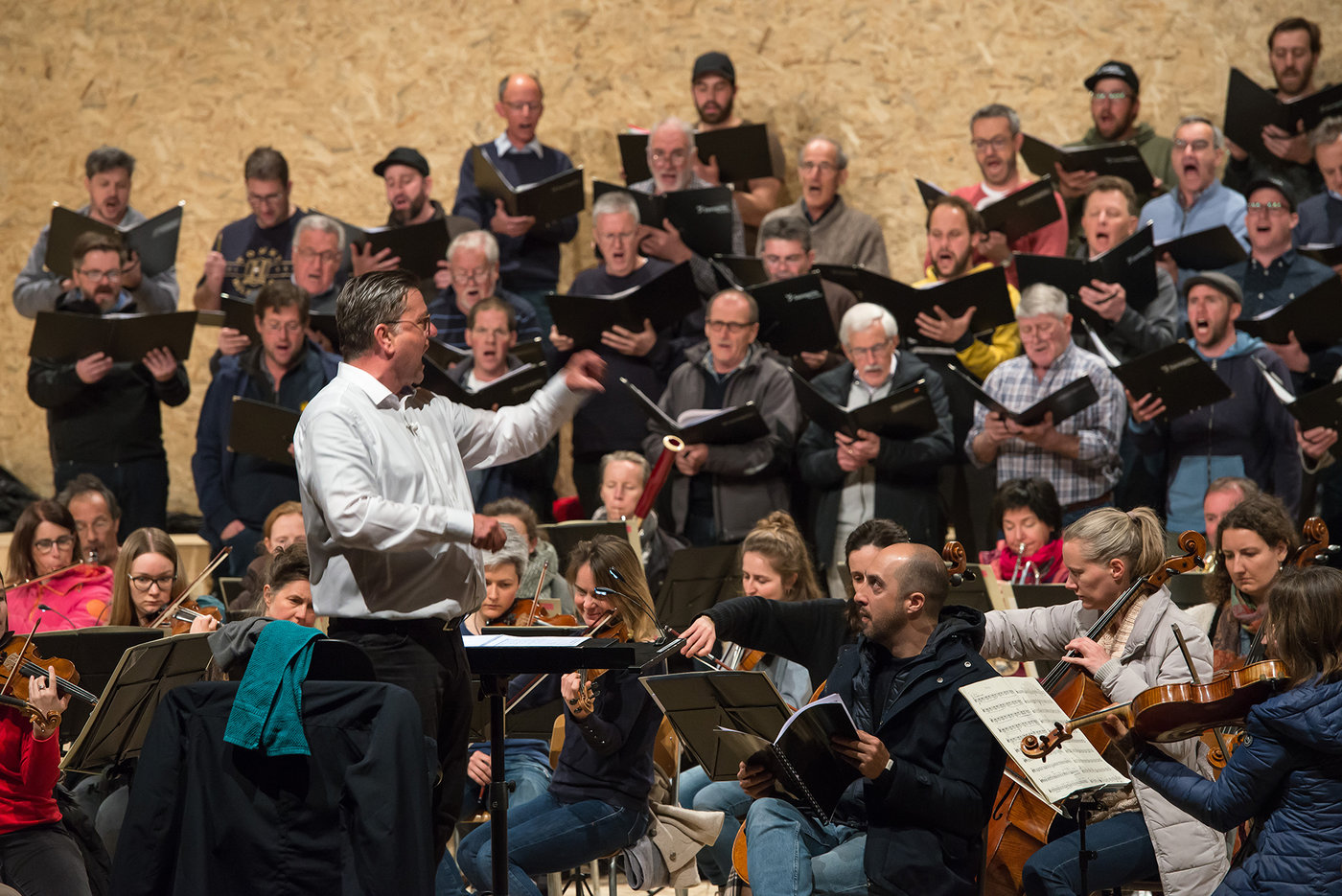
Musicians are often told that they should consider themselves lucky because they have the best job in the world. However, the reality is quite different.
SMM
(translation: AI)
- 27 Apr 2023
The narrative is persistent: the pandemic was a lean period for the "most professionally fulfilled people", the musicians. They were barely able to pursue their profession and, especially as freelancers, had to struggle with great existential fears. But now all that is over and the good life is returning to them. They can turn their wonderful hobby back into a profession, as people who - unlike those who are usually dying - can reconcile their personality with their everyday working life.
Music psychology has long doubted the idea that music strengthens positive emotions and helps us to have a fulfilling everyday life. The renowned music psychologist Patrik N. Juslin, who teaches at Uppsala University in Sweden, warned back in 2013 that we should be "more open to the possibility that much of what makes musical experiences unique is in fact non-emotional aspects", such as the intellectual interest in musical structure or form. The emotional impact of music is largely disconnected from this.
Current studies seem to indicate that the opposite of what previously seemed to be a cliché is actually true: making music not only means exceptional professional and social stress, which causes quite a few people to break down. It also seems to fascinate personalities who have a higher genetic risk of emotional imbalance. At least this is what studies conducted by an international research team with the participation of the Max Planck Institute for Empirical Aesthetics (MPIEA) in Frankfurt am Main suggest. Their conclusion: on average, musically active people have a slightly higher genetic risk of depression and bipolar disorder.
Music and mental health problems
According to the MPIEA, in 2019 the team was able to prove a connection between musical engagement and mental health problems for the first time in a large population study: Around 10,500 Swedish test subjects had provided information about both their musical activities and their mental well-being. In addition, the data was linked to the Swedish patient register so that psychiatric diagnoses could also be evaluated. It was found that musically active people actually reported depressive, burnout and psychotic symptoms more frequently than those who did not make music. The results were published in the open access journal Scientific Reports published.
The team subsequently expanded its research to include methods of molecular genetics. They discovered "that genetic variants that influence mental health problems and those that influence musical commitment overlap to some extent". Individual indicators for the genetic risk of mental illness and the genetic predisposition to musicality could be calculated.
The analysis of the data showed that people with a higher genetic risk of depression and bipolar disorder were on average more musically active, practiced more and performed at a higher artistic level. Interestingly, the MPIEA writes further, "these correlations occurred regardless of whether the individuals actually had mental health problems".
Flow experiences (states that are felt when you are completely absorbed in an activity) appear to play an important role in overcoming such predisposition-related psychological stress. According to the institute, initial results show that they can have a positive influence on the psyche, even when family and genetic risk factors are taken into account.
Literature
Patrik N. Juslin: "From every day emotions to aesthetic emotions: Towards a unified theory of musical emotions", Physics of Life Reviews 10 (2013), Elsevier.
Wesseldijk, L. W., Lu Y., Karlsson, R., Ullén, F., & Mosing M. A. (2023). "A Comprehensive Investigation into the Genetic Relationship between Music Engagement and Mental Health", Translational Psychiatry 13, Article 15. DOI: 10.1038/s41398-023-02308-6
Deepen experiences
The Entrada 2023, hundreds of classical music auditions, took place over the weekend of March 31 to April 2. The jazz and pop auditions followed on April 16. Those in Free Space and Composition will take place on the final weekend of May 18 in Lugano.
Heinrich Baumgartner
(translation: AI)
- 26 Apr 2023
Snapshot of the 7th Hirschmann master class under the direction of Philippe Racine 2021 at Villa Senar in Weggis. Photo: Ueli Steingruber
Various activities are planned under the heading "Follow-Ups" in order to deepen the competition experience of award winners. The weekend with hundreds of live performances and just as many consultations with the various expert juries is a thing of the past. This year's jazz and pop competition also took place on April 16, and in three weeks' time, the actual conclusion of the 2023 competition will take place in Lugano with the finals and live performances of the Free Space and Composition competitions. However, this is by no means the end of the youth music competition's activities for 2023. Under the heading "Follow Ups" on the competition website, there are various activities that have become increasingly important in recent years and make a decisive contribution to the sustainability of the competition.
New projects
An innovation in this area is that these activities will be carried out for the first time in 2023 together with the Loc.Artium association (www.locartium.ch) are offered. The non-profit association serves to promote and support young musical talent. In collaboration with partner organizations, it organizes artistic projects with a special focus on interdisciplinarity. The organization is still under construction. The direction in which future projects can go is shown by the three activities about which the homepage already provides information: From August 28 to September 2, a workshop for contemporary music and music technology entitled "Inventions - Out of the Box" will take place at the Zurich University of the Arts. 36 participants will explore various aspects of contemporary music creation in an interactive way.
From August 2 to 4, the "Worlds Beyond Orchestra" will be working on the cross-style concert project "The Jazz Symphony" under the direction of Daniel Schnyder. From August 4 to 10, the string players will perform in clubs and at festivals in Switzerland and Austria.
The third project that Locartium is organizing this autumn is also under the direction of Daniel Schnyder. It is called "The Other Concert" and is aimed at young musicians, composers, improvisers, actors and dancers who are researching creative new forms for concert formats. The workshop will conclude with an original concert on September 7 at Moods in Zurich.
The projects "Inventions" and "The Other Concert" are supported by the Fondation SUISA and the Accentus Foundation, the project "The Jazz Symphony" by the Hirschmann Foundation. All projects are organized by the Loc.Artium association and take place in collaboration with the Swiss Youth Music Competition and the Association of European Music Competitions (EMCY). Selected young people between the ages of 17 and 24 are eligible to take part. The participation fee is moderate. The registration deadline is April 16. However, there are still a few places available for those who are quick to decide.
Proven activities
The existing range of "Follow Ups" will largely continue in 2023: There is the Ruth Burkhalter Foundation, which enables selected prizewinners to take part in the Junior Baroque Academy in Gstaad and awards an associated scholarship. The Hirschmann Foundation has been supporting participation in European masterclasses for years, and in 2023 will be supporting Daniel Schnyder's workshop.
In the European environment, there is also the opportunity to obtain an EMCY profile. EMCY, the European Union of Music Competitions for Youth, publishes on its homepage www.emcy.org The festival raises the profile of selected prizewinners and paves the way for them to perform at home and abroad.
The prizewinners also greatly appreciate the many opportunities to perform, including as part of the Herbst concert series at the Helferei, at the Lucerne Festival, at the Swiss Music Schools Association's Forum for Musical Education, at the Arbon Cultural Center and at the ESSE-Bar jazz club in Winterthur.
In the jazz and pop category, individual prizewinners are also given the opportunity to make a professional studio recording at the Jazz Campus Basel or the Zurich University of the Arts. Further activities for winners of the music competition can be found on the homepage www.sjmw.ch.
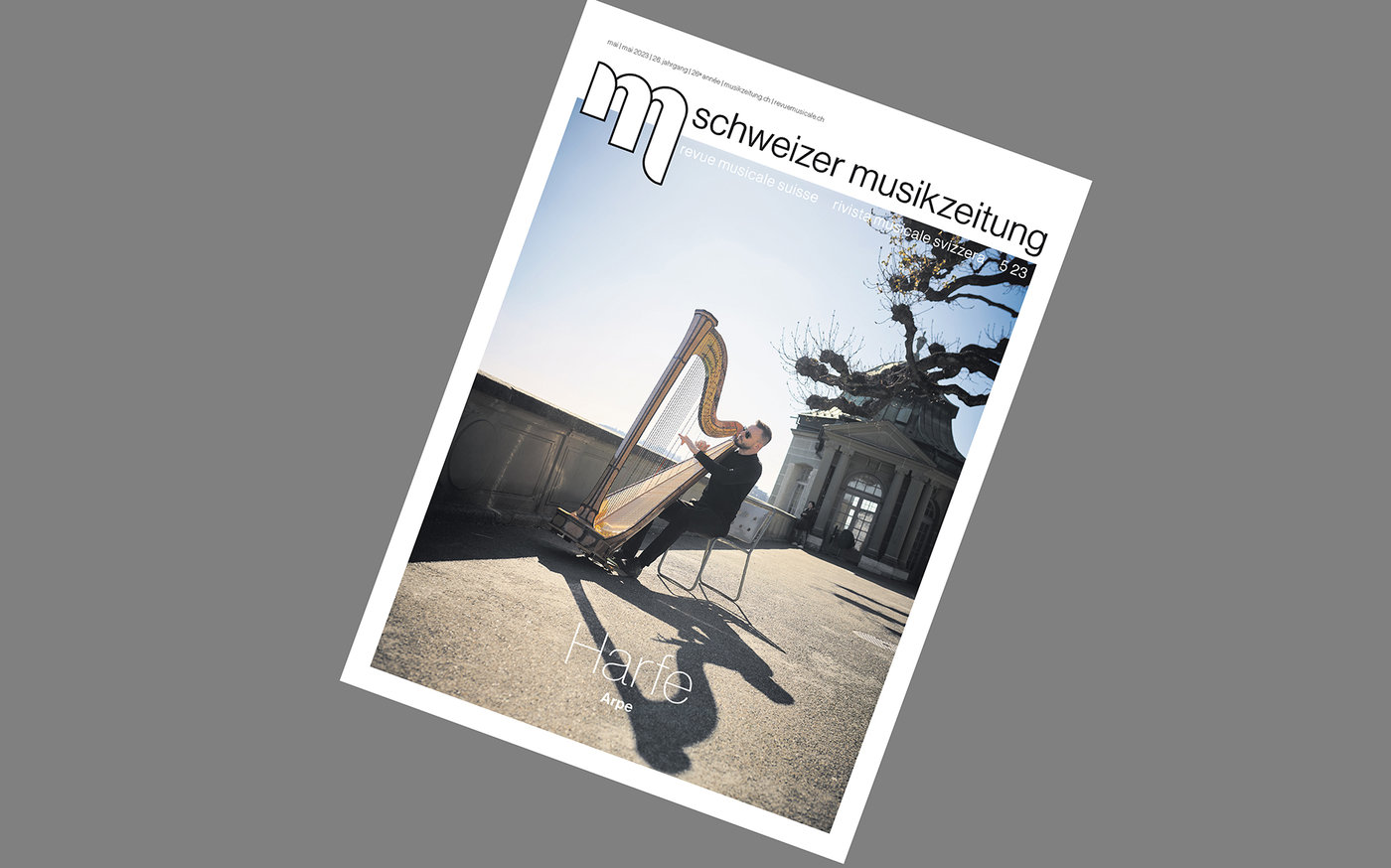
Issue 5/2023 - Focus "Harp"
SMZ
(translation: AI)
- 26 Apr 2023
Cover page SMZ 5/2023. Joel von Lerber. Photo: Holger Jacob
Table of contents
Focus
Between violin making and watchmaking Harp maker David in the Jura
The misunderstood niche instrument The harp is becoming more and more popular today
Style is just a word in music Julie Campiche is one of the rare female jazz harpists
Changing the image of the harp Joel von Lerber easily refutes the harp clichés
(italics = summary in German of the original French article)
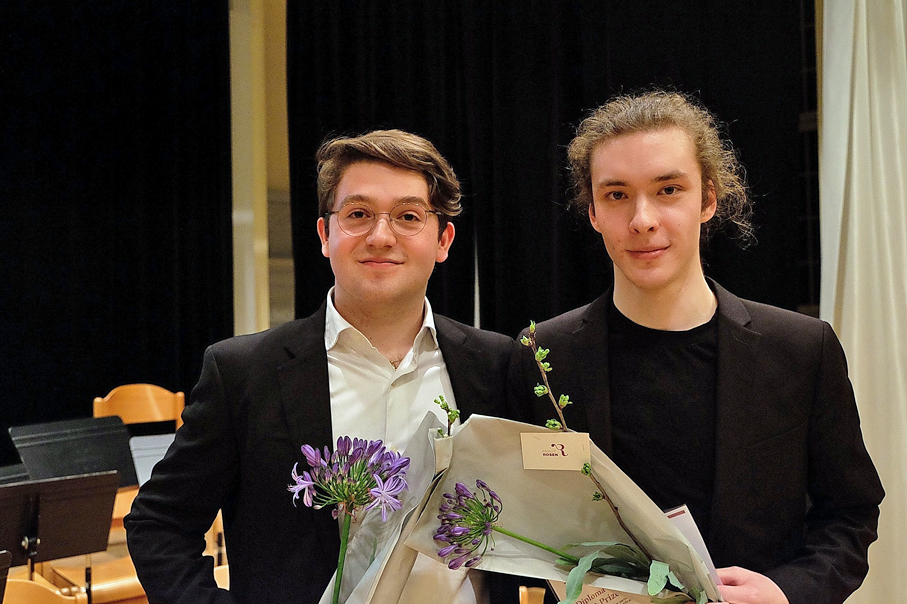
At the final concert on April 23 as part of The Muri Competition, the two winners were chosen: Enrico Bassi from Italy in the bassoon category and Leonid Surkov from Russia in the oboe category.
PM/SMZ
(translation: AI)
- 24 Apr 2023
Enrico Bassi (left) and Leonid Surkov. Photo: The Muri Competition
The music competition took place for the fourth time this year. It is considered the largest competition in the world for the two woodwind instruments oboe and bassoon. It was founded The Muri Competition 2013 by Renato Bizzotto, Matthias Rácz and Martin Frutiger.
This year, 400 candidates registered, 102 of whom qualified for the final rounds. The final rounds on April 23 were contested by two finalists and four finalists:
Renato Bizzotto, the overall director of the competition, states: "The artistic level of this year's competition was very high and it was not easy for the jury to choose the right winners." With The Muri Competition, Muri is consistently expanding its position as a cultural center.
New Nidwalden music promotion program
The new cantonal support program for young musical talent starts after the summer vacations. 20 music students applied for the program with an audition at the Grossmatt school in Hergiswil on 1 April. 11 were accepted into the program.
Support for talented musicians in Nidwalden
(translation: AI)
- 14 Apr 2023
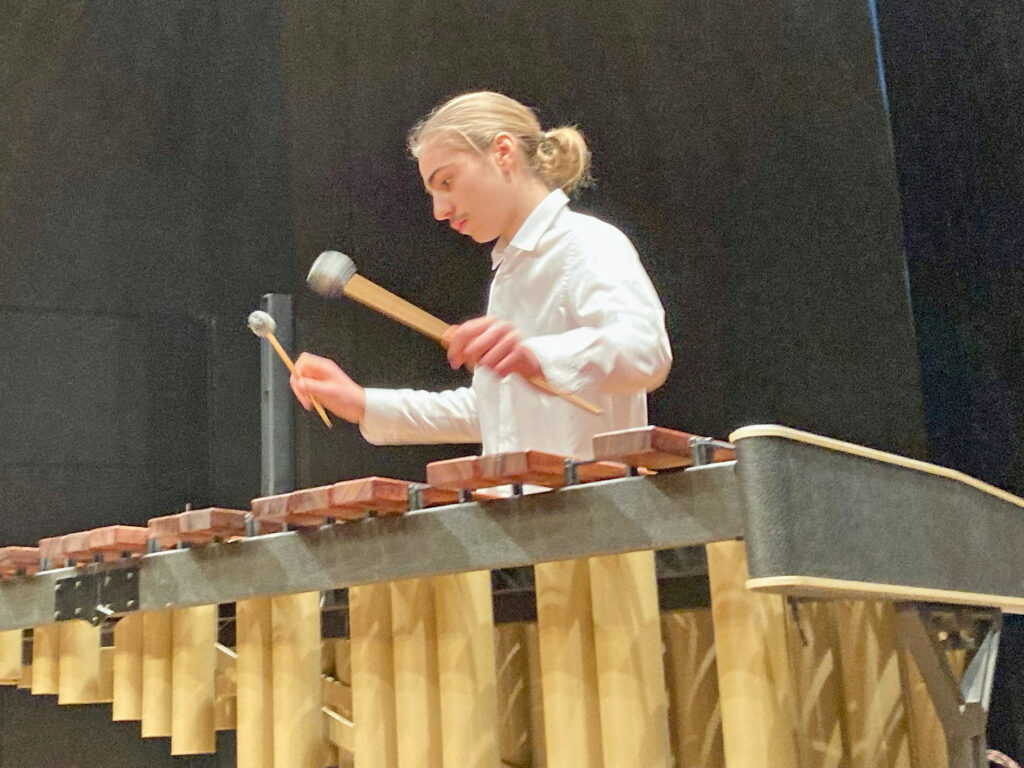
Fabio Barmettler on the marimba. Photo: Toni Rosenberger
"The music teachers who teach at our music schools do an outstanding job," says Michael Schönbächler, President of the Nidwalden Music Schools Association. This is the reason for the pleasingly high number of applications for the entrance examination for gifted students. The level of the auditions is roughly comparable to that in other cantons, Schönbächler continues.
Classical, pop and yodeling
The pieces of music performed by the well-prepared music students were just as varied as the instruments. Rock and pop, classical and folk music wowed the jury, who decided at the end of the day which candidates would be accepted into the sponsorship program.
High motivation
The talented musicians are between 10 and 18 years old and are characterized by a high level of motivation. In addition to school, they attend instrumental or singing lessons, take part in ensembles or orchestras and perform at concerts. Participation in regional and national competitions is also on the program. Daily practice is a matter of course for them. "We demand a lot of commitment from our talented musicians. However, they are highly motivated because music is very important to them," says Toni Rosenberger, Managing Director of the Talent Promotion Program.
First year
After the summer vacations, the program starts for the talented students who have been accepted. In addition to additional instrumental or vocal lessons, they will attend theory lessons and other courses. "We are now looking forward to the first cohort of Nidwalden music talents and are excited to see how the program gets off the ground," says Michael Schönbächler.
Anniversary concerts of the Konus Quartet
The Bernese saxophone quartet, which specializes in contemporary music, is celebrating its twentieth anniversary at the beginning of May with the premiere of four pieces written especially for the ensemble.
Konus Quartet/SMZ
(translation: AI)
- 14 Apr 2023
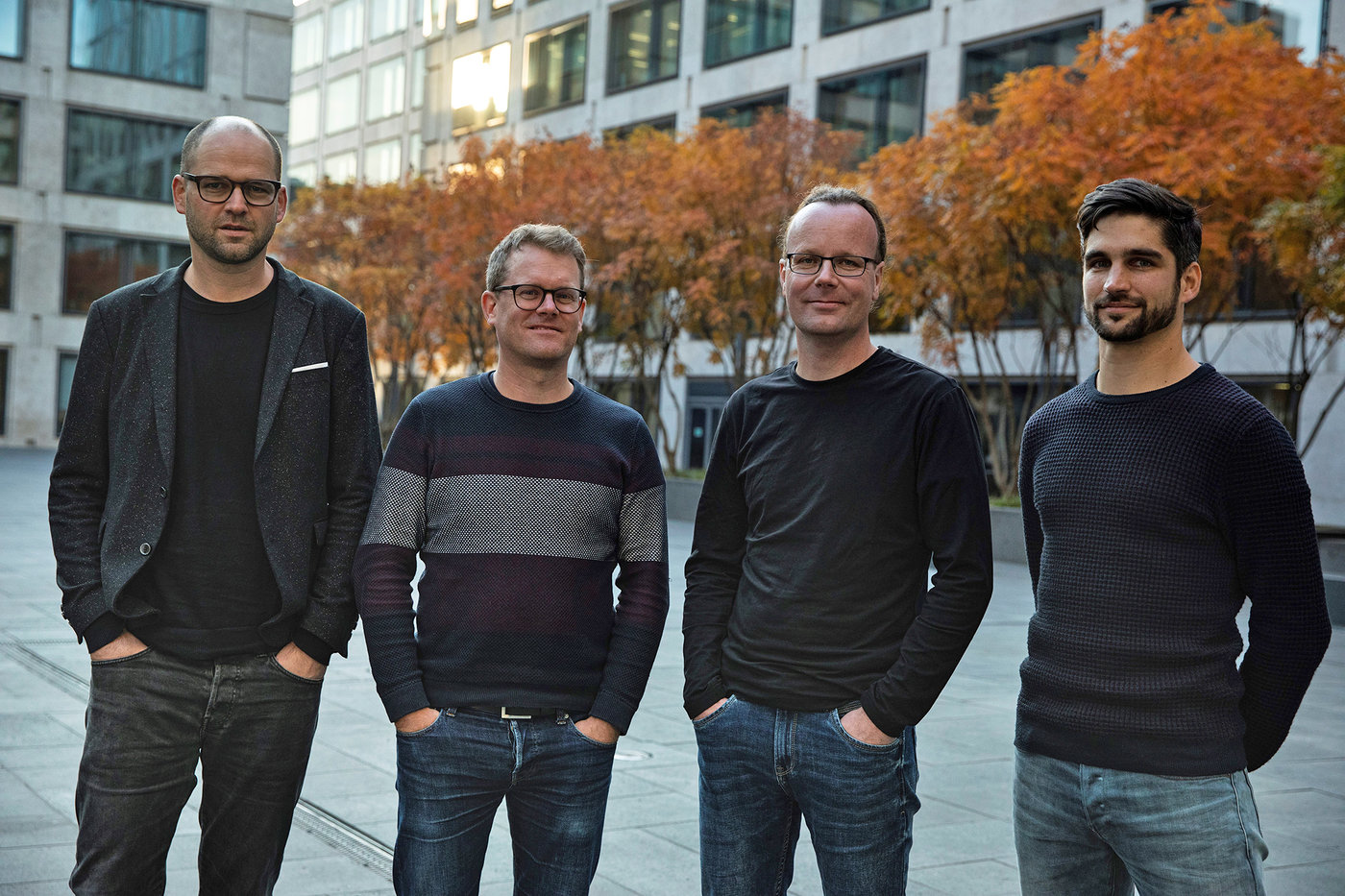
The Konus Quartet with Christian Kobi, Fabio Oehrli, Stefan Rolli and Jonas Tschanz (from left). Photo: Livio Baumgartner
The Cone Quartet consists of the Bernese musicians Christian Kobi, Fabio Oehrli, Jonas Tschanz and Stefan Rolli. Since its foundation in 2003, it has specialized in the latest contemporary and experimental music. The internationally renowned ensemble works intensively with contemporary musicians and has premiered numerous works, for example by Aargau composer and Swiss Music Prize winner Jürg Frey.
To celebrate its 20th anniversary, Konus is presenting a varied showcase of its work on three concert evenings in Bern, inviting the audience into the musical cosmos of the quartet: For the anniversary, the ensemble has commissioned four pieces from personalities who have been particularly influential in their artistic development to date. Pieces by the Berlin-based Canadian composer Chiyoko Szlavnics, by the Zurich-based electronic musician and composer Tomas Korber together with the Austrian percussionist and composer Martin Brandlmayr, by Klaus Lang and by the American composer and sound artist William Dougherty will be premiered in Bern. They will all be present during the performance of their pieces.
A program that looks to the future without ignoring the past - for example, the concept of Austrian organist and composer Klaus Lang interweaves the precise, minimalist sound of the Konus Quartet with the impressively archaic singing of the Georgian women's choir from Gori. Another guest is the string quartet Quatuor Bozzini, which is considered one of the best in the world - together with the Konus Quartet, it will perform the world premiere of the new composition by Chiyoko Szlavnics.
The program in detail
Interlaced Resonances: Friday, May 5, 2023, Bern, Aula in the PROGR, 7.30 p.m.
The Konus Quartet will perform the newly composed work by Chiyoko Szlavnics (UA) with the Quatuor Bozzini, as well as Continuité, fragilité, résonance by Jürg Frey.
Voltage Cracklings: Saturday, May 6, 2023, Bern, auditorium in the PROGR, 7.30 p.m.
Together with the two musicians Martin Brandlmayr (percussion) and Tomas Korber (electronics), the Konus Quartet will play a collective composition (UA). In addition, the quartet will present a new piece by William Dougherty (UA) with the inclusion of live electronics.
Air Vibrations: Sunday, May 7, 2023, Bern, Church of St. Peter and Paul, 7:30 p.m.
Together with the Gori Women's Choir and Tamriko Kordzaia (synthesizer), the Konus Quartet will perform a composition by and with Klaus Lang (UA).
In mid-March, the viril Surses choir performed the "Rieischs" concert project in Savognin, Chur and Bern.
Sibylle Ehrismann
(translation: AI)
- 13 Apr 2023
Rainer Held at one of the final rehearsals with Flurin Caduff and the Kammerphilharmonie Graubünden. Photo: zVg
Rainer Heldwho conducts this venerable Graubünden choir, which often wins awards at singing festivals, had already started planning in 2018. However, the coronavirus pandemic temporarily paralyzed the "Rieischs" (German for roots) project. Now, finally, the Choir viril Surses with the Graubünden Chamber Philharmonic Orchestra and the bass-baritone Flurin Caduff as a soloist to a broad public.
New work for a timeless sense of home
From the outset, the idea was to symphonically arrange Romansh songs on the theme of "roots", not only from the past but also from today. The main work commissioned by the choir is a 40-minute new composition by Philip Henzi and is entitled Rieisch's Surmiranas. The area where the choir comes from is called "Surmeir". Henzi is a very accomplished composer and arranger, he conducts the Swiss Jazz Orchestra and teaches jazz at the music academies in Bern and Lausanne.
For this piece, a small group of singers first went in search of suitable folk songs. Seven out of 20 were selected and arranged by Henzi for his work. Three new a cappella compositions were woven into these seven arrangements, which the men's choir commissioned from young musicians from Graubünden: Katharina Mayer (*1982), Mario Pacchioli (*1981) and Flavio Bundi (*1987). Poems by the young Grisons composer Dominique Caglia-Dosch (*1995) were set to music.
Gradually, a complete work was created with the dramaturgy "Singing the praises of home - going abroad - living there and putting down roots or coming home with great homesickness and longing - singing the praises of home again". Placing the theme of love of one's homeland at the center is perfectly suited to the people of Graubünden. Not only do they have a wonderful home in the mountains, they also sing about it joyfully to this day.
Impressive totality
The performance on March 17 in the sold-out Martinskirche Chur turned out to be a real event. The sound power and agility of the choir was remarkable, and the Romanesque language lent the music a slightly archaic tone. Flurin Caduff stood out impressively from the sonorous, well-balanced choral sound with his warm, radiant bass-baritone.
Henzi's treatment of the traditional songs is refreshingly simple and harmonically and rhythmically refined. In any case, the choir and orchestra mastered this music perfectly. And although the three new a cappella pieces each had their own signature, they fitted harmoniously into the whole. The audience thanked them for this original and impressive evening with a standing ovation. Radio SRF recorded the concert.
Gisela Gronemeyer died at Easter
Gisela Gronemeyer, music journalist and publisher of "MusikTexte", died on April 9, 2023 in Cologne at the age of 68.
SMZ
(translation: AI)
- 12 Apr 2023
depositphotos.com
How the Publisher MusicLyrics writes, Gisela Gronemeyer has "created a unique fund of writings on new music" as an author, translator and editor since its foundation in 1983. She has also championed the work of female composers for decades
The 25th edition of the m4music music festival attracted more visitors and professionals than ever before. The event will continue to focus on topics such as diversity and sustainability in the future.
Michael Gasser
(translation: AI)
- 12 Apr 2023
Anuk Schmelcher won this year's Demotape Clinic. Photo: Flavio Leone
The Pop music festival of the Migros Culture Percentage, m4music, has grown once again at its 25th edition: The two-day event at Zurich's Schiffbau attracted almost 1500 professionals and a total of over 6000 music fans this March. Festival director Philipp Schnyder von Wartensee is delighted that the event welcomed around 2000 more guests than last year. "In terms of our capacities, however, we are now close to the ceiling." Whether we should aim for further growth is one of the key questions that will need to be answered in the coming months.
Presence in Latin Switzerland
According to Schnyder, this year's festival edition was extremely beautiful, colorful and, last but not least, extremely diverse. "This was reflected not only in the music program and our demo tape clinic, but also in the conference." As in 2022, m4music once again decided not to open its festival in French-speaking Switzerland. Instead, efforts are still being made to maintain a presence there throughout the year. "In November, we were represented with a panel discussion at the Geneva festival 'Les Créatives' and broadcast three concerts from there on Couleur 3.
And two months ago, around 100 professionals came together at an m4music event in Lugano to discuss how smaller cities could promote the music scene." From Schnyder's point of view, the event in Ticino was not only an effective signal for the local scene, but also for the responsible cultural promotion institutions in the region. "For 2024, we want to think fundamentally about how we should continue with our activities in French-speaking Switzerland and what we can offer as an extra."
A festival in the learning process
Various festival content - including some panels - can be discovered on the m4music website, its Soundcloud or YouTube channel. "But despite the digitalization push, we have refrained from turning ourselves into a hybrid event," says Schnyder. Not least because such an undertaking would be too costly. According to the press release, there was a palpable desire at this year's m4music to make progress together on issues of diversity and awareness, sustainability and social justice. "We are in a learning process, we are aware of that. It is also clear that we need to make further progress in this regard." When it comes to air travel for invited guests and performers, m4music does not yet have any clear guidelines. "However, if I compare the number of flights taken by our guests today with the number before the pandemic, it has become significantly less."
The value of music
While the networking workshop "Crossing the Röstigraben" discussed how the music scene can bridge the gap between German-speaking and French-speaking Switzerland and Ticino, the panel "Tomorrow's Warriors" focused on the question of what the local jazz scene needs to do to appeal more to the younger generation. Musician Julie Campiche was once shocked to discover that her young daughter was convinced that the saxophone was not an instrument for girls, but exclusively for boys. Campiche attributed this mainly to the fact that too few women are employed as teachers at local training centers. "If we acknowledge that we have a problem in this respect, that would be a first step."
Meanwhile, the panel "What value does music have?" mainly debated the extent to which pop will be valued in 2023. Cultural scientist Maximilian Jablonowski noted that more money is currently being made with pop again and raised the question: "Is pop still creative at all?" WoZ-Editor Bettina Dyttrich described the current pop music system as "perverse". "Bands used to be able to make a living from their shows and albums. This is becoming increasingly difficult, even for well-known acts."
The next edition of the festival will take place on March 22 and 23, 2024. Further information can be found at: www.m4music.ch
New "Paul Juon" chamber music competition
From October 20 to 22, 2023, the national chamber music competition "Paul Juon" will be held for the first time.
Swiss Chamber Music Association/SMZ
(translation: AI)
- 06 Apr 2023
Paul Juon (1872-1940). Detail from a postcard, undated. Photo: zVg
With a total prize money of 25,000 Swiss francs and a Swiss-wide concert placement for three years for the prize-winning ensembles, targeted and sustainable support is offered to outstanding young chamber ensembles. The sponsoring association is the Förderkreis Kammermusik Schweiz in collaboration with the Paul Juon Gesellschaft, and the venue is the Kunsthalle Appenzell. The composition of the jury will be announced in June. Application deadline: September 1, 2023.
According to artistic director Martin Lucas Staub, the organizers' declared aim is to use this chamber music competition with concert placement to close the gap in the promotion of young Swiss chamber ensembles that has arisen since the Migros Chamber Music Competition was discontinued.
Sustainable promotion
The concert placement for three years and coaching on the management of their own ensemble are sustainable promotional measures. They allow the winning ensembles to expand their concert experience and raise their profile by introducing them to a wide audience throughout Switzerland. This makes it much easier for them to embark on a successful career.
In addition, concert organizers receive substantial financial support from the Förderkreis Kammermusik Schweiz if the winning ensembles are engaged. This encourages small and medium-sized concert organizers in particular to offer high-quality concerts with talented young ensembles. At the same time, the Förderkreis Kammermusik Schweiz guarantees the musicians appropriate remuneration.
Ensembles from trio to sextet are eligible to take part in the competition, performing a work by Swiss composer Paul Juon in addition to two pieces of their choice. With the compulsory piece by Paul Juon, the competition aims to make his great music better known, especially among the younger generation of musicians. Paul Juon's extensive catalog of works includes pieces for all relevant chamber music ensembles.
The Paul Juon Chamber Music Competition will be held every three years in future. Further information on the competition and online registration can be found at www.fkms.org
Big competition for Idagio and Co.
Since March 28, it has been possible to stream classical music via the Apple Classical app.
SMZ
(translation: AI)
- 05 Apr 2023
nito103/depositphotos.com
Since March 28, 2023, anyone who owns an iPhone has been able to use the Apple Classical App Access to the "largest classical music catalog in the world" in the "highest available sound quality" (self-promotion).
Max Nyffeler attended the presentation of the app at the company's London headquarters. Read Nyffeler's informative report including classification directly on its website
Christoph Grab receives Swiss Jazz Award 2023
The Swiss Jazz Award will be presented on June 24 as part of JazzAscona.
ZHdK/SMZ
(translation: AI)
- 05 Apr 2023
Christoph Grab. Photo: René Mosele
As announced by the Zurich University of the Arts (ZHdK) Christoph Grab "has been a fixture on the national and international jazz scene for decades.
He holds a professorship at the ZHdK, works as a freelancer in the Swiss jazz scene and is a member of many permanent formations. Now he is being honored with the Swiss Jazz Award 2023. The award ceremony will take place on June 24 as part of the JazzAscona festival, where he will perform in three different formations.
The Swiss Jazz Award has been presented annually at JazzAscona since 2007 to outstanding personalities from the Swiss jazz scene."
Review with phantom pain
A conference on "Music Discourses after 1970" at the Bern University of the Arts.
Max Nyffeler
(translation: AI)
- 03 Apr 2023
Carl Bergstroem-Nielsen provided welcome entertainment with his "presentation", a kind of performance. Photo: Max Nyffeler
The range of content was broad, thanks to the variety of topics and the international focus. Although one focus of the conference (March 23-25), which was conceived by Thomas Gartmann, Head of the Research Department at Bern University of the Arts (HKB), was on Switzerland and the Tonkünstlerverein (STV), there were also numerous contributions on developments in Western and Eastern European countries, South Africa and the USA. Gender issues were also discussed. The result was a conference rich in perspectives, with a wealth of information and points of view that stimulated productive further thought.
The key points were marked by two presentations at the beginning and at the end. Jörn Peter Hiekel began by taking a critical look at the one-sidedness and dichotomies in the avant-garde's discourse on progress since the 1950s, dedicating a special chapter to Adorno and his lasting influence. However, he did not fall into the trap of the usual black-and-white painting of the time - here the progressives, there the reactionaries - but spoke out in favor of an unbiased but historically informed way of thinking.
The antithesis was provided by the ideologically narrow final presentation by Jessie Cox, a Swiss composer, drummer and educator with Rasta braids, who has dedicated himself to the fight against the cultural hegemony of the white man and threw around a lot of empty identity politics terms. Starting with the unfortunate "diversity" theme of the Lucerne Festival 2022, he lectured via Zoom from New York for three quarters of an hour on the ineradicable racism of the Swiss and apostrophized their media, above all the NZZas mouthpieces of an unreflected anti-blackness. Cox will now be performing live at the Lucerne Festival in August. So entertainment is guaranteed.
Controversial issues excluded
The change in discourse as a historical process has only occasionally been explicitly addressed. What has become of Habermas' discourse ethics in musical terms, what does Foucault's Ordre du discours about today's music business? Such explosive questions were beyond the scope of the assembled musicologists' interest. The far-reaching changes in music criticism were also only addressed in passing and from the high horse of musicology. The presentations mostly revolved around concrete phenomena and projects, aesthetic trends and institutional problems. This resulted in a panorama of quite critical snapshots, but a presentation that would have placed such detailed aspects in a larger temporal horizon would undoubtedly have been an asset. For example, two major trends of the last fifty years that have also had a significant impact on music were not discussed at all or only to a limited extent: the increasingly apparent end of Eurocentrism and the media revolution.
Extinguished lighthouses
As far as the media are concerned, Pascal Decroupet examined the influence of digitalization on composing using the example of French spectralism, and insights into the reality of television were provided by Thomas Meyer, who recalled the productions of Armin Brunner with Mauricio Kagel, and Mathias Knauer, who demonstrated how experimental music film productions have been set to zero over the years in German-speaking Swiss television. He wished for a return to a politically emancipatory approach to the medium, as Walter Benjamin once imagined it - a laudable idea, but one that is pure utopia today in the face of a media industry controlled by global capital interests.
Gabrielle Weber presented a different model of cultural promotion through the mass medium of television with two series of music films produced in 1970 for French-speaking Swiss television and in 2001 for DRS. While the older production placed music-making in a socio-cultural context and showed, for example, the composer André Zumbach working with children conducting, the ten films made by director Jan Schmidt-Garre on behalf of DRS and STV focused entirely on the composers and their works. With the release on DVD, a new medium at the time, the films from 2001 reached an audience that went beyond just television viewers. The juxtaposition of the two series revealed something of the change in perspective that has taken place in the arts over the last thirty years.
In addition, there was still close collaboration at the time, especially between Radio DRS and the Tonkünstlerverein. This is the subject of a research project reported on by Stefan Sandmeier and Tatjana Eichenberger. The difference to the present is striking: today, television stations see themselves primarily as a distribution medium, they buy finished productions or at best participate in co-productions. With the exception of ratings-rich recordings of mass events or star portraits, music films have migrated to special-interest channels such as Arte, 3sat and global satellite and internet channels.
These realities are irreversible and there is no point in lamenting them. In this respect, Peter Kraut performed a dialectical tightrope walk with a mixture of self-irony and precise socio-cultural analysis, but without nostalgia for the "golden age" of the event he curated. Tactless Bern and Key Bern looked back on. They were beacons in the alternative music scene of the late 20th century.
Music on the party's tightrope
Two major topics caught the eye. On the one hand, there were the retrospectives by Eastern and Central European speakers on music policy in the former Eastern Bloc. Lithuanian Rūta Stanevičiūtė's observations on how national traditions were made subservient to the system-stabilizing doctrine of socialist realism under communism found a parallel in Jelena Janković-Beguš's (Belgrade) presentation on the cultural policy of non-aligned Yugoslavia. Using the central figure of Nikola Hercigonja as an example, she demonstrated the politically intended felt between the party and artistic creation. The composer and functionary Hercigonja was built up into a musical national hero by the party and the media controlled by it, with the result that his pompous aesthetics still resonate in Serbian music today. Today, the avant-garde movement to break away from this legacy also includes the Quantum Music Project from Belgrade, whose seven members practice a refreshing combination of musical experimentation, technical curiosity and the search for new social models.
The funny barracks
Musical life under socialism was by no means uniform. Away from the official institutions, musicians repeatedly tried to use the narrow scope for alternative practice. They were kept on a long leash by the party, such as the group Neue Musik Hanns Eisler in the GDR, whose members were also guests at the Künstlerhaus Boswil on several occasions from the 1970s onwards. Or where control was perforated, as in Hungary, which was envied as the "funniest barrack in the socialist camp", artistic nuclei emerged with long-term effects even after 1989 - one example is the career of the young Peter Eötvös. From 1956, the Warsaw Autumn Festival in communist-resistant Poland was a center of almost magnetic attraction for all free-minded musicians; here, East and West could meet for open dialogue. Fortunately, the voices from the former Eastern Bloc were given a lot of space in Bern - which is by no means a matter of course for Western European musicology.
The STV, a memory neurosis
As is well known, the history of the STV is the subject of a National Fund project, which now also provided the framework for the Bern conference. Consequently, the second major topic revolved around the STV. It is remarkable that this happened in close connection with the discussion about free improvisation - apparently this is a bundle of problems that is still capable of arousing music policy neuroses. What is even more remarkable is that the institutional decline of the STV and its journal Dissonance/Dissonance This trend ran parallel to the emergence of free improvisation, which was widely discussed in the press, became a popular object of cultural promotion and finally became an institutionalized genre at universities. These tendencies towards consolidation were counteracted by the appearance of Carl Bergstroem-Nielsen (Copenhagen). His "lecture" consisted of a scenic-musical performance of indecisive searching and accidental finding, interspersed with sudden ideas - a welcome break.
After the extensive discussions about improvisation and its significance in musical life, an outsider was forced to think: Did this Swiss variety of deconstructivism and the negation of the traditional concept of the work act as an aesthetic ferment that accelerated the disintegration process of the STV on both a discursive and personnel policy level? With the dissolution of the concept of work, the influence and commitment of the long-serving active members in club life also dwindled - fixed structures were now frowned upon. The late inclusion of improvisers in the STV's governing bodies was just one outward sign of the creeping aesthetic paradigm shift.
Defeatism and structural decay
The plug was ultimately pulled on the STV due to the funding policy of the Federal Office of Culture, which no longer provided funding for artistic activities. Association members and committees turned a blind eye to the impending fiasco. In his presentation, Thomas Gartmann described the long, drawn-out countdown with merciless clarity. Based on this assessment, the disaster appears to be a textbook example of institutional failure and, in view of the passivity of the members, a beacon of democratic politics. The reasons, one may assume, are to be found in the minds: A loss of values, a lack of direction and, consequently, inaction in the face of a changing reality that people did not want to acknowledge. In their act of self-destruction by letting things happen - the whole thing evokes associations with a Marthaler production - those responsible at STV proved themselves to be truly avant-garde. They were way ahead of their time, as a look at the current Credit Suisse case confirms.
Incidentally, in the discussions on this dreary retrospective, the disappearance of musical discourse was lamented in unison and the faded Dissonance/Dissonance dedicated a wreath. That the SMZ could be a forum for such a discourse did not occur to anyone. It was not even mentioned. But perhaps those present sensed that the time for the old discourse was over. But nobody yet knows what a new one should look like. Perhaps a look at today's reality could help.
The "Schweizer Musikzeitung" is media partner of the conference "Music Discourses after 1970"
Evening music - Tafelmusik
Themed morning at the Institute of Musicology at the University of Zurich.
Laura Kacl
(translation: AI)
- 31 Mar 2023
Georg Philipp Telemann. Anonymous engraving. Image: Wikicommons
As part of the 38th Early Music Festival Zurich took place on March 11 at Institute of Musicology at the University of Zurich a themed morning was held at the festival (organized by Esma Cerkovnik and Hein Sauer). Three contributions shed light on the festival theme Vespers I: Abendmusik - Tafelmusik from a musicological and German studies perspective, revealing the diversity of the phenomenon of "music in the evening".
In the first lecture, Hein Sauer reported on the setting of Vespers in the 16th century, which gradually became the focus of liturgical music production over the course of the century. Here, the speaker showed the special significance that the setting of the psalms and especially the Magnificat had in the 16th century, both in Italy and in the Protestant regions north of the Alps.
The lecture by Julia Amslinger (Göttingen) and Nathalie Emmenegger (Bern) approached the setting of psalms from a literary perspective. These were newly translated, formulated and arranged in the early modern period. The most prominent Zurich example is the work of Johann Wilhelm Simler (1605-1672). His German poems (1648) were set to music for 4 voices on the basis of the Genevan Psalter. Their success was not only evident in the numerous editions, but also in their distribution from Zurich to the Grisons mountains.
Finally, Ute Poetzsch (Magdeburg) reported on the Musique de Table Georg Philipp Telemann (1733). She demonstrated the musicophilological and musical problems associated with this demanding chamber music work. Poetzsch thus broadened the scope to include aspects of instrumental music in the 18th century.
These contributions, each accompanied by a lively discussion, provided an excellent prelude to the subsequent concerts of the festival.
The NOB with nocturnal images and sounds
The night as a source of inspiration and as a space for the liberation of thoughts: The New Orchestra Basel builds a bridge between works on the threshold of modernity and the creative power of young people.
Niklaus Rüegg
(translation: AI)
- 30 Mar 2023
The assembled individual images are photographed as a huge cloth hanging above the orchestra. Photo: Niklaus Rüegg
The New Orchestra Basel (NOB) has been under the direction of Christian Knüsel since 2012. He professionalized the orchestra and repositioned it with interdisciplinary, thematic and annotated programmes. Promoting young talent is an important part of his orchestral work. Young people are involved in regular educational programs. The NOB Composition Workshop produces commissioned works by young composers under supervision. The NOB Academy offers Central and South American talents online master classes on their instrument; this season, the Jove Orquestra Nacional de Catalunya (JONC) from Barcelona as a cooperation partner. Six members of this orchestra have been invited to play in the concert on March 26 at the Stadtcasino. "We want to make youthful creativity visible in our concerts and bring the joy of music to the next generation," says the program booklet.
A picture from Nachtmusiken
Last August, Christian Knüsel asked the artist and design teacher at the Center for bridge programs Basel-Stadt (ZBA), Gert Handschin, to make a visual contribution to the program "Thoughts are free - 1001 nights" together with his students. During the concert break, he revealed that he was initially unsure whether he would be able to carry out this task, as he did not know the composition of his class at the time. Every year, new young people from difficult backgrounds or living in precarious circumstances come to the ZBA - this school year, there are also refugees from Ukraine. He asked his colleague Silvia Arbogast from Gymnasium Bäumlihof to work with him.
They agreed on the linocut technique and the format 21 x 21 cm. The brief for the 25 participating students was to experiment with shadows, fragments and colors and to be inspired by the music of the evening. In the end, the individual parts were put together to form a large square. The original could be admired in the foyer of the Stadt-Casino. A huge cloth with the photographically transferred works of art hung above the orchestra. The audience had the opportunity to let their eyes wander over the colorful squares and at the same time immerse themselves in the musical and nocturnal dream world.
Breaking formal shackles
In his introduction, Christian Knüsel presented Debussy as the first composer to abandon rigid formal structures. Debussy had set himself Nocturnes (1900) was inspired by the Impressionist paintings of the same title by James Abbott McNeill Whistler. With the sentence Nuages the orchestra succeeded in immediately transporting the audience into an imaginative nocturnal dream world. Con sordino, the dynamics within the pianissimo were fully exploited at the beginning. In the middle of the piece, the clouds piled up mightily before clearing again towards the end.
John Cage's Music of changes (1951) gave the NOB season program its name. In his piano piece, Cage elevated indeterminacy to a principle. No two interpretations should be the same. The performance should obey chance and be left to the performer's creativity. Knüsel resolved this requirement by having the pianist Beatrice Berrut play Cage's composition in alternation with the feel-good classical piece Forgotten Dreams (1954) by Leroy Anderson. The change from one to the other was controlled by randomly recorded bird calls.
Manuel de Falla wrote his three-movement work Noches en los jardines de España (1909-1916) was originally conceived as three nocturnes for solo piano, but was later reworked into a symphonic work. The piano is strongly integrated into the orchestra, but is always at the center of the action. Beatrice Berrut gave her part a brilliant profile.
The orchestra concluded with Nicolai Rimsky-Korsakov's Scheherazade (1888) into the magical fairytale world of 1001 Nights. Knüsel emphasized that having an imagination could also be essential for survival: "Inspiration was existential for Scheherazade", because the princess had to keep the Sultan happy night after night with 1001 stories in order not to be killed. The princess's years of survival find their musical expression in the ostentatious repetition of the one theme that runs through all four movements, but is constantly changing musically. One could say that the princess remains the same, the stories change. The development of the theme is achieved in the finest way in the two-way conversation between the woodwind and the strings. The solo parts by the clarinet, flute, oboe and bassoon, and especially the solos by concertmaster David Castro Balbi, are unforgettable.