100 years of Caspar Diethelm

The Central Swiss composer Caspar Diethelm (1926-1997) could have celebrated his hundredth birthday on March 31. His work is important - but it is in danger of being forgotten. Musicians who still knew him personally and who studied and premiered works with him are therefore campaigning for his music to be heard again, whether through performances or recordings. The pianist Patrizio Mazzola is particularly committed to the memory of an outstanding artistic personality and his work.


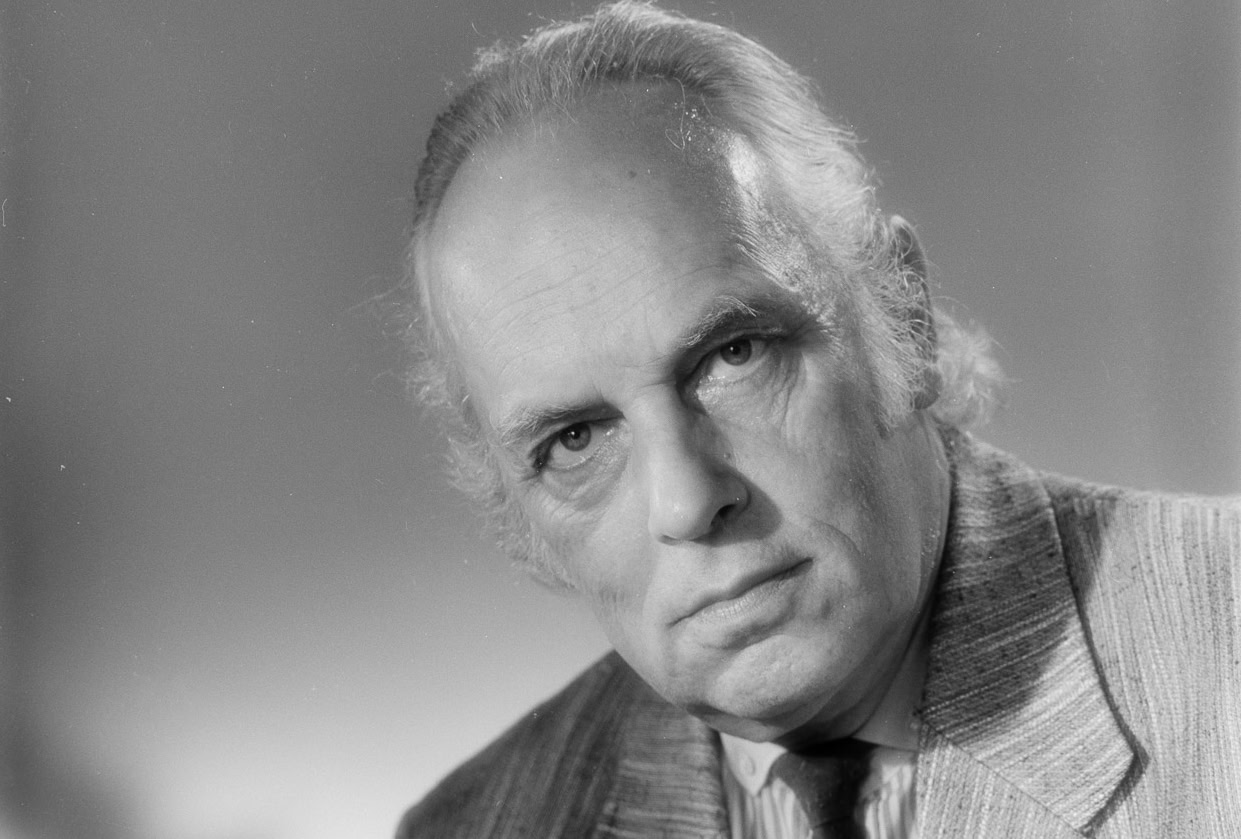
Caspar Diethelm. Photo: zVg


The centenary of this important Swiss composer's birth should be an occasion to pay tribute to him here and help keep his memory alive. It is possible that he is no longer known to younger people, although he enriched the Swiss composer landscape in a worthy manner. Switzerland is generally too modest artistically and therefore too little proud of its artists of the past and present compared to many other nations. Before discussing Diethelm's artistic characteristics and achievements, a selection of individual external landmarks in his life will serve as a framework.

Vita
 

31. 3. 1926


born in Lucerne

from 1944 Pupil at the Lucerne Conservatory and Church Music School
Private lessons in composition with Johann Baptist Hilber and Albert Jenny
1946-50 Conducting lessons with Ernst Hans Beer, Lucerne, and Alexander Krannhals, Basel
1946-79 Professional activity as land registry administrator, tax official etc. in Sarnen, political activities there
1948 - 1952 Courses with Hindemith and Honegger, as well as participation in the Darmstadt Summer Courses
from 1958 Conducting (Zurich Radio Orchestra, rehearsing his own works)
1960 Marriage to Brigitte, née Ullrich, three daughters: Esther, Jutta, Irene
1963-93 Teacher of music history, theoretical subjects and chamber music at the Lucerne Conservatory
1969 Art Prize of the Canton of Obwalden
1985 Art Prize of the Canton of Lucerne
1. 1. 1997 died in Lucerne

Not just a «musician»

I was able to accompany Caspar Diethelm musically and personally for 25 years. The initial mutual underestimation of our artistic abilities soon turned into a great appreciation for each other. Initial skepticism is nourished almost exclusively by ignorance and lack of knowledge. This is reminiscent of the original saying in the Sarner Aula Cher, where it is (probably still) written in large letters: «Mänge macht sich Gedanke aber dänkt nid derbiä.» This pithy sentence in the original Obwalden dialect could well have been written by Diethelm (or was it even his own? - who knows ...). He «parried» statements with a quick wit and liked to give his works appropriate titles. For example, the piano concerto he wrote for me with Yggdrasil which derives from his reading of the Old Norse Edda-texts, which always made a great impression on him. The word is Old Norse for «world ash tree», the tree of life as it were (everything is connected to everything else). Other work titles include Menhir, a towering (Breton) stone block, The wheel of life (after a Buddhist mandala), Mandala symphony, Maya (according to the Four Buddhist Truths). These few examples already show which phenomena and fields of knowledge accompanied Diethelm throughout his life. Philosophy (he read «ancient Greeks» such as Plato or Aristotle in the original), biology, botany, mushroom science (at a professional level as a cantonal mushroom inspector!) and his activities as a local politician should also be mentioned, although I will limit myself here to selected examples. His education was therefore very varied, even comprehensive, as far as a human being can be. He was therefore not a «mere musician», similar to Robert Schumann in this respect.

Artistic independence

However, as I am outlining Caspar Diethelm here primarily as a composer, the characteristics of his style should be explained here: Stylistically, I believe he originally comes from the German Romantic tradition, which may come as a surprise. Some of his ancestors come from further back in Germany. Diethelm has incorporated this German Romanticism - both the «traditional» style of Brahms, Bruch or Reger, for example, and the «special» styles of Bruckner and Mahler - into his extensive oeuvre. He has, as it were, transferred them into a more modern tonal language of the 20th century. In this he is comparable to Bartók, Stravinsky, Martin or Honegger. All this without being a dependent epigone, but with great independence. In addition, like Debussy and Ravel, he occasionally has a penchant for both «Balkanisms» and Far Eastern influences (also extra-musically).

Diethelm told this anecdote about Bruckner: when asked whether he was a «Brahmsian» or a «Wagnerian», Bruckner replied: «I'm an Aner (one) myself». And I also remember something about Honegger: spontaneously switching on the radio without knowing which work was being played, I thought to myself that Honegger, whom I suspected here, was even more brilliant than Diethelm, only to find out afterwards that it was the Mandala symphony of Diethelm ... Indeed, Diethelm was «Aner himself», to return to Bruckner.

It is to be hoped that Switzerland will remember its important son Diethelm in the future, revive him through his music and carry him out into the world as a great ambassador of little Switzerland.

__________________________________

Further materials and information on Caspar Diethelm

A self-positioning by Caspar Diethelms, probably created at the end of the seventies

"In his works, Caspar Diethelm tries to find a statement that suits him without committing himself to a particular school or style. On the one hand, there is a strong rootedness in tradition, in the landscape of his canton, where he has lived and worked since birth, and in the emphasis on a Swiss uniqueness. On the other hand, there is his preoccupation with all styles from dodecaphonic music to the avant-garde since Webern. Insofar as they can be seen as enriching the composer's expressive possibilities, influences from all these areas can be found more or less clearly. In contrast, »atonality', whatever this may mean in concreto, is avoided; instead, the music is structured and shaped according to centers of gravity, i.e. according to the tonality levels in Hindemith's sense. In addition to an independent harmony that does not avoid the simple in addition to extremely complex sounds, and an idiosyncratic and occasionally aggressive rhythm with a preference for compound time signatures, the composer's particular devotion is to the element of melody, and increasingly so. Even in the earliest works, echoes of elements of folk music cannot be ignored, although there are never any quotations, only formations that are intended to evoke a Swiss or even original Swiss sound. In addition to the great masters of the past, the composer's role models are Paul Hindemith and Bela Bartók, as well as the Swiss composers Arthur Honegger, Othmar Schoeck and Frank Martin."

Events and publications for the anniversary year

In addition to various concerts from the end of March, two CD productions are planned. In October, the Toccata label will release the world premiere recordings of the concertos op. 210, 285 and 211 with the Deutsche Staatsphilharmonie under the direction of Rainer Held. Soloist in Yggdrasil is the dedicatee Patrizio Mazzola, who is now premiering the piano concerto after Esther Diethelm published it in 2024. The solo part in the violin concerto Anubis Sibylle Tschopp, who rehearsed the work with Caspar Diethelm and premiered it in 1996, is responsible for the production. In the Concerto Hiemalis Finally, Kilian Herold, solo clarinettist with the Berlin Philharmonic Orchestra, can be heard. The launch of this CD will take place on November 29 in Lucerne.

The second CD will also be released in November on the Toccata label and features five first recordings of chamber music works.

Further details on CDs and concerts can be found in this document (link to PDF). A newsletter for the anniversary year can be ordered via caspardiethelm.com. https://www.caspardiethelm.com/aktuelles.html

Review in the Schweizer Musikzeitung

Caspar Diethelm: Symphonic Works, Royal Scottish National Orchestra, conducted by Rainer Held.
Guild GM3CD 7808
The desperate desire for the apocalypse

The Zurich Opera House presents «Monster's Paradise». Together with Elfriede Jelinek, the Austrian Olga Neuwirth has created a highly topical opera in which she unleashes the monsters of the present on each other.


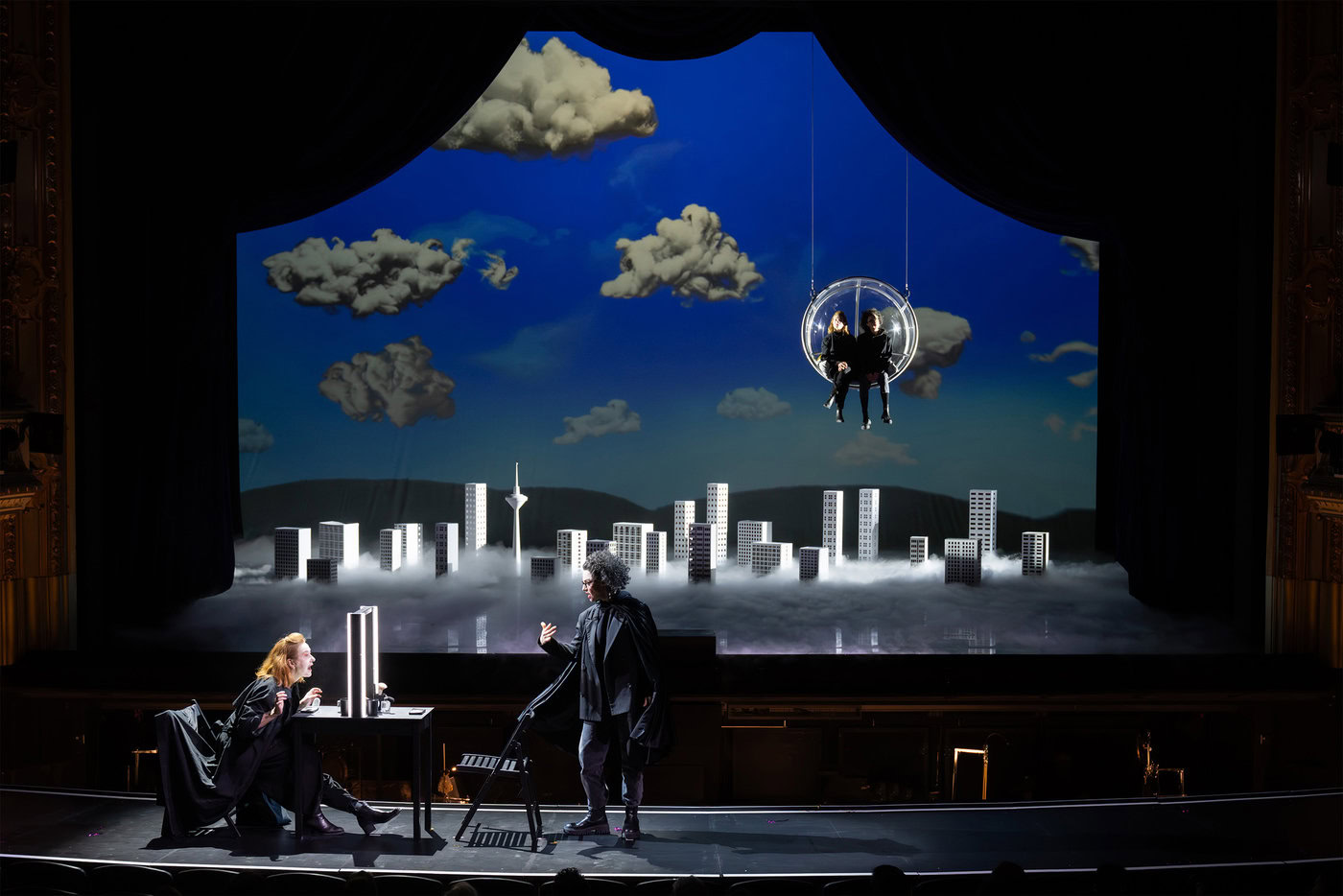
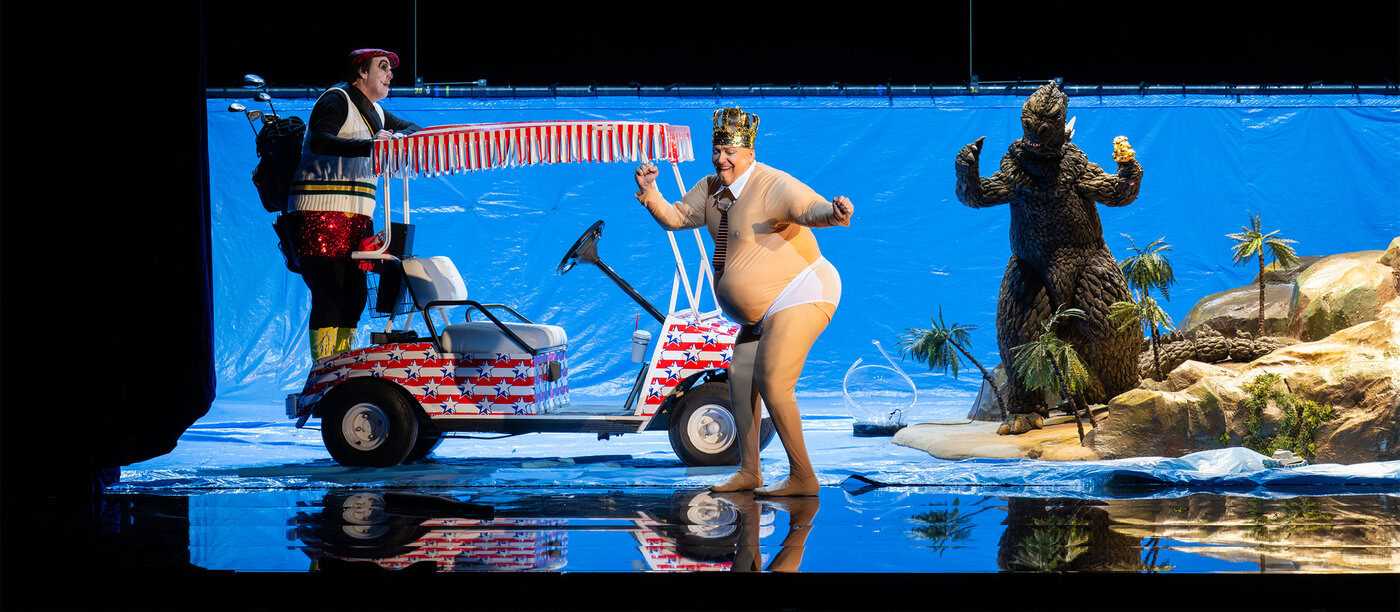
From left: Andrew Watts (Mickey), Georg Nigl (The King-President), Anna Clementi (Gorgonzilla). Photo: Monika Rittershaus/Opernhaus Zurich

The Grand Guignol, this pompous Punch and Judy show from France, tends towards the monstrous, the unreal and the surreal, although it has long since been overtaken and overtaken by reality. The Théâtre du Grand Guignol in Pigalle, which opened in 1897 and shocked audiences with torture, rape and bloody murder, closed on January 5, 1963 on the grounds that it could not compete with Buchenwald. Art does not come close to reality. The two artists who have now created a new «Grand Guignol Opéra» are well aware of this.

Their starting point is the futility of the enterprise; nevertheless, they try and send two vampiresses in their own image out into the world: to perhaps save it after all or at least eliminate the worst tyrant, a «king-president» whose real-life likeness we see on the news every day. They fail miserably; the president, after all, is eaten by another monster, the resurrected Gorgonzilla. However, the end of the world cannot be stopped in this way; a deluge sweeps everything away. At the end, we see the two vampires, playing Schubert's F minor Fantasy on a Bösendorfer, sailing towards the sunset in the ocean.

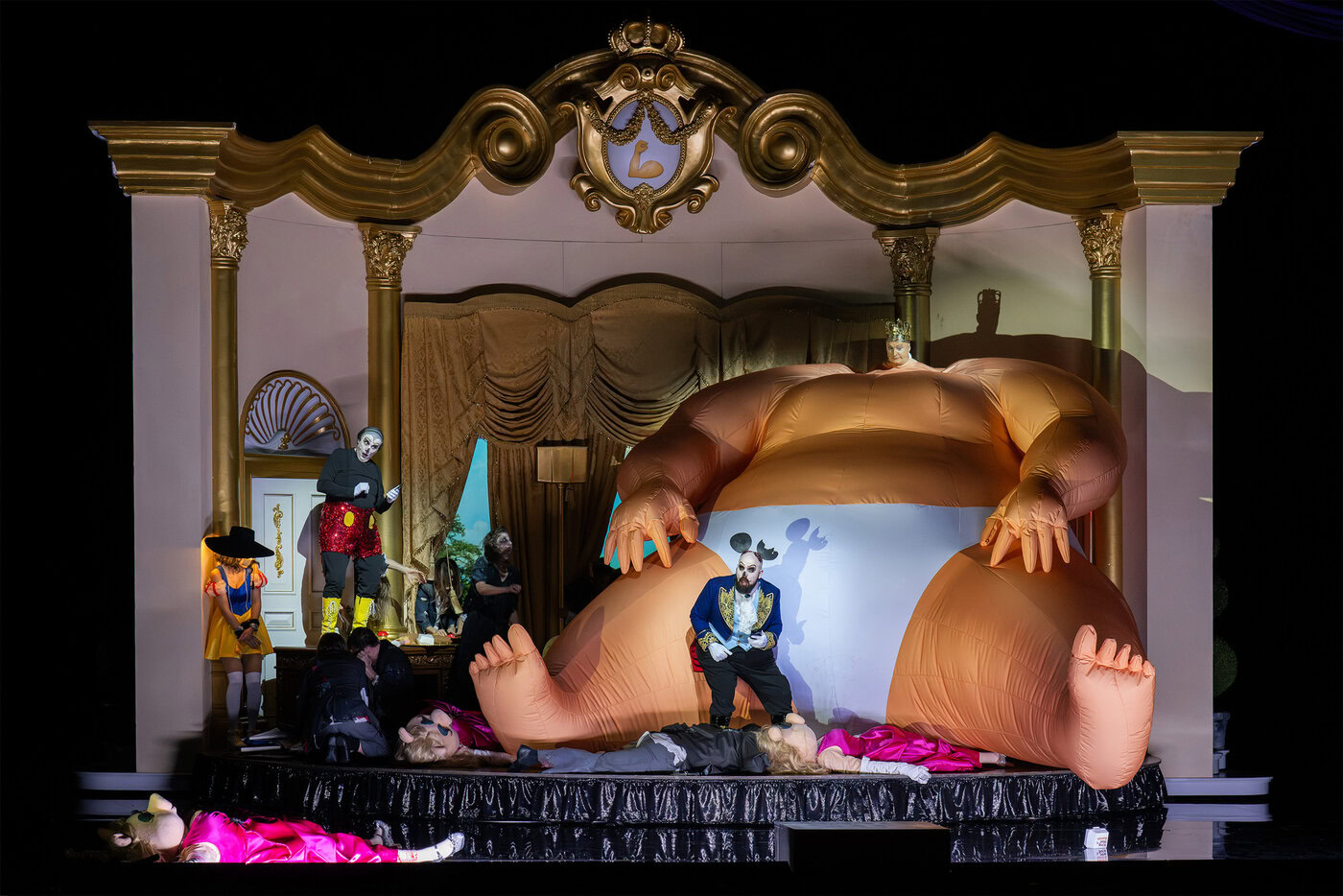
From left: Anna Clementi (Gorgonzilla), Sara Defrise and Kristina Stanek (Vampires), Georg Nigl (The King-President). Photo: Monika Rittershaus/Opernhaus Zurich

Gap between text and music

The opera Monster's Paradise, which premiered at the Hamburg State Opera on February 1st and is now being shown in Zurich, takes us on a lustfully apocalyptic ghost train into the abyss. With lots of spectacle and flailing. This makes the dystopia fun. The artistic abysses lurk elsewhere: not in the monstrous, of which there could certainly be a little more, but in the theatrical pace, which is often slowed down by resignation and well-intentioned statements. «We are no longer in demand,» sings one vampire right at the beginning. «Come to me, all who are peaceful and want to stay that way!» are Gorgonzilla's first words. This is not the way to make exciting and aggressive art. But you immediately wonder whether that's what the two authors want at all, whether they're not allowing us to be led astray.

The composer Olga Neuwirth came up with the idea for this musical theater; she managed to persuade her long-time librettist, her friend Elfriede Jelinek, who had long been weary of opera, to write a joint text. But it is precisely with this text that there is a problem. He rambles and lectures, rambling, sometimes lecturing, sometimes sarcastic, sometimes flat. The words block. The first scene, for example, doesn't get off the ground. One may concede that such platitude is part of the genre, as an anti-quality that counteracts good taste. However, the music sounds far too rich, lively, refined, colorful, jazzy-drivish, funny. The orchestra of the opera house under Titus Engel plays thrillingly.

The Vampiresses (actresses: Sylvie Rohrer and Ruth Rosenfeld, singers: Sara Defrise and Kristina Stanek). Photo: Monika Rittershaus/Opernhaus Zurich

Long and cumbersome like the end of the world

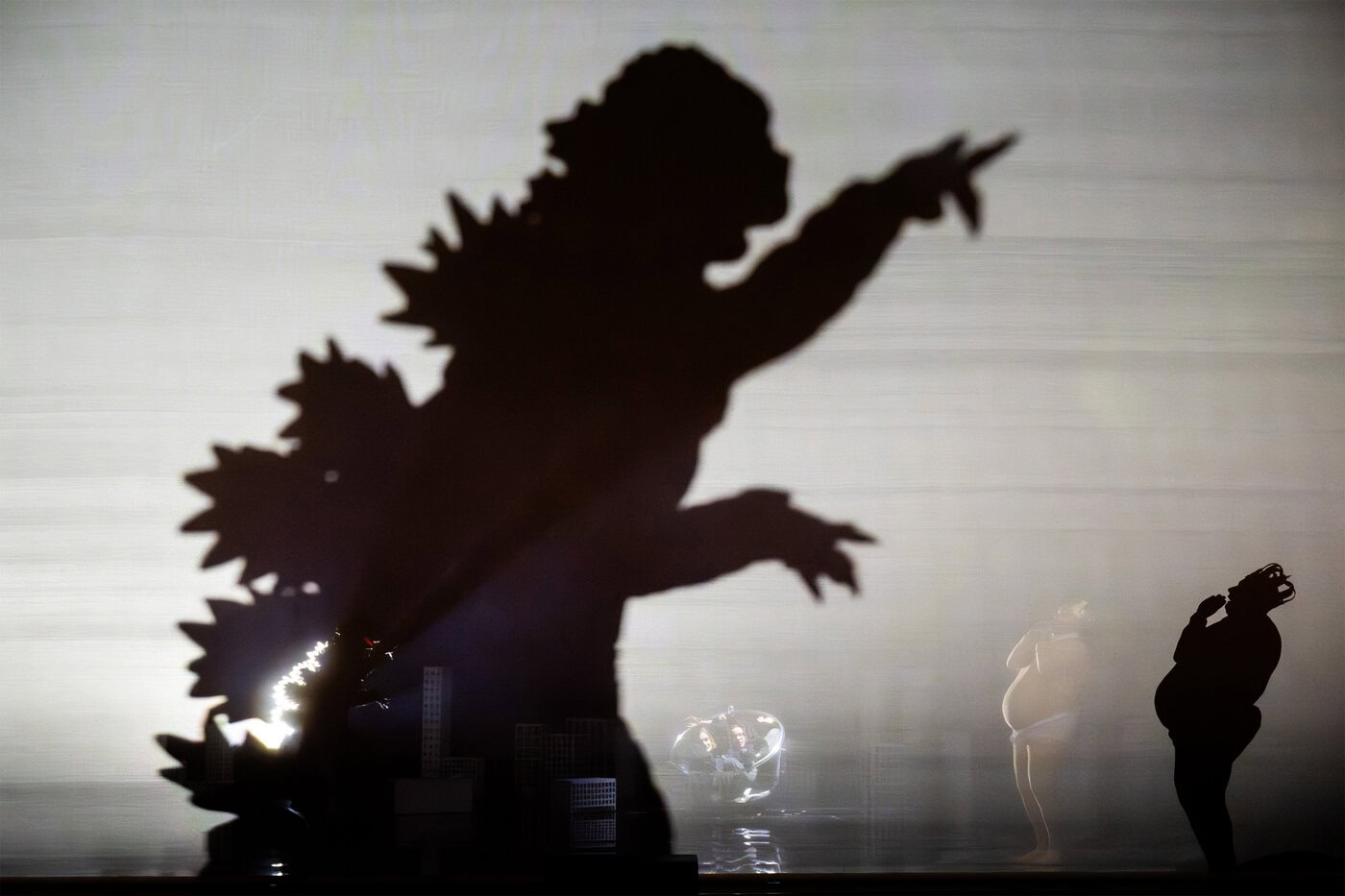
As a result, the levels often drift apart. Added to this is the colorful and yet sometimes unimaginative scenic design. Director Tobias Kratzer and his team sometimes struggle to get the banter going, but they manage to create magnificent images at the climaxes. The battle of the monsters with Gorgonzilla (Anna Clementi) and the President (excellent: Georg Nigl) becomes a larger-than-life shadow theater. The final scene in the sea floods the eye and ear thanks to the skillfully employed cinematic means that Neuwirth loves so much. There is so much to experience, almost too much, because all the scenes, even the really successful ones, are too long and too cumbersome. The play could be cut down by a good third. The only thing that would be lost would be the precarious non-quality that characterizes the work to some extent.

But at this moment, the critic begins to suspect that he is once again trying to differentiate far too much and is losing sight of the end of the world. That may be. - Big (not monstrous) applause.

Zurich, Opera House; Premiere on March 8, 2026; co-production with Hamburg and Graz. Further performances until April 12

Georg Nigl (The King-President), Andrew Watts (Mickey), Eric Jurenas (Tuckey) and the extras team at Zurich Opera House. Photo: Monika Rittershaus/Operhaus Zürich

Ars Electronica Forum Valais 2026

24 compositions were selected for the Concert Selection of the 11th Ars Electronica Forum Wallis as part of the call for acousmatic works.

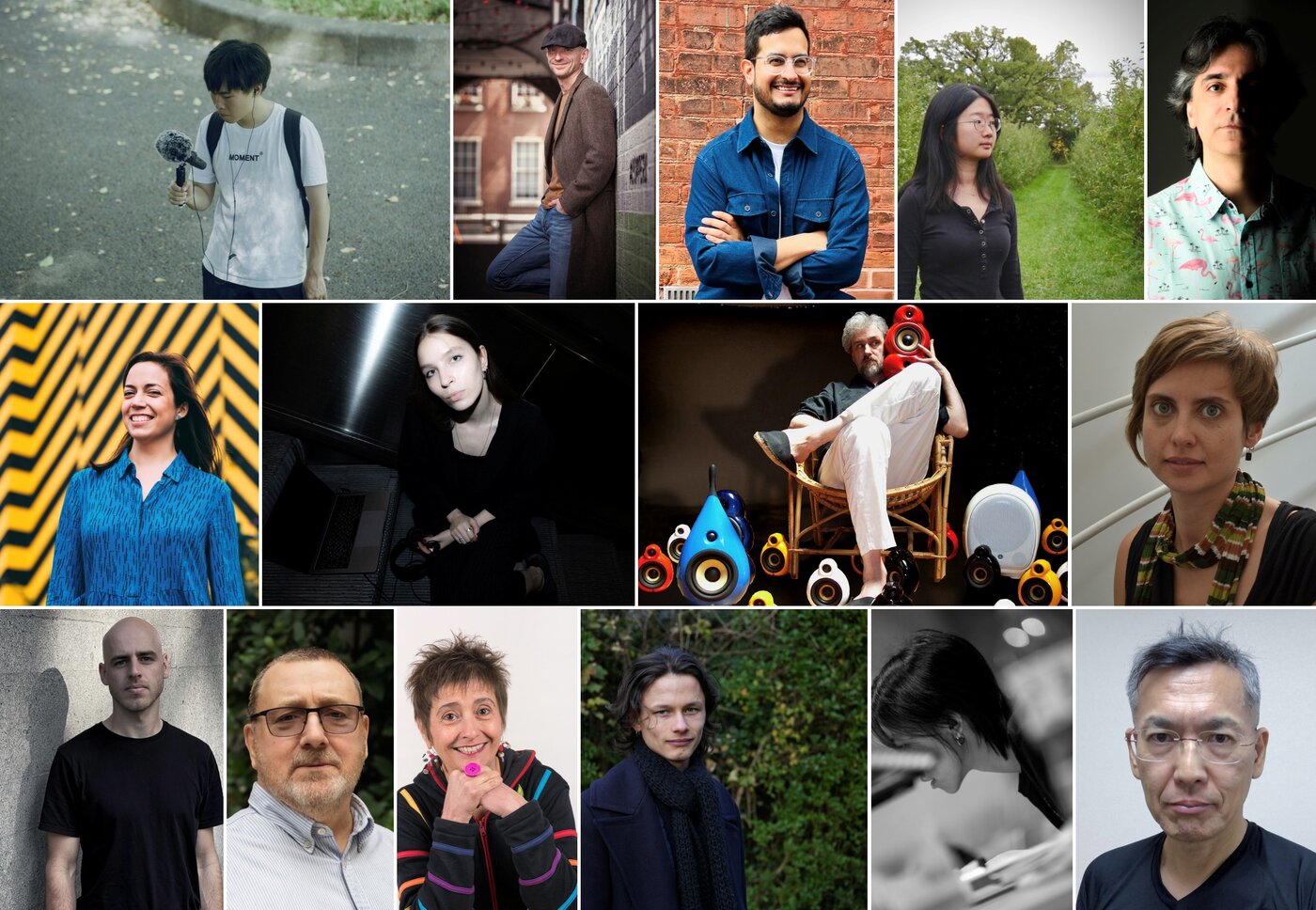
Some of those selected for the Ars Electronica Forum Wallis Selection 2026: (from left to right) Boyi Bai.) Boyi Bai, Gordon Delap, Varun Kishore, Anne Liao Zouning, Panayiotis Kokoras, Manuella Blackburn, Sofia Zaiceva, Jean-Marc Duchenne, Ariadna Alsina Tarrés, Pascal Lund-Jensen, Jonty Harrison, Lucie Prod'homme, Valentin Sismann, Li He, Yasuhiro Otani

41 works by 49 composers from 23 countries were selected for the 11th Ars Electronica Forum Wallis Call for Acousmatic Works. 24 works made it into the Concert Selection. There was a Special Mention for a further 17 works. 157 composers from 42 countries and all continents submitted a total of 182 works. The jury consisted of Kotoka Suzuki (JPN), Jaime Oliver La Rosa (PER), Reuben de Lautour (TUR/NZL) and Javier Hagen (Festival Director Forum Wallis).

The concerts will take place this year on June 5 and 6 and on July 3 and 4 as part of the Festival for New Music Forum Wallis at the MEbU (Münster Earport) in Goms.

The Forum Valais is an annual international festival for new music in Switzerland. It is run by the Valais chapter of the International Society for New Music (IGNM-VS). Since 2006, it has co-produced over 350 world premieres and presented works by over 500 composers from all over the world. Regular guests of the festival include ensembles such as recherche, Zafraan, UMS'nJIP, dissonArt, Steamboat Switzerland, Cod.Act, Arditti String Quartet, Klangforum Wien, ensemble für neue musik zürich, Contrechamps and Ensemble Modern

http://forumwallis.ch

The winners of the Concert Selection

(in alphabetical order)

Bai Boyi (CHN) - Take me back to Indonesia
Bernard Bruno (FRA) - lune(s)
Blackburn Manuella (GBR) - Train of Thought
Borrel Stéphane (FRA) - La Grenouille de Lycie

Cho Youngjae (KOR) - narthex
Delap Gordon (IRL) - An Insect that Shuns the Light
Duchenne Jean-Marc (FRA) - On a Changing Sky
Eghdami Pierre (FRA/GER) - Fulgurite

Harrison Jonty (GBR) - Chamber music
Hayashi Kyohei (JPN) - Butterfly Garden
Karkatselas Theodoros (GRC) - Quarks
Kokoras Panayiotis (GRC) - Useless box
Kulari Daniel (ALB/ITA) - Variations and Disintegrations on a Theme by Çesk Zadeja

Lund-Jensen Pascal (CHE/DEN) - Building the Anthropocene
Moyers Jr. Timothy (USA) - Heliosphere
Noiseau Etienne (FRA) - Jardins d'Épicure
Otani Yasuhiro (JPN) - Thresholds of Presence
Prod'homme Lucie (FRA) - Espèces de gros sons

Stollery Pete (GBR) - Bosque
Totaleee (ITA, Giuseppe Pisano, Andrea Laudante, Paolo Montella) - Non è un atlante di traiettorie algo-siderali
Vanderburg Kyle (USA) - Tempest in a Teakettle
Yağlı Berk (CYP/TUR) - False Awakening on a Mediterranean Island
Yang Wei (CHN) - Rain contained, rain contains
Zouning Anne Liao (CHN) - Dust Storm


Awarded with a Special Mention

(in alphabetical order)

Alsina Tarrés Ariadna, Andrić Andreja, Bermúdez Chamberland Diego, Bravo Benard Hector, Carcassi Daniele, Casolino Alessandro, Harper Nathan, Kishore Varun, Lampropoulou Magda, Laudante Andrea, Lewis Andrew, Li He, Montella Paolo, Naylor Cameron, Oliveira João Pedro, Parisse Mattia, Parry Jake, Pastorino Paolo, Scott Richard, Sismann Valentin, Snapir Jonatan, Tesorini Riccardo, Zaiceva Sofia


New lecturers at the HSLU from fall semester 26/27

Fabre Guin, Johanna Kulke and Sanne Lorenzen will be teaching at the HSLU's Institute for New Music, Composition and Theory starting this fall.

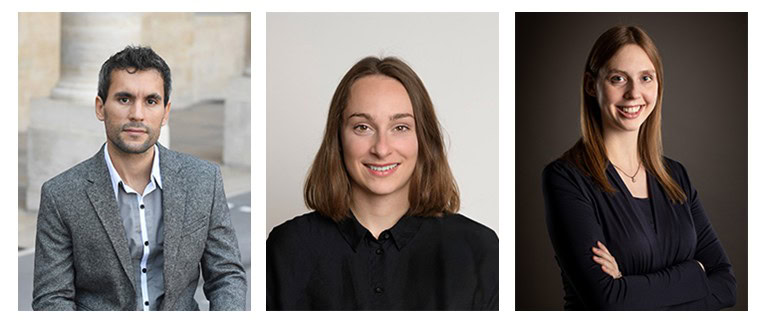
From left: Fabre Guin, Johanna Kulke, Sanne Lorenzen. Pictures: zVg

How the Lucerne University of Applied Sciences and Arts - Music announces that the three people will take up their posts in the fall semester 2026/27. The HSLU writes about the musicians' careers:

Fabre Guin studied violin, harpsichord, organ and composition (including harmony, counterpoint, formal theory, instrumentation and harmonization on the piano) at the conservatoires in Nancy, Saint-Maur-des-Fossés and Paris, as well as musicology at the Sorbonne. He initially taught écriture at the Conservatoire d'Aubervilliers and has been teaching at the Conservatoire National Supérieur de Musique et de Danse de Paris since 2018 in the areas of écriture, analysis musicale and culture musicale appliquée active. He is also titular organist at the Sainte-Geneviève church in Paris and regularly gives concerts

Johanna Kulke completed a Bachelor's degree with a double major in piano and violin as well as a Master's degree in violin and music theory at the Lucerne School of Music. She has been teaching violin, piano, music theory and composition at the Oberaargau Music School in Langenthal and Herzogenbuchsee since 2018 and is also active as a violinist, conductor and composer.

Sanne Lorenzen studied church music at the Royal Danish Academy of Music in Copenhagen. This was followed by a bachelor's and master's degree in music theory at the Fribourg University of Music and a master's degree in organ at the Schola Cantorum Basiliensis. She has been teaching music theory at the Pre-College of the Lucerne School of Music since 2022 and is Senior Lecturer for Music Theory and Aural Training at the University of Music and Performing Arts Graz. She also works as an organist for the reformed church in Sursee.


A festival is rebuilt

The new Ascona Music Festival was presented to the public at a media conference in Locarno at the end of January. No stone is left unturned.

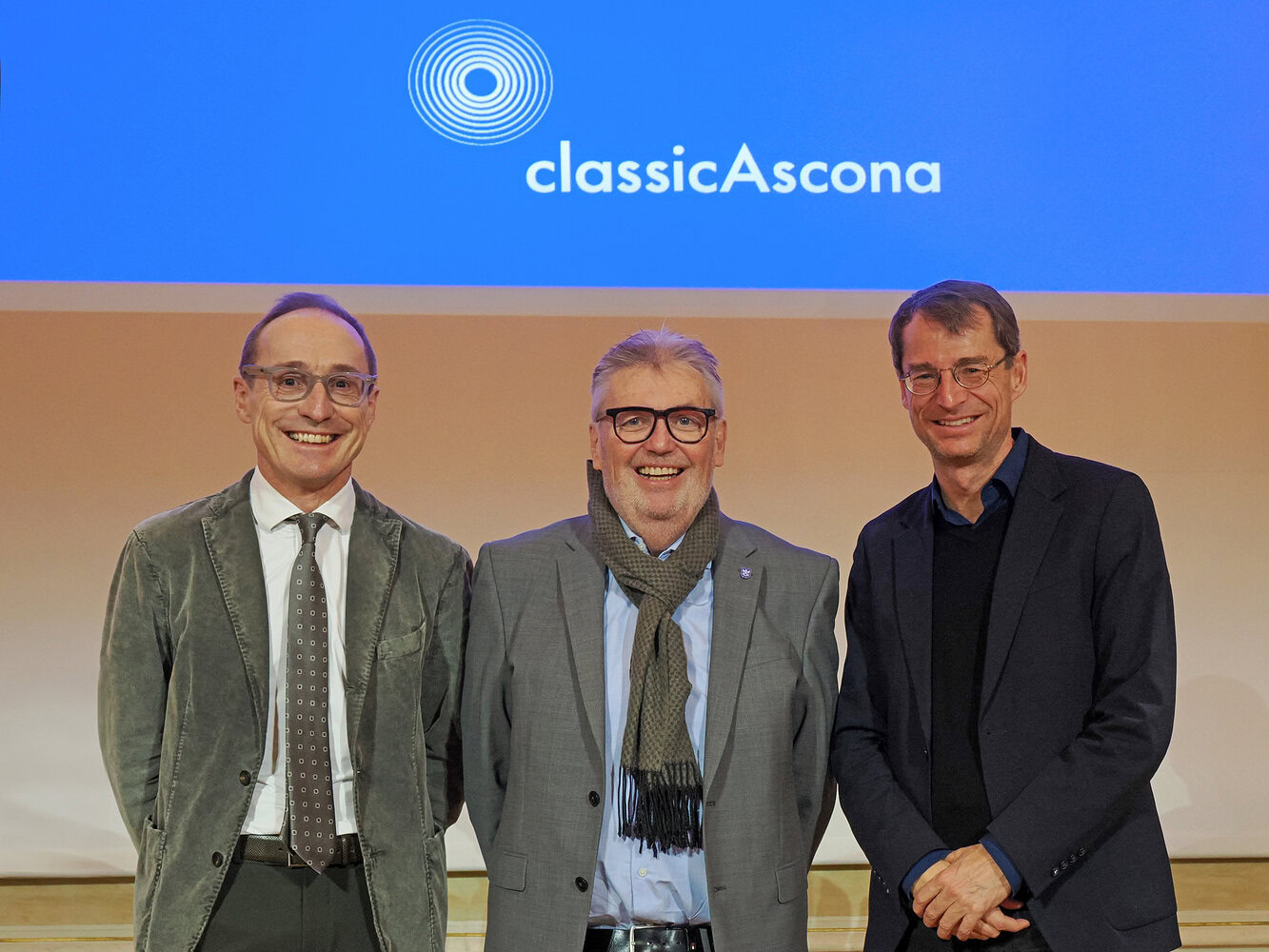
From left: Luca Allidi (President of the Foundation Board), Giorgio Gilardi (Mayor of Ascona) and Christoph Müller (Artistic Director). Photo: Roberto Barra

The traditional Settimane musicali di Ascona are history. Founded in 1946, the oldest classical music festival in Switzerland alongside the Lucerne Festival (1938) and the Braunwald Music Week (1936) has been radically restructured in its eightieth year and is now called classicAscona. The transformation process was implemented by the new artistic director, cultural manager Christoph Müller, in collaboration with the local authorities. With Sindaco Giorgio Gilardi on the podium and a large number of local representatives in the hall, they were prominently represented at the media conference. A clear indication of the importance Ascona attaches to the festival in the future. It is to become an economic factor in the region, which means promoting cultural tourism and attracting an increasingly affluent audience to Lake Maggiore. The event period from mid-September to mid-October is ideal for this; the popular summer festivals have come to an end and the sunny early autumn in Ticino does its part. In addition to Ascona and Locarno, the Brissago Islands, Monte Verità and churches in Ronco and the lower Maggia Valley are picturesque venues.

From artist festival to cultural event

The drastic changes range from the new, somewhat cool-looking company logo to the marketing, audience strategy and program structure. The artists' festival, led for 13 years by pianist Francesco Piemontesi, at which the artistic director also performed as a soloist and chamber musician and gathered an illustrious group of like-minded people around him, has thus become a cultural event in which economic considerations and artistic planning are closely intertwined.

Basel-born Müller, a cellist and former member of the Basel Chamber Orchestra, can draw on a wealth of experience as an event organizer. Before his appointment to Ascona, he directed the Menuhin Festival in Gstaad for 25 years, where he increased the annual attendance from 13,000 to around 28,000 - a fact that was noted with great interest in Ascona. He also founded the Lucerne Chamber Circle and, together with Sol Gabetta, the Solsberg Festival in northern Switzerland. Recently, he has also become the director of the Klosters Music Festival. A musical multi-entrepreneur who now wants to make his business model, which he knows how to adapt to local conditions, fruitful for Ascona too.

Media presence, celebrities and artists in residence

Success is to be ensured through improved advertising - Müller speaks of 30,000 e-mail addresses - new program content and an opening to new audiences. And last but not least, the appearance of international celebrities, where Müller can draw on the artist contacts he has built up over the years. The most precious trophy he has now announced for Ascona is Cecilia Bartoli. Her guest appearance in Gluck's Orfeo ed Euridice, The opera is performed semi-staged by the Musiciens du Prince from Monaco, but with tickets costing between 95 and 275 francs, it is not for the average person. With a budget that has doubled to 1.7 million francs, the ticket prices are quite reasonable, even for the concerts of the three «artisti in residenza», soprano Julia Lezhneva, violinist Vilde Frang and cellist Sol Gabetta, who also give master classes. Only guest orchestras such as the Basel Chamber Orchestra, the Camerata Salzburg and the Deutsche Kammerphilharmonie Bremen are a little more expensive.

Academies of all kinds

The educational programs are a new and important part of the festival: the classicAscona Academy, the Choral Academy with the London Tenebrae Choir and the Baroque Academy with the ensemble Il Pomodoro and flautist Maurice Steger. In the final concerts, young musicians can present themselves; they are entitled «Next Generation» and are free of charge. Collaboration with the Conservatorio in Lugano and regional schools is also planned. All these measures are intended to arouse the curiosity of the local public for the paid concerts. International music business, the promotion of young talent and the development of new audiences: an interesting mix. In September, we will see how it all comes together.


Joachim Raff: a composer with a message for today's Switzerland

Joachim Raff, who was born in Lachen/SZ in 1822 and died in Frankfurt in 1882, wanted his music and his social views to unite rather than divide.

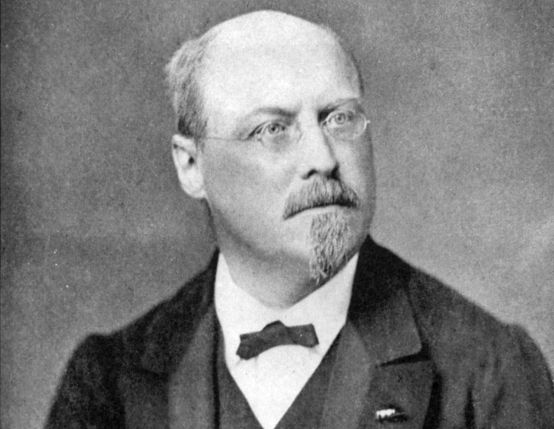
Raff 1878. photograph by Mondel & Jacob, Library of Congress's Photographs division


The original version of this text was first published with many pictures on viewswitzerland.ch


When Franz Josef Raff (1789-1861) fled from Empfingen-Wiesenstetten in southern Germany to Switzerland in 1810 on the advice of his father, he had no idea that his future son Joseph Joachim would have a world career as a composer ahead of him. The Napoleonic wars, in particular the preparations for the Russian campaign and the early death of a brother in the war, ultimately lead to his escape to Wettingen Abbey. After working as a tutor in Lucerne, the musically gifted Franz Josef came to Lachen, the district capital of Märchl, as a teacher and church musician in 1817. Progressive circles from the village's revolutionary liberal elite had already founded an elementary school together with the parish, alongside the Latin school, and Father Raff acted as a strict pedagogue who also excelled in church music.

Katharina's marriage to the daughter of the neighbouring, politically rebellious ox farmer and Landammann Franz Joachim Schmid decisively politicized the mood in the Raff family. Schmid was one of the ringleaders who opposed the domination of the powerful noble families and patricians in Schwyz and, together with the Märchler doctor Melchior Diethelm, wanted to establish an independent canton of Ausserschwyz. Melchior Diethelm would later become one of the architects of the Swiss bicameral system. Joachim Raff was born on May 27, 1822 in the old 16th century Sust. This «multi-purpose building» serves as a commercial and industrial building as well as a school and arsenal. It also had to accommodate the teacher's apartment.

Early giftedness of Joachim

Throughout his school years in Switzerland until 1840, Joachim stood out for his diligence, musicality, multiple talents, maverick nature, ambition and even a desire, expressed to his mother, to achieve something very special in life. His strict father taught him to play the violin, piano and organ. He mastered Latin early on and at the Jesuit College in Schwyz, which he attended from 1838-1840, he was repeatedly top of his class in a wide range of subjects. Throughout his life, he would continue his self-taught education and develop into one of the most recognized music historians and composers. Early influences and an excellent genetic make-up are decisive for his success.

His early politicization at his grandfather's pub table, the awareness of being the son of an exposed political refugee and thus belonging to a minority, but also his great sensitivity, his strong mind and also his striking personality accompany Raff throughout his life.

Early Raff compositions were sung by him, together with his fellow students, at the «Pannerfest» for the banner lord Theodor Ab Yberg (1795-1869) in Schwyz in 1840. He was also impressed by the visit of the Schwyz Landsgemeinde on May 3, 1840 in Rothenthurm.

Joachim Raff is enthusiastic about the political customs, the corresponding democratic rites, procedures and elections in this politically very uncertain time of transition from a confederation of states to a federal state and thus to the foundation stone of Switzerland.

He also wrote about this in May 1840 in the then well-known Catholic-conservative newspaper «Sanct Gallischer Wahrheitsfreund». Early on, he developed his own identity based on justice and equality. There are indications in his biography of early bullying, ostracism due to his giftedness and impressive, very personal conflict management regarding his strict father (he goes on hunger strike against him).

Throughout his life, he defined himself with conviction and an explicitly equal consciousness as someone who came from Switzerland, his motherland, and with Germany as his homeland.

All this can be read in the biography of her daughter Helene Raff, the writer and painter, about her father (Bosse, Ravensburg 1925).

First professional experience and years of travel

Although Joachim Raff wanted to become a professional musician against his parents' wishes, he gained his first professional experience as a teacher in Rapperswil from 1840 to 1844.

An expert opinion from the then already well-known musician Felix Mendelssohn Bartholdy (1809-1847) attests to his above-average musicality, which finally triggers his risky career change to become a freelance musician in 1843. This courageous, adventurous step, which he took against all odds, not only drove him away from his family, but also into homelessness on the Platzspitz in Zurich.

Thanks to a somewhat desperate attempt to make contact with Franz Liszt (1811-1886), then celebrated as a star pianist, at the Casino Basel in June 1845, he received a promising promotion.

After their first joint project, the inauguration of the Beethoven monument in Bonn in August 1845, Liszt arranged various work opportunities for him in music houses in Cologne, Stuttgart and Hamburg. Many more or less successful compositions for piano were written during this time. Above all, however, Raff learned a great deal through self-tuition, was in contact with musicians and published in various international specialist journals. It was in Stuttgart that Raff met and came to appreciate his most important friend and lifelong patron, Hans von Bülow (1830-1894).

Profiling in Weimar

Joachim Raff took the step towards assisting Franz Liszt in the transition from 1849/50. Although the composer from Lachen also felt somewhat exploited by Liszt (many instrumentations, orchestrations, correspondence, organization of trips and music days, negotiations with publishers, journalistic activities), he was also supported by him (help with his own compositions, performances of Raff's works at the piano, conducting Raff's works, offering various relationships, etc.). However, his progressive emancipation from his patron was also unstoppable due to stylistic differences.

From the very beginning, Raff has consistently followed the path of processing the most diverse stylistic elements from music history, from which he is constantly inspired. He is not familiar with the passionate disputes over style that took place in the 19th century.

At the same time, however, he is careful to follow his own path, his own music, with ultimately his own style. Above all, his contrapuntal mastery, the colorfulness of his instrumentation and the complexity of his treatment of the themes became his trademark.

Raff expands his compositional activity. Songs, chamber music works and even an opera («King Alfred») are the focus of his further musical development in his younger years. Successes, but also repeated failures, occurred in parallel.

His network of contacts expands significantly. He met Richard Wagner (1813-1883), the violinists Joseph Joachim (1831-1907), Edmund Singer (1831-1912), Alexander Ritter (1833-1896), the cellist Bernhard Cossmann (1822-1911), but also representatives of the Weimar court such as Grand Duke Carl Alexander (1805-1863). He was able to talk to the composers Hector Berlioz (1803-1869), Robert Franz (1815-1892), Johannes Brahms (1833-1897) and Louis Spohr (1784-1859) personally and on an equal footing. He also regularly exchanged ideas with progressive literary figures such as Peter Cornelius (1824-1874) and August Heinrich von Fallersleben (1798-1874).

The Wagner question

The charisma and success of Richard Wagner in particular challenged Raff. The radical reorientation of opera as a total work of art inspired him. In his book «The Wagner Question» (1854), Raff takes an in-depth but also critical look at the star of his time. Raff attempts to counter Wagner's leitmotif technique, the role of the orchestra and the expansion of harmony with his own interpretation. With the fairy-tale epic «Sleeping Beauty» (1856), he tackles this in a practical way.

The music drama «Samson» (written between 1851 and 1857) should actually have been his doctorate on the one hand, but also a work on a par with Wagner (Lohengrin). Raff also wanted it to qualify him for a position as a secretary at the Goethe Foundation or as a curator at the Weimar library (music department). This example impressively demonstrates Raff's three great potentials, which were already apparent in his early youth: an academic career, a career as a composer and, what remains to be described, his career as a university teacher and university director. Various reasons prevent the performance of the completed tragedy. It was not until 2022, the 200th anniversary of Joachim Raff's birth, that the successful world premiere took place at the German National Theater in Weimar. And in 2023, the World premiere recording at the Theater Bern under the overall project management of Graziella Contratto (Label Schweizer Fonogramm).

Breakthrough in Wiesbaden

It was also in Weimar that Joachim Raff met his future wife, the actress Doris Genast (1827-1912). She worked at the theater in Wiesbaden and the hundreds of pages of mutual letters from their long-distance relationship between Wiesbaden and Weimar fortunately still exist and form the basis for future research on the «Silver Age of Weimar». The touristically and culturally diverse spa town of Wiesbaden was therefore also the place that Raff chose in 1856 as the future center of his work and life until 1877.

As if the floodgates were opening, Joachim Raff plunged into his most fruitful, productive and successful creative period as a composer.

Sophisticated piano suites, his first concerts at the Gewandhaus in Leipzig, which he conducts himself, the 1863 award ceremony at the Gesellschaft der Musikfreunde in Vienna with his first symphony «An das Vaterland», demanding large sonatas for piano and violin, many other chamber music works (trios, quartets, quintets, sextets, octets), songs and choral works, successful symphonies (e.g. the 3rd Symphony op. 153 «Im Walde» in 1869, or the 5th Symphony, op. 177, «Lenore»), which are performed worldwide, characterize this period. For example, the 3rd Symphony op. 153 «Im Walde» in 1869, or the 5th Symphony, op. 177, «Lenore»), which were performed worldwide, characterize this period. New operas were also written (e.g. "Die Parole"; "Dame Kobold").

Joachim Raff's private life also changed. In 1859, he married Doris Genast, the daughter of the Weimar director and actor Eduard Genast (1797-1866), who was still working with Johann Wolfgang Goethe (1749-1832) at the court in Weimar.

In 1865, the couple's only daughter, Helene, joined them. She was brought up and educated in a progressive and equal manner by the couple, who were avant-garde at the time and had artistic and professional careers on both sides. She studied the same school subjects as her male counterparts and was one of the pioneers of the women's movement in Germany at the beginning of the 20th century.

Joachim Raff receives various honors, knight's crosses and medals of merit from various duchies in Germany, Luxembourg and Italy. In 1872, together with Franz Liszt and Richard Wagner, he was made an honorary member of the New York Philharmonic. He dedicates a piano concerto to his friend Hans von Bülow and honors the then leading cellist Friedrich Grützmacher (1832-1903) with the Concerto for Cello, op. 193. Another world-class instrumentalist, the Spanish violinist Pablo de Sarasate (1844-1908), takes on Raff's extensive violin works and disseminates them almost worldwide.

Director of the Dr. Hoch'sches Konservatorium in Frankfurt am Main

It was a great satisfaction and honor for the self-taught Joachim Raff to be asked to become the first director of the newly founded Dr. Hoch'sches Konservatorium in 1877. Personalities such as Johannes Brahms and Josef Gabriel Rheinberger (1839-1901) were also under discussion. The Frankfurt lawyer Dr. Joseph Hoch (1815-1874) bequeathed a considerable fortune to the city to enable the foundation of this conservatory.

Raff enthusiastically puts together an important teaching staff and quickly develops the school into an internationally recognized music academy. He himself teaches composition. Franz Liszt and many other important musicians visit the institute several times.

As a special feature, Raff employed the top pianist and composer Clara Schumann (1819-1896). A woman as a professor at a university is unusual and again testifies to the innovative director's progressive understanding of gender equality. Raff also went his own visionary way by creating a separate class for female composers. In his inaugural speech on September 22, 1878, Raff's Samson studies are mentioned and «he gives an outline of music history in a concentrated form and sophisticated diction that is rarely found.» (Cahn P., Das Hoch'sche Konservatorium, 1878-1978, 1979).

Joachim Raff also continued to compose well-known works. Symphonies, an opera, orchestral preludes, a cantata, a vocal cycle and, above all, his most important sacred work, the oratorio «Welt-Ende Gericht Neue Welt». This opus 212 is one of his last works. Raff's daughter, Helene, mentions in her biography of her father that he was often haunted by premonitions of death towards the end of his life. In 1881, he completed the comprehensive work and the following year, on June 24, 1882, Raff died of cardiac paralysis in Frankfurt am Main.

To mark the 200th anniversary of his birth in 2022, the aforementioned oratorio will be impressively and worthily performed by the Gewandhaus choirs and the Capella Lipsiensis under the direction of Gregor Meyer in the parish church of Lachen, his birth church and in the Gewandhaus in Leipzig and recorded on CD.

A lasting legacy

Raff's legacy is twofold. Firstly, there is his music. Since the 1970s, it has enjoyed an astonishing renaissance. Raff's work is once again present in research (several dissertations, master's theses, research projects in various countries), recordings (around 150 CD productions on 55 labels), countless important concerts all over the world, publications, podcast productions, presence in the electronic media and exhibitions.

It is probably in this context that the music makers responsible also recognize Raff's personality. At a time when provocations, divisions, egoism, fake news, radicalization and nationalism are having an increasingly negative impact on world events, Raff's work, which is based on harmonizing, connecting, coherent, well-founded knowledge and thus respectful and appreciative insights, takes on a new dimension.

Many musicologists recognize the value of the «synthesis» with which they characterize the work of Joachim Raff. Raff could often be harsh in his arguments and pursue his goals with a certain stubbornness; he even came into conflict with the law as a result of his occasional debts. But with his music and his social views, he wanted to unite and not divide. He conveyed values and reduced tensions. As a «counterpoint», his view of mankind and the world fit well into the 21st century.

List of sources

Books

- Cahn, Peter: The Hoch Conservatory 1878 - 1978, Frankfurt am Main, 1979

- Dörffel, Alfred: Die Gewandhauskonzerte zu Leipzig 1781 - 1881, reprint of the 1884 edition,

Leipzig, 1980

- Genast, Eduard: From Weimar's classical period, Stuttgart, 1903

- Kolb, Severin: «The Wagner Question» - Joachim Raff's Confrontation with Richard Wagner in Weimar (1850 - 1856), Raff-Studien Volume 2, Wiesbaden, 2026

- Kolb, Severin and König, Stefan: (eds.), Synthesen. Conference on the opening of the Joachim Raff Archive, Lachen 2018 (conference report), Raff-Studien Volume 1, Wiesbaden, 2026

- Kolb, Severin: Years of upheaval - Joachim Raff in Stuttgart (1847 - 1849) in Musik in Baden-Württemberg, Marbach am Neckar, 2021 / 2022

- Marty, Res: Joachim Raff - Life and work, Lachen, 2014

- Marty, Res: Anniversary publication, 50 years of the Joachim Raff Society, Lachen 2022

- Marty, Res: Lines & Sound, Documents & Stories from the Joachim Raff Archive, Lachen 2025

- Raff, Helene: Leaves from the Tree of Life, Munich, 1938

- Raff, Helene: Joachim Raff, a biography, Regenburg, 1925

- Schäfer, Albert: Chronologisch-systematisches Verzeichnis der Werke Joachim Raff's, Wiesbaden, 1888

- Thomas, Marc: The Music of Joachim Raff, An illustrated catalogue, Stuttgart, 2022

Documents

- Walter Labhart Documentation Library, Endingen AG

- Joachim Raff Archive / Marty Collection, Lachen


This text was first published with many pictures on viewswitzerland.ch

Concert tour by a chamber orchestra from Bachmut

To mark the fourth anniversary of the Russian war of aggression against Ukraine, the chamber orchestra of the Ivan Karabyts Bachmut College for Culture and the Arts will be touring Switzerland and Liechtenstein from February 19 to 25.

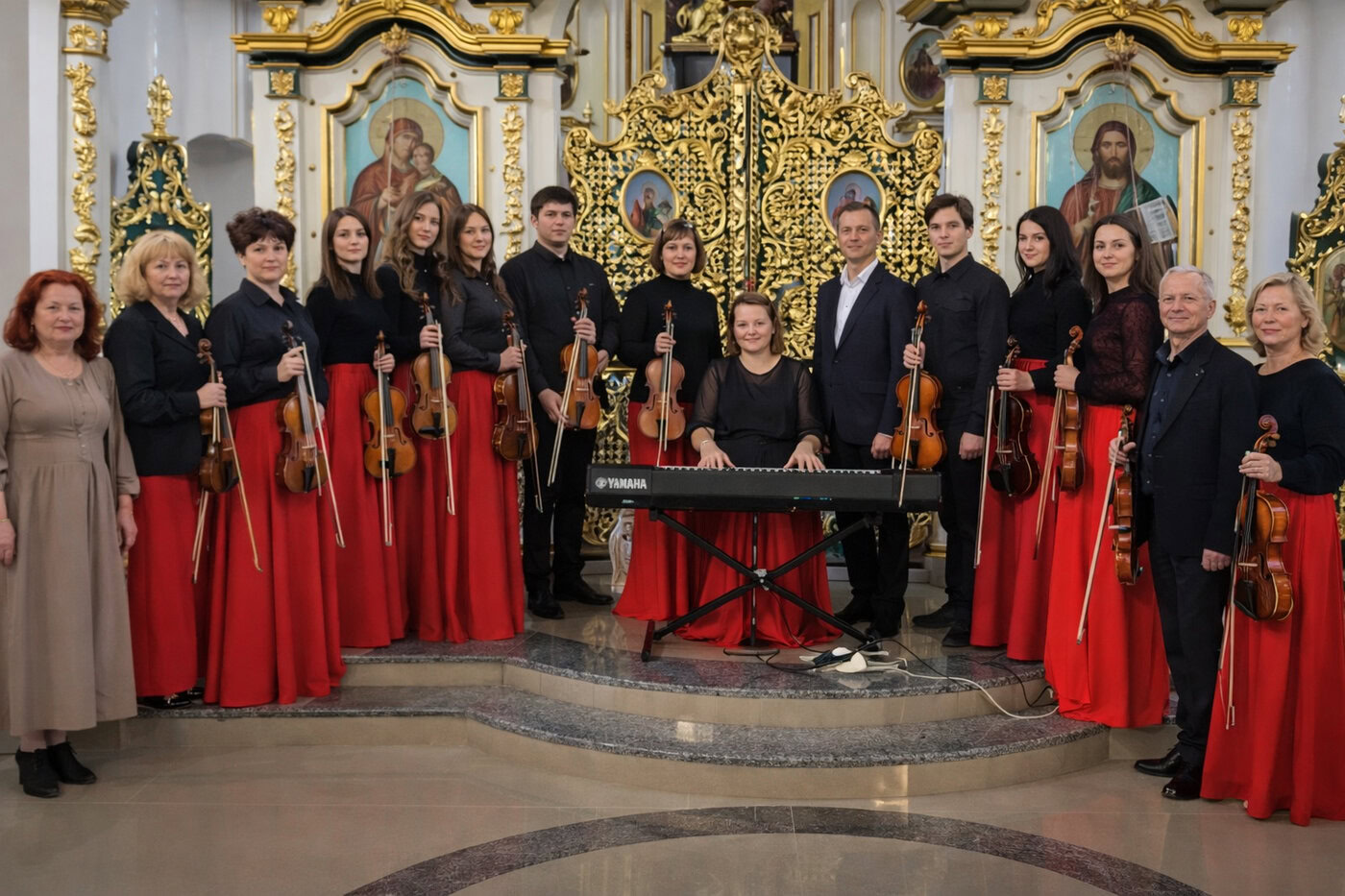
The chamber orchestra of the Ivan Karabyts Bachmut College for Culture and the Arts. Photo: zVg

February 24, 2026 marks the fourth anniversary of the beginning of the Russian war of aggression against Ukraine. With a concert tour through Switzerland and Liechtenstein, refugees, local partner organizations and the population are jointly commemorating the victims of the war - and sending a signal of solidarity. The tour is organized by the Ukrainian Cultural Association Prostir Lucerne and Ukrainehilfe Zentralschweiz, in close cooperation with numerous local partners.

As part of the tour, the chamber orchestra of the Ivan Karabyts College Bachmut for Culture and Art (currently in exile in Kamjanez-Podilskyj, Ukraine) will perform in several cities. The program includes short works by Ukrainian composers - as an expression of Ukraine's independent cultural diversity: culture as resistance and hope.

Bachmut - a city that no longer exists

Bachmut, once a city of around 80,000 inhabitants, became the scene of one of the most brutal battles of the 21st century and is now considered uninhabitable. The college from which the orchestra originated was destroyed in 2022, instruments looted, classrooms vandalized and the concert hall bombed. Nevertheless, the young artists continue to make music - under makeshift conditions, with salvaged archives and a few surviving instruments.

The orchestra uses the concerts to collect donations and draw international attention to the situation in Ukraine. At the same time, making music together sends a strong signal: for dignity, cultural identity and the future.

Concert dates - Tour Switzerland & Liechtenstein

Thursday, February 19, 2026 - 18:00 | Schaan (LI)
Parish Church of St. Laurentius, Reberastrasse 17, 9494 Schaan
Local organization: SKS Integrationshilfe association

Friday, February 20, 2026 - 19:00 | Zug
St. Johannes Zug, St.-Johannes-Strasse 9, 6300 Zug
Local organization: Catholic parish of the city of Zug

Saturday, February 21, 2026 - 17:00 | Olten
Christkatholische Stadtkirche, Kirchgasse 2, 4600 Olten
Local organization: KALYNA Ukraine Network Olten Region

Sunday, February 22, 2026 - 09:00 | Basel
Thomaskirche Basel (service followed by a concert),
Hegenheimstrasse 229, 4055 Basel
Local organization: Worldwide Church
Donations: Ukrainian aid with a heart

Sunday, February 22, 2026 - 17:00 | Zurich
Grossmünster Zurich, Zwingliplatz 7, 8001 Zurich
Local organization: Grossmünster Zurich
Donations: HEKS

Monday, February 23, 2026 - 19:00 | Lucerne
Lukas Church Lucerne, Morgartenstrasse 16, 6003 Lucerne
Local organization: Ukrainian Cultural Association Prostir & Ukrainehilfe Zentralschweiz

Tuesday, February 24, 2026 - 18:30 | Bern
Bern Minster (peace prayer and concert), Münsterplatz 1, 3000 Bern
Local organization: Arbeitsgemeinschaft Christliche Kirche in der Schweiz (AGCK)

Wednesday, February 25, 2026 - 19:00 | Geneva 
Geneva Espace Madeleine / Temple de la Madeleine Rue de la Madeleine 15, 1204 Genèvee
Local organization: Permanent Mission of Ukraine in Geneva (in coordination)


Admission free - collection / donations

Admission is free. A collection / donation will be collected at the exit. The proceeds will always go to the Ukrainian Cultural Association Prostir Lucerne and Ukrainehilfe Zentralschweiz and will be used in full for Ukrainehilfe on the ground.

The concert tour itself is fully funded by grants - donations from the concerts therefore flow directly into specific aid measures, particularly in frontline regions such as Kharkiv, Donetsk/Donbas, Luhansk, Zaporizhia and Kherson. Both humanitarian aid (e.g. urgently needed equipment and supplies) and cultural aid (e.g. musical instruments for children and support for cultural institutions) are supported. Exceptions: In Basel, the collection goes to the «Ukrainehilfe mit Herz» initiative, in Zurich the donations go to HEKS (according to the local organization of the respective concerts).

Focus on America at the Lucerne Festival

Sebastian Nordmann has presented his first summer program. The festival wants to become more relevant, but wants the controversial topic to be understood in purely musical terms.

Sebastian Nordmann. Photo: Marco Borggreve

It has been known for two and a half years that Sebastian Nordmann would succeed Michael Haefliger at the Lucerne Festival. The former director of the Konzerthaus Berlin officially took over as Artistic Director on January 1, 2026 and was invited to the media conference at the KKL to present the program. Although his predecessor had not planned anything in terms of content, the Foundation Board had set two clear guidelines: The Lucerne Festival Orchestra and the Lucerne Festival Academy were to be continued. In addition to ensuring artistic excellence, Nordmann is expected above all to make the festival more relevant. This was emphasized by Markus Hongler, President of the Board of Trustees, in his welcoming address.

Dreams without nightmares

The music festival should therefore have an even stronger impact on society. Against this backdrop, it was surprising how reserved Sebastian Nordmann was about this year's theme «American Dreams» - especially in view of the current political developments in the USA. At the media conference, the new artistic director deliberately stuck to the music. The motto emerged two years ago in a conversation with Riccardo Chailly, chief conductor of the Lucerne Festival Orchestra, who wanted an American focus. As a result, the opening concert on August 14 will feature Charles Ives‘ Symphony No. 1 as well as George Gershwin's Concerto in F for piano (soloist: Frank Dupree) and orchestra. The program is complemented by Gershwin's Cuban Overture and Steve Reichs New York Counterpoint for eleven clarinets. But can the positively connoted «American Dreams» be left uncommented while many Americans are currently experiencing massive state violence as a nightmare? «We don't want to take a position on party politics or economic policy,» answers Nordmann in a personal conversation. «What is important to us are the American dreams that were expressed, for example, in the music of George Gershwin or in the minimal music of Steve Reich and John Adams.» The artists were invited because of their art - from Yo-Yo Ma and Hilary Hahn to the poet Amanda Gorman.

The music should speak for itself

He does not want to offer a forum for party politics, but rather remain in dialog and build bridges. According to Nordmann, the festival stands for democratic and humanistic values. But how can this claim be fulfilled without taking a clear political stance, when in the USA it is hardly about party politics anymore, but about the fundamental threat to democracy? Nordmann answers: «I think it would be wrong for cultural institutions to say what is right or wrong in terms of party politics. We want to be for something, not against something. Anyone who advocates hatred and violence will not perform with us. We want to support the orchestras and artists from the USA here. And show them that we hear and see them,» says Nordmann. American music should therefore stand for itself - and there is plenty of it this summer, from John Adams to Frank Zappa, from Leonard Bernstein to Aron Copeland. The artist-in-residence is Augustin Hadelich, who lives in the USA and will be performing four different programs, including the violin concertos by Samuel Barber and Ludwig van Beethoven as well as a Fiddle Night. Anne-Sophie Mutter, whose career began at the age of 13 at the Lucerne International Music Festival, celebrates her 50th stage anniversary with the Pittsburgh Symphony Orchestra and Penderecki's 2nd Violin Concerto, among others, but also has an American program with André Previn's 2nd Violin Concerto.

Connections and innovations

Last summer, Jörg Widmann was introduced as the successor to the late Wolfgang Rihm as director of the Lucerne Festival Academy. With his conducting of Wolfgang Rihm's «monstrous» (Widmann's own words) orchestral work Tutuguri a link is made to its predecessor. The fragile music of composer-in-residence Mark Andre, which Widmann raves about, sounds completely different. There are innovations at the Lucerne Festival, which presents 20 symphony orchestras and 120 events, particularly in the area of communication. With the «Mittendrin» format brought over from Berlin, you can take a seat in the orchestra, and under the motto «Luege Lose Erläbe», a child or young person receives an accompanying ticket for 10 francs at every concert. Two free opening events at the KKL and open air on Europaplatz are designed to whet the appetite for the festival, which is two days shorter than last year. With «Orchestrating the moment», the festival has come up with an emotional claim. Will this be enough to make it more relevant?

Jerusalem in the center

The five-day chamber music festival Mizmorim in Basel from January 21 to 25 focused on intercultural encounters.

The Mizmorim ensemble. Photo: Mizmorim/Liron Erel

«The word Jerusalem contains both the Jewish word »Shalom« and the Arabic »Salam'. Both mean peace. At the festival, we don't want to divide the different cultures, but to come together through music. Jerusalem is a city that brings us together as a society," says Michal Lewkowicz, founder and artistic director of the Mizmorim chamber music festival in Basel. Almost all concerts, readings and guided tours at the twelfth edition, which was held under the motto "Jerusalem", were sold out. Renowned artists and ensembles such as the Gringolts Quartet, clarinettist Reto Bieri and flautist Ariel Zuckermann provided musical excellence. Young talents such as the Arola Quartet from Bern, which was only founded in 2024 and emerged from the masterclass that took place for the first time in November, were also discovered at the festival.

Arola Quartet from Bern. Photo: Mizmorim/Liron Erel

So almost all the events revolved around Jerusalem. Lukas Landmann gave an insight into the 5,500-year history of the city, which was conquered 34 times, at the Jewish Museum of Switzerland. Heidy Zimmermann showed the unpublished composition created in 1967 at the Paul Sacher Foundation Jerusalem for solo singer, narrator, two choirs and orchestra by Roman Haubenstock-Ramati. The vocal ensemble Voces Suaves dedicated its program «Wenn ich Dein vergesse ...» psalm settings from the Renaissance to the present day, which the Israeli-Palestinian oud player Taiseer Elias juxtaposed with Arabic melodies in his solos. The opening concert «The Ties that Bind us» by David Krakauer (clarinet) and Kathleen Tagg (piano) already featured jazz and klezmer echoes with November 22 a work by the Syrian composer Kinan Azmeh.

From Bach to Feldman

The concert «Yerushalayim shel zahav» at the SRF Studio Basel combined western music by Johann Sebastian and Carl Philipp Emanuel Bach with seven very different Jerusalem songs sung expressively by Hila Baggio, which showed the breadth of Judaism and its music: from Sephardic to Hasidic, from Yiddish to Yemenite. Marcelo Nisinman has written exciting arrangements for flute (Ariel Zuckermann), violin (Ilya Gringolts), harpsichord (Francesco Corti) and himself on bandoneon, which give each of the songs its own color.

Yerushalayim shel zahav in slow triple time, which became internationally known through the Israeli singer Ofra Haza, loses pathos in Nisinman's version and gains in complexity. His The silent wall The portrait of the city commissioned by the festival is surprisingly worldly and sounds like tango and joie de vivre. And conveys a good impression of the city's vibrancy and multiculturalism, which is the subject of lively discussion afterwards in the foyer over hummus, pita and beer.

The concert «Yerushalayim shel zahav» at the SRF studio in Basel. Photo: Mizmorim/Liron Erel

Two concerts were dedicated to the Jewish American composer Morton Feldman, who would have been 100 years old on January 12. On the late-night date, the half-hour Why patterns? for flute, glockenspiel and piano (1978) on the program. Deep flute tones (Anja Clift) meet high, warm piano sounds (Dmitry Batalov). Christian Dierstein joins the lines on the glockenspiel. This is very tender, intimate music that makes time stand still and turns simple changes of tone into events. The closing concert «Jerusalem Syndrome» with the Mizmorim Festival Ensemble, which featured a number of Swiss premieres, spanned an arc in the Ackermannshof from the Jewish composer Stefan Wolpe (1902-1972), who fled Nazi Germany to the USA, to the Israeli Palestinian Samir Odeh-Tamimi, who lives in Germany and whose trio Li-Umm-Kámel combines Arabic music with European compositional traditions. Another intercultural encounter at this festival.

Radio SRF 2 Kultur will present a cross-section of the program of this year's Mizmorim Festival on 19.3.2026 from 8 to 10 pm in the program «Im Konzertsaal».

Paul Clift and Iris Szeghy at the ISCM World Music Days 2026

Paul Clift and Iris Szeghy will represent Switzerland at the ISCM World Music Days 2026 in Romania with «On the celestial hierarchy» and «Elegies and Arabesques» respectively.

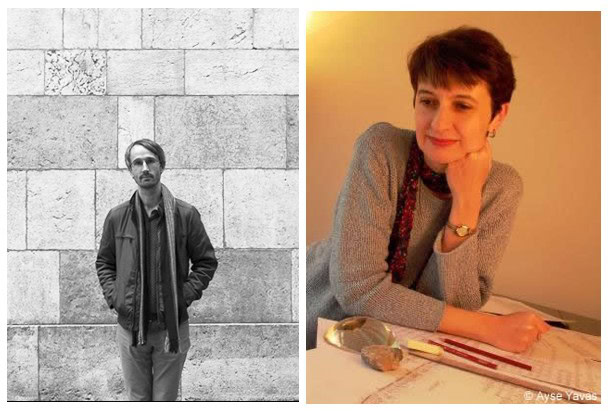
Paul Clift (photo from: paulclift.net) and Iris Szeghy (photo: Ayse Yavas)

The this year's World Music Days will take place in Bucharest from May 23 to 31. Its motto «Columna Infinita» is a reference to the sculpture by the important Romanian artist Constantin Brâncuși.

The Swiss Music Edition (SME) for the first time on behalf of the ISCM Switzerland (Swiss section of the International Society for Contemporary Music) entered the Swiss works. These were compositions by Alice Hoi-ching Yeung, Barbara Rettagliati, Benoit Moreau, Christophe Schiess, Manuel Valverde and Paul Clift from the ISCM Switzerland Call for Scores last fall. The selection was made by Christian Spitzenstaetter (President of ISCM Switzerland/SME), Aline Sarah Müller (SME office), Mathias Steinauer (SME/artistic director ISCM WMD 2004 in Switzerland) and Javier Hagen (SME/a. President ISCM Switzerland).

The work of Iris Szeghy was submitted by the Slovakian section. Iris Szeghy (2016/2026) is the fifth Swiss composer at the ISCM World Music Days after Helena Winkelman (2015), Junghae Lee (2004/2019), Esther Flückiger (2020/2023) and Karin Wetzel (2021).

Further information: https://iscm.org/wnmd/2026-romania/

Issue 1/2026 - Focus «Cultural heritage»

Photo: Holger Jacob

Table of contents

Focus

Only what touches me is a legacy
Adriano, Graziella Contratto, Myriam Schleiss and Urs Schnell discuss Switzerland's musical cultural heritage under the direction of Michael Eidenbenz.

Recognizing, preserving and promoting cultural heritage
What is on the «List of Living Traditions» and why?

World Heritage Site - and now?
What process led to the inclusion of Swiss yodeling on Unesco's «Representative List of the Intangible Cultural Heritage of Humanity» and what are the consequences?

«The idea of Swiss yodeling is a myth»
Zurich ethnomusicologist Dieter Ringli assesses what is currently happening in the country's yodeling scene.

The National Sound Archives between past and future
German translation of the original Italian text

(italics = summary in German of the original French article)

Critiques

New releases Books, Sound carrier, Websites, Notes, Movies

Echo 

There is not enough space in the printed edition for all the texts, so they are listed here and linked to the corresponding online articles. Most of these were published before the printed edition appeared.

The avant-garde and Wotan's advice
The Lucerne Festival presents new musical trends with «Forward».

Symphonic jam session
In the Repertoire Orchestra, amateurs and music students perform popular works of classical concert literature together with professionals for one evening.

Conducting an orchestre à vent en vrai
The Swiss Conducting Days offer six days of masterclasses and concerts for future conductors and chefs d'orchestre à vent.

Open letter with regard to the vote on the «Halving initiative» in March 2026
130 signatories

Total classical music
Carte blanche from Jürg Erni

Base

Articles and news from the music associations

Konferenz Musikhochschulen Schweiz (KMHS) / Conférence des Hautes Ecoles de Musique Suisse (CHEMS)

Swiss Music Council (SMR) / Conseil Suisse de la Musique (CSM)

Swissmedmusica (SMM) / Association suisse de Médecine de la Musique (SMM)

Swiss Musicological Society (SMG) / Société Suisse de Musicologie (SSM)

Swiss Musicians' Association (SMV) / Union Suisse des Artistes Musiciens (USDAM)

Schweizerischer Musikpädagogischer Verband (SMPV) / Société Suisse de Pédagogie Musicale (SSPM)

SONART - Musicians Switzerland

Swiss Youth Music Competition Foundation (SJMW)

Arosa Culture

SUISA - Cooperative Society of Authors and Publishers of Music

Swiss Association of Music Schools (VMS) / Association Suisse des Écoles de Musique (ASEM)


Bony heritage
Puzzle by Pia Schwab

________________________________________

Order issue for CHF 12.- (+ CHF 2.- shipping costs)

The National Sound Archives between past and future

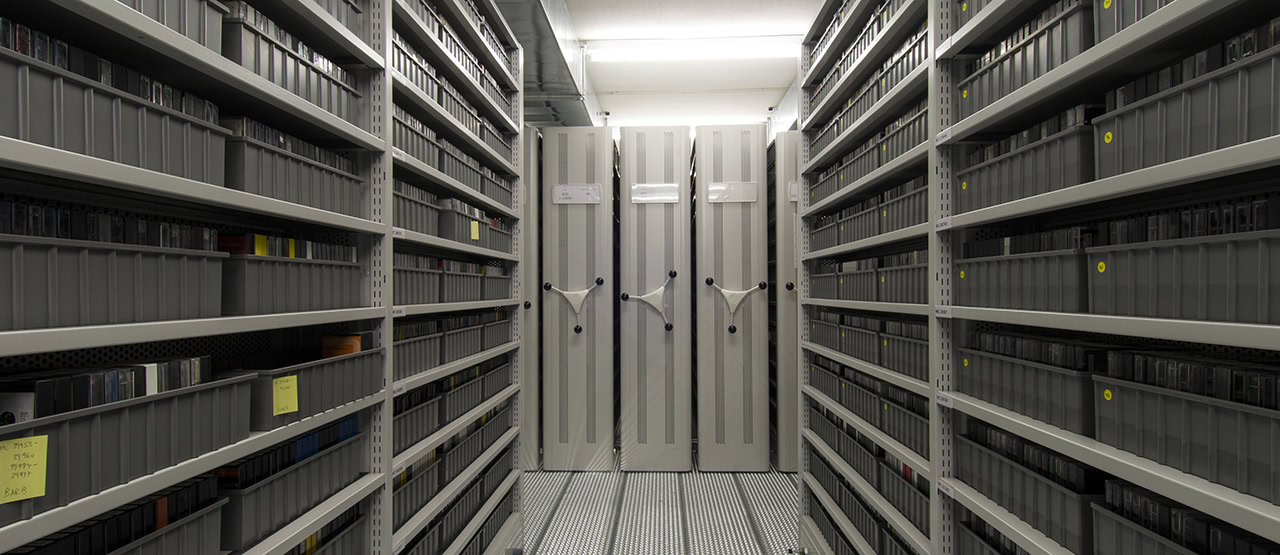
Founded in 1987 in Lugano and now part of the National Library, the Phonotheque collects, preserves and makes accessible Switzerland's audio cultural heritage. It takes care of all public and private recordings with documentary or identity-forming value for the country: music, voices, interviews, advertising or soundscapes.

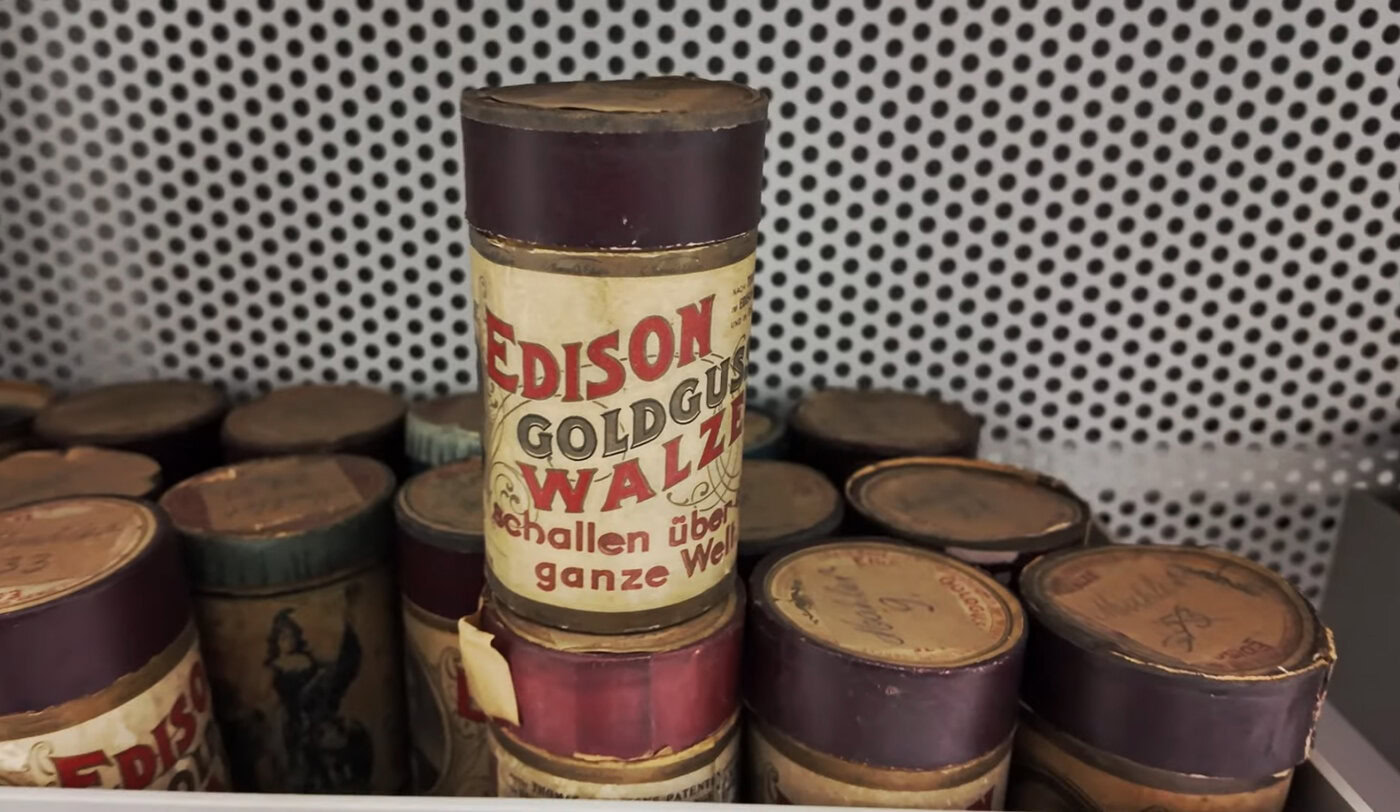
Thomas Edison's phonographic cylinders, patented in 1878, were the first sound carriers to allow the reproduction of sounds. Photo: National Sound Archives

It's a gesture from childhood and, depending on our romantic disposition, we don't stop doing it later. Don't you sometimes hold one of those shells on the bookshelf to your ear? «Listen to the sea», we were told when we were little, because it's well known: Seashells have the magical ability to soak up the sound of their surroundings and retain it forever. Later we learned (if we wanted to) that they are only small, imperfect resonating bodies for the surrounding sounds, including our blood pulsing through our ears. But the desire to believe in this small sea remains. It probably corresponds to the great desire of our species to appropriate what surrounds it in the most intangible and fleeting form, the world of sound.

Sound waves, which make up everything audible, spread out and eventually disappear. The idea of repeating a sequence of musical notes or words identically proves to be a chimera. Musicians and actresses experience this time and again. To mitigate this loss of control, man invented the technique of writing. Verba volant, scripta manent: an ingenious remedy for the constant loss of energy in the world of sound. Writing is an encryption that is not aimed at preservation, but at the repeatability of what is meant, relying on the imagination of the human brain.

But what about the true sound, the true object? The castrati of baroque Rome practiced in front of reverberating walls to catch a fleeting echo of their voice, and it was not until 1857 that Éduard Léon Scott de Martinville patented the phonautograph, a kind of oscillometer with which he could record sound waves on blackened glass. Recording, but not yet reproducing. It was not until 2008 that his phonautograms were made audible: a fragment from Au Clair de la Lune, some verses from Tasso and other small experiments.

In 1878, Edison patented his phonograph, in which the vibrations from a needle were scratched onto a foil-covered cylinder and which now also made the reverse possible: to «read» the groove again, to hear what had been recorded. In 1888, Berliner used records instead of cylinders, which were more suitable for mass production and marketing. The 20th century then saw the transition to electrical recordings on magnetic tapes and finally to purely digital recordings and the final dematerialization of the sound carrier: music moved to the internet. Today, we can use our smartphones to make and play back recordings for hours on end and access almost all of the world's music online.

A library of sounds

Libraries exist to preserve written documents and make them available to the public. And for sounds? If sounds can be recorded, the question arises as to what should happen to the carriers of these sounding memories of a society.

Already at the end of the 19th century, a few years after Edison's invention, there was an eagerness to record. Some European institutions recognized early on that it was just as important to preserve this heritage as written records. Thus the Vienna Phonogram Archive was founded in 1899 and the Berlin Phonogram Archive in 1900. In Switzerland, the National Library has also been collecting some sound documents since the beginning of the last century. In the 1960s, however, there was a call for a specialized institution. In 1984, the municipality of Lugano provided premises and funds, which led to the establishment of the National Sound Archives Foundation in 1987. In 2016, it became a section of the National Library. After starting out in Studio Foce, the Phonotheque moved to the Centro San Carlo in 2000. In 2031, it will move to the Città della Musica, a futuristic project that will bring together various partners from the music sector in the premises of Radio RSI in Besso.

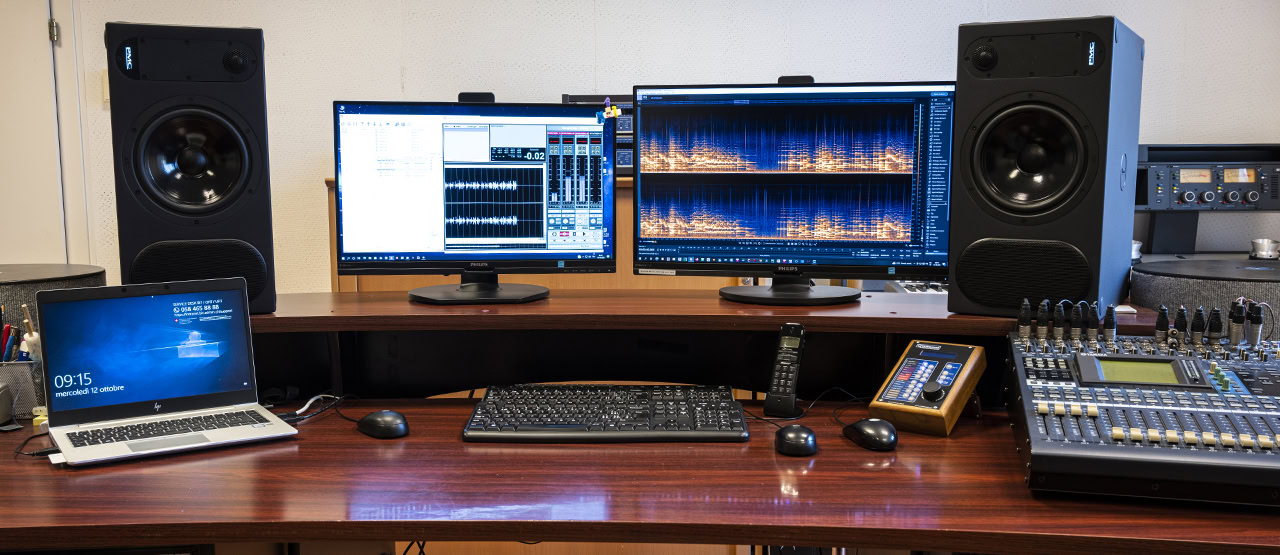
Recording has dematerialized and settled in the digital world. Photo: National Sound Archives

The mission of the Swiss National Sound Archives is derived from the Federal Act on the Swiss National Library: to collect, catalog, preserve, make accessible and publicize the acoustic cultural heritage. The sound carriers, called Helvetica because they are necessarily related to Switzerland, are divided into five sections, four musical - classical, jazz, rock & pop, folk - and one non-musical, which includes voices, audio books, radio plays, interviews, but also natural sounds and soundscapes.

«Our oldest items are wax cylinders with classical and operetta music from the collection of a private individual in Chiasso,» explains Günther Giovannoni, Director of the Phonotheque since 2019. «As far as music recordings are concerned, there is no obligation in Switzerland to submit a specimen copy to us. That's why we've been working for forty years, with the support of Suisa, other collecting societies and in collaboration with radio and other partners, to catch up on the collection backlog. For streamed content, Parliament has passed a law on the submission of mandatory digital receipts from 2027: a gigantic amount of material from which we have to choose. We are only obliged to conserve what is considered important, a challenging selection that involves people from different sectors.»

The sounding cultural heritage of a country

A cursory scroll through social media might make you wonder what is so important to preserve in all the often very commercial noise. «It's not for us to judge,» Giovannoni interrupts, «commercial or artistic value are not our only selection criteria. For example, we have a department that takes care of advertising. This could be considered less substantial or educational from certain points of view, but it is extremely important historically and sociologically, especially for specialists. The crucial question is one of sustainability: does it make sense to store so much material? What are the ecological and financial costs? Our guidelines allow us not to take everything so as not to be overburdened. For example, we also select new artistic productions: We let them rest for a while before we add them to our inventory.»

An exponentially growing amount of material makes a selection inevitable. «We are not obliged to have everything, but everything that is considered important.»
Photo: National Sound Archives

This requires a clear vision of what our country's sounding cultural heritage should be. «Our self-image is partly determined by remembered sounds,» explains Giovannoni. «Switzerland is small, but extremely diverse in terms of languages, cultures and special features. The archivist has the task of preserving this sound memory for future generations. We protect the past for the future.»

Of particular interest in this context is the speech and noise section, probably the richest in the Phonotheque. While it was the express intention to document a large number of bell ringings up and down the country, the soundscapes captured are sometimes a by-product of other recordings. They offer us sonic chronicles of certain spaces over decades: a rural market, an urban square. «The sounds change like our everyday lives,» says Giovannoni, «take the crunching of a glacier, which changes over time and will soon cease to exist. Or more prosaically: the municipality of Lugano has given us the recordings of municipal council meetings over the last 60 years. So you can follow the development of political discourse, linguistically, sociologically ... »

Among the musical documents, some take us through the history of the country, such as the estate of Hanny Christen: «Fifty tapes that were discovered by chance in the early 1990s. They preserve part of the »old and pure« traditional Swiss music and have revolutionized the way we look at it,» explains Andrea Sassen, Head of the Folk Music Department. "Or think of the K-Sound collection of Kiko Berta, who recorded some of the most important albums of the 90s, including gems that never made it to the market," adds Yari Copt, head of the Rock department.

«But it's also interesting to look at the present,» he continues. «Today, a generation of Swiss artists with a clear vision and high production quality is at work. And for everyone involved in musical heritage, this is a strong signal: the Phonotheque is not just an archive for the past, but a living place that documents the present and builds the sonic heritage of tomorrow. Preserving these productions today will make it possible in the future to say exactly what was going on in Swiss music at that moment.»

Looking to the future

So here we are preserving, but surprisingly also creating, as if to draw attention to what needs to be immortalized for the future: Bruno Spoerri is celebrating his 90th birthday on the Phonotheque's YouTube channel by delighting the audience with a wonderful livestream, masterfully recorded by Lara Persia at Studio Lemura. «This is the first in a series of concerts that we have been able to organize thanks to an extraordinary donation,» explains Giovannoni. «A kind of showcase: we are highlighting the value of our archives by offering a stage to those who have contributed to Switzerland's sound heritage. A tribute to these people who have given so much.»

Here, too, the concept of legacy is expressed, the focus on the future. This brings us back to the technical challenges posed by storage media: a central theme for the preservation task of the Phonotheque. «We are closely tied to the technology. First and foremost with regard to the longevity of the carrier media. Shellac or vinyl records, for example, are robust. If they are stored professionally, we will still be able to hear their content in a hundred years' time. Tapes, on the other hand, slowly lose their information; 'home-burned' CDs have an average lifespan of five years. Playback devices also age and are subject to historical development.

One example is Sony's DAT cassettes, which were produced for 20 years. The company stopped production in 2007, but kept the licenses. At the moment, we still have a supply of tape heads, but when they are used up, we will face a serious problem. This determines our priorities in terms of digitization and preservation. It is a constant technical challenge to make the material tangible: We want to be a place where users are offered inspiration as well as opportunities to discover new things.»

Visual Audio is a lighthouse program of the Phonotheque: a digitization process in which the contents of a damaged record are saved by photographing it in analog form and scanning the image. Photo: National Sound Archives

This will is reflected in future-oriented technological projects such as research into the continued ability to read DAT sound carriers or lighthouse programs such as Visual Audio, a digitization process that makes it possible to save the sound content of a damaged record by photographing it in analog form and scanning the image.

An educational program with guided tours, workshops, lectures and school visits is aimed at a wide audience. It is also extremely important for the Phonotheque to raise awareness of listening and sound among the youngest members of the public. «Young people listen to music, but often in dramatically poor quality via their cell phones,» complains Giovannoni. «We need to teach them to listen consciously, also with regard to possible damage caused by overuse. They should become aware that sound quality is an important factor when listening to music and that timing, medium and format can influence perception. Many young people don't even know that there are other ways to listen to music than on their cell phones, and they have no idea of the differences in quality. You have to teach them, and you can do that by showing them the technical progress and the different sound qualities throughout the history of sound carriers.»

Why Swiss music says no to the SRG halving initiative

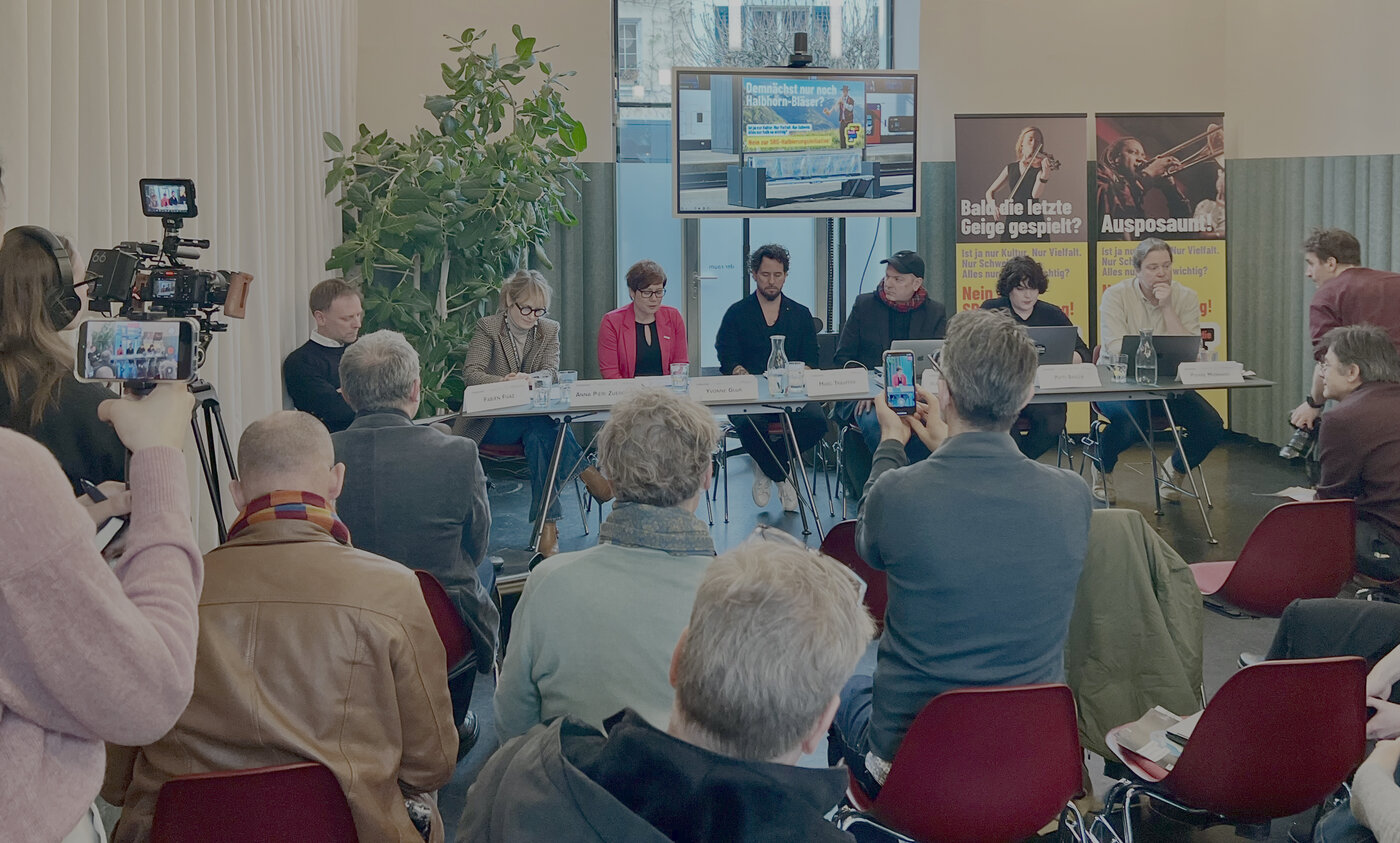
The Solothurn Film Festival, the most important meeting place for Swiss film, was not just about cinema on January 25. Representatives of the entire cultural scene - from film and music to the performing arts - came together in front of the media to send out a clear signal: No to the SRG halving initiative «200 francs is enough».

This vote is of central importance for music. SRG is not just another media provider, but the most important media platform for Swiss music - for professionals as well as for the broad amateur and up-and-coming scene.

Music reaches Switzerland - via SRG

Music is part of everyday life in Switzerland. Around 20 percent of the population sing, a further 20 percent play an instrument and almost 15 percent dance regularly. And almost everyone listens to music. The decisive factor is the channel: Over 80 percent of the population consume music via radio and television.

This is exactly where SRG comes into play. It broadcasts over 42,000 hours of Swiss music every year, produces around 1,000 hours of live music and, with an average Swiss music share of around 40 percent, reaches an audience that no private provider or streaming platform reaches to the same extent.

This presence is no coincidence, but a cultural policy mandate - and it is the basis for visibility, income and the promotion of young talent.

Visibility determines the next generation

Yvonne Glur, Co-Head of the Amateur Music Department at the Swiss Music Council and President of accordeon.ch, puts it in a nutshell: «Visibility is crucial for the next generation of amateur musicians. Young people get involved when they experience that their skills and passion are noticed, valued and shown.»

Whether brass music, choirs, folk music, jazz or contemporary formats: Many ensembles and clubs exist outside of commercial logic. Without a national stage, they quickly disappear from the public eye - and thus from everyday cultural life.

Diversity needs infrastructure

The halving initiative would deprive SRG of a large part of its financial resources. The consequences would be foreseeable: fewer in-house productions, fewer broadcasts, less reporting. Inexpensive international content would increase, while Swiss music and regional formats would be squeezed out.

Marc Trauffer, dialect pop singer and producer, warns: «We urgently need a strong SRG. Great TV entertainment cannot be financed in the private media sector in four languages - and that is precisely what contributes to the diversity of our country.»

What applies to shows and series also applies to music formats: Swiss content is complex, regionally anchored and rarely suitable for the masses in a purely commercial sense. This is precisely why a strong public infrastructure is needed.

More than music: culture as a unifying force

The media conference in Solothurn made it clear that SRG is not only central to music, but to culture as a whole. Films, series, concert recordings, archives, cultural journalism and digital platforms such as Play Suisse create a shared public sphere - across language barriers.

If this infrastructure is weakened, Switzerland will lose part of its cultural anchor. Regions, smaller language communities and niche formats would be particularly affected.

A joint "no" from the cultural sector

The cultural scene agrees: reforms, criticism and further development are all part of the process. But halving is not optimization. It is a clear cut - with consequences for jobs, young talent, diversity and cultural cohesion.

That is why musicians are joining with filmmakers, authors, actors and cultural associations to say: No to the SRG halving initiative. No to the dismantling of the media stage.

Video with Patti Basler


What happens when you listen to Mani Matter anew - politically exaggerated and highly topical? Satirist and cabaret artist Patti Basler has written his own lyrics against the SRG halving initiative to the tune of «I han es Zündhölzli azündt».

With wit and sharpness, she gets to the heart of the matter: culture, attitude - and not doing things by halves.

The Swiss violin making school impressed in Paris

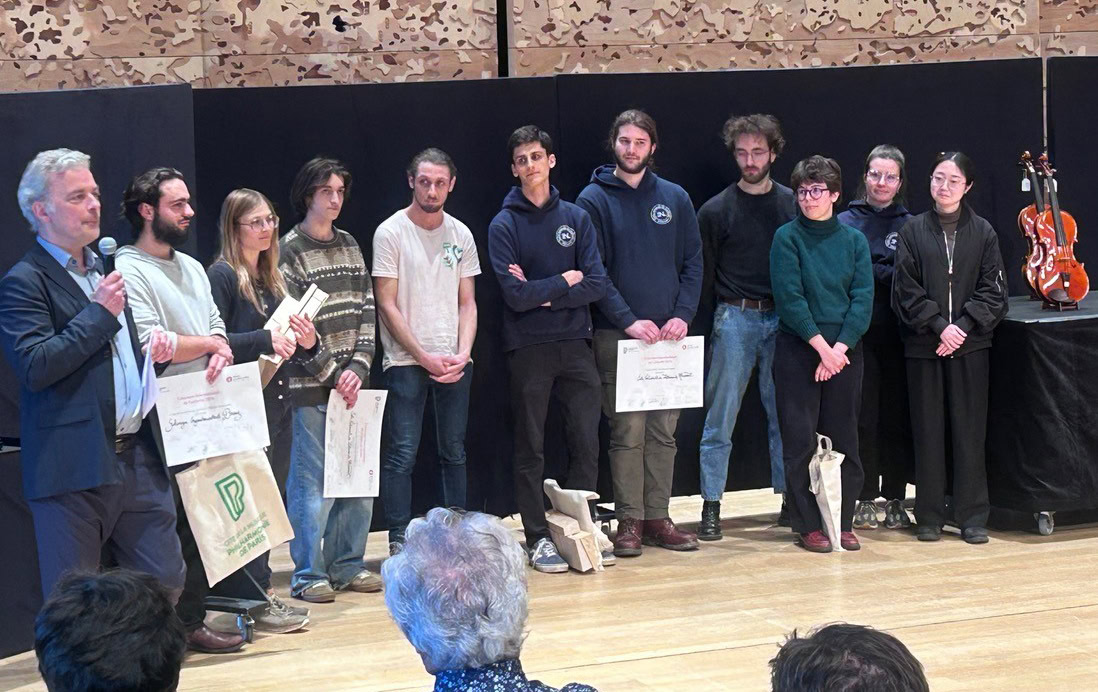
Laura Gartmann and Thibault Jaberg's viola was awarded a prize at the Concours international de lutherie 2026.

From left: Raphael Pidoux (president of the jury), Thibault Jaberg and Laura Gartmann as well as the students of the Ecole nationale de Lutherie in Mirecourt. Photo: Swiss violin making school

After successful participations in 2022 and 2024, the Brienz  Swiss violin making school also at this year's third Concours international de lutherie from January 14 to 18 in Paris. Laura Gartmann and Thibault Jaberg, fourth-year apprentices, built the viola that won an award in the «Talents de demain» category. It was awarded a bronze medal and the jury's special «Coup de Cœur» prize for outstanding craftsmanship. First and second place in the competition went to the French École nationale de Lutherie in Mirecourt.

The Concours international de lutherie is one of the most prestigious competitions in international violin making. In the «Talents de demain» category, violin makers in training are judged according to the strictest criteria of craftsmanship, design and sound. According to the Swiss violin making school, receiving the special jury prize underlines the high quality and independence of the training in an international comparison, confirms the school's sustainable training approach and strengthens its international visibility.

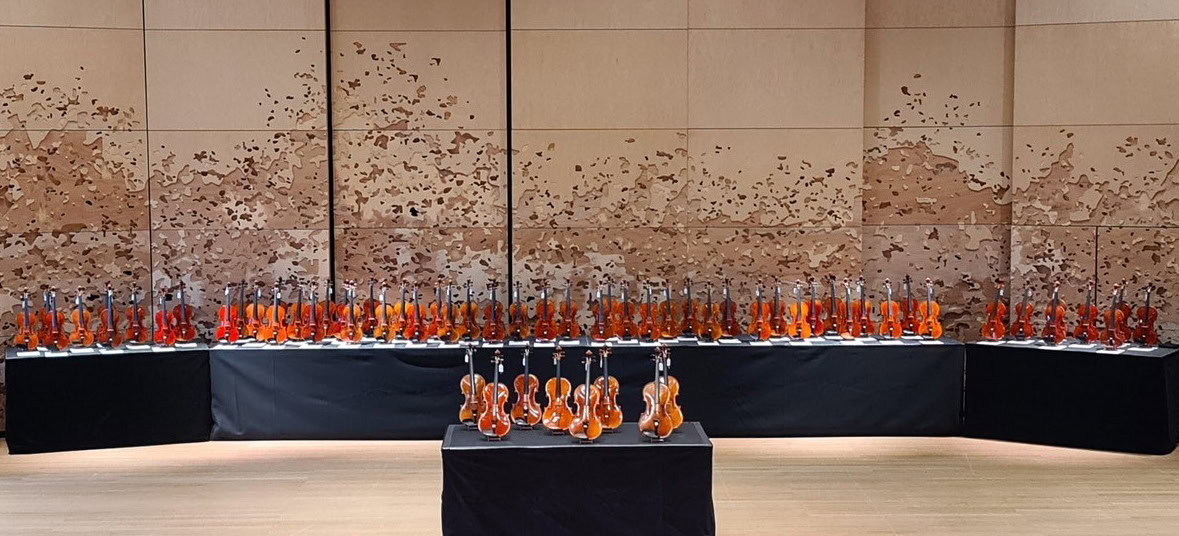
Nine schools with 15 instruments took part in this year's edition. An international jury of experts judged a total of 75 violas from 22 countries in the two categories «Talents d'aujourd'hui» and «Talents de demain».

«Forêt d'altos»: All instruments that were submitted and assessed in the two competition categories «Talents d'aujourd'hui» and «Talents de demain». Photo: Swiss violin making school

Books submitted

The music books in the lists below have been received by the editorial office or have been reported to us as new publications.

Graphic: VisualGeneration/depositphotos.com

Music books received July–December 2025

  • Paul Suits: Score Reading: Time-honored Principles and New Approaches, 124 p., € 37.00, Tredition, Hamburg 2025, ISBN 978-3-384-57748-1
    >>> Review by Lukas Langlotz
  • Michael Schwalb: Paul Sacher. Progress through reflection, 129 pages, approx. €20.00, Edition Text + Kritik, Munich 2025, ISBN 978-3-96707-923-4
  • Erik Hug: The History of Progressive Music. An experiment in 39 steps, 111 pages, $33.00 (plus shipping/handling), self-published, erikh@bluewin.ch
  • Roman Brotbeck: Heinz Holliger. Conversations, comments, and texts, 350 pages, €36.99, Schott, Mainz, ISBN 978-3-7957-3399-5
  • Home is Where the Heart Strives, Edited by Philipp Rhensius, Janina Neustupny, Thomas Burkhalter, Hannes Liechti, and Vinzent Maria Preuss, 312 pages, €29.00 (print), Norient Books, Bern 2025, ISBN 9783952544464
  • History of musical interpretation in the 19th and 20th centuries. Volume 4: People – Styles – Concepts, edited by Heinz von Loesch, Rebecca Wolf, and Thomas Ertelt, 712 pages, €79.99, Bärenreiter / J.B. Metzler, Kassel / Stuttgart 2025, ISBN 978-3-7618-2081-1
  • Markus Meier: Ostracized, loved, and tolerated. The organ in post-Reformation Toggenburg., 400 pages, CHF 48.00, Chronos, Zurich 2025, ISBN 978-3-0340-1796-1
    >>> Review by Tobias Willi
  • Ferruccio Busoni, Arnold Schoenberg: Dialogue on Modern Music. Carteggio – Scritti di Busoni con annotazioni inedite di Schönberg, 520 p., $36.00, Giometti & Antonello, Macerata 2025
  • Iso Camartin: «Nessun dorma – Let no one sleep!" Arias, duets, ensembles – 48 oases of melodious sound, 288 pages, CHF 32.00, Rüffer & Rub, Zurich 2025, ISBN 978-3-907351-38-3
  • Reinhard Strohm: Opera in motion. European Music Theater from Baroque to Romanticism, 319 p., € 49.99, Bärenreiter/J. B. Metzler, Kassel/Stuttgart 2025, ISBN 978-3-7618-2676-8
  • Malte Zill: STAGMA in the «Third Reich». Instrumentalization of musical copyright in the European context, (=Musik und Diktatur, Band 5), 468 p., br., € 64.90,Waxmann, Münster 2025, ISBN 978-3-8188-0093-2
  • Event and History. The International Summer Courses for New Music, Darmstadt 1962–1994, Edited by Susanne Heiter and Dörte Schmid, 560 pages, €48.00, Edition text+kritik, Munich 2025, ISBN 978-3-96707-010-1
  • Heike Plitt: The guitar in the psychotherapy room, 140 pages, €22.00, Reichert, Wiesbaden 2025, ISBN 9783752008869
  • Mateusz Borkowski: Wizard of the Violin. Henryk Wieniawski – Life and Times, Translated from Polish by Peter Oliver Loew, 146 pages, €19.80. Harrassowitz, Wiesbaden, 2025, ISBN 978-3-447-12300-6
  • Klaus Wloemer: Josef Reinhart and Music. The role of music in his literary work, with a list of settings of his poems from 1897 to the present day, 954 pages, CHF 128.00, Schwabe, Basel 2025, ISBN 978-3-7965-5351-6
  • Giuliano Musio: There's a crack, Accompanying text to Beethoven's «Egmont,» 118 pages, CHF 17.00, Edition Taberna Kritika, Bern 2025, ISBN 978-3-905846-79-9
  • Kai Marius Schabram: Claudio Arrau, Universalist of the Piano, 214 pages, €26.00, Solo Portrait, Edition Text + Kritik, Munich 2025, ISBN 978-3-96707-788-9
  • Rebekka Susanne Bräm: Theater with director's theater—opera needs its dignity back! Thoughts from the Hotpot, 175 pages, CHF 39.90, published by BoD Books on Demand, Hamburg 2025, ISBN 978-3-7583-3640-9
  • The Techniques of Electric Guitar Playing, edited by Seth F. Josel and Michelle Lou, 303 pages, €69.00, Bärenreiter, Kassel 2025, ISBN 978-3-7618-2424-5
  • Norbert Schläbitz: »Form follows content« or: Against mainstream research – for research pluralism in music education, (= Studies in Music Culture, Volume 12), 236 pages, €39.90, Waxmann, Münster 2025, ISBN 978-3-8188-0058-1, Open Access
  • Andreas Häberlin: A Music Transcription Method. Notating Recorded Music by Ear, 178 p., approx. €39.00, Routledge, New York 2025, ISBN 9781032842547, Open Access
  • Academization of the arts. Situierung, Episteme, Kodifizierung (Situating, Episteme, Codification), edited by David Hagen, Jan Lazardzig, Thekla Neuss, Angela Nikolai, and Dörte Schmidt, approx. 340 pages, approx. €34.00, Edition Text+ Kritik, Munich, ISBN 978-3-68930-000-5
  • Herbert Blomstedt: Mission Music - Conversations with Julia Spinola, 199 p., € 26.00, third, expanded edition, Henschel/Bärenreiter, Leipzig/Kassel 2025, ISBN 978-3-7618-2417-7 (Bärenreiter)
    >>> Review by Jakob Knaus
  • Reverberations of Empire? Opera in the Contexts of (De)Colonial and Postcolonial Thought, edited by Lena van der Hoven and JBOM, (= Journal of Black Opera and Music Theater, No. 1 Nov. 2025), 208 p., Bern Open Publishing
  • Robert Oboussier. Contributions to a silenced opus / Contributions à propos d’un opus réduit au silence, edited by Ramon Bischoff, 208 pages, German/French, CHF 45.00, Edition Clandestin, Biel 2025, ISBN 978-3-907262-72-6
  • Res Marty: Lines & Sound. Documents & Stories from the Joachim Raff Archive, 234 pages, CHF 30.00, Joachim Raff Society, Lachen 2025, ISBN 978-3-033-11783-9, available from: res.marty@bluewin.ch

Incoming music books January-June 2025

  • Jan Tamaru: Subject recognition. Voice subject diagnosis in singing lessons, with an evaluation of C. G. Jung's theory of types for vocal pedagogy, 192 p., € 39.90, Breitkopf & Härtel, Wiesbaden 2023 ISBN 978-3-7651-0488-6
  • I am a theater person. Udo Zimmermann - memories and documents, edited by Saskia Zimmermann and Matthias Herrmann, 408 p., € 49.00, Breitkopf & Härtel, Wiesbaden 2024 ISBN 978-3-7651-0513-5
  • Michael Wertmüller, Special volume Musik-Konzepte XI/2024, edited by Ulrich Tadday, 248 p., Edition Text + Kritik, Munich 2024, ISBN 978-3-96707-969-2
    >>> Review by Torsten Möller
  • Kristin Thielemann: Fully relaxed. Peace and concentration for your music lessons, 104 p., online material, € 24.50, Schott, Mainz 2025, ISBN 978-3-7957-3315-5
    >>> Review by Torsten Möller
  • Philip Herschkowitz: About music. Biographical. The music-theoretical work. The compositional workedited by Heidemarie T. Ambros, Alexei Lubimov, Elisabeth Leonskaja, Alexei Grots, 444 p., € 48.00, Hollizer, Vienna 2024, ISBN 978-3-99094-139-3
  • Michaela Fridrich: Music unmediated. A Utopia, 127 p., € 22.00, Edition Text + Kritik, Munich 2025, ISBN 978-3-96707-738-4
  • Jessie Cox: Sounds of Black Switzerland. Blackness, Music and Unthought Voices, 250 p., Duke University Press, Durham and London 2025, ISBN 978-1-4780-3143-7
  • Artificial intelligence of sounds. Ethics and aesthetics of digital music cultureedited by Michael Schmidt, 120 p., Edition Text + Kritik, Munich 2025, ISBN 978-3-68930-030-2
    >>> Review by Wolfgang Böhler
  • Sigfried Schibli: Musical life in the Basel region, Bild-Geschichten BL Volume 12, 121 p., Fr. 23.00, Verlag Baselland, Liestal 2025, ISBN 978-3-85673-706-1
  • Music therapeutic impulses for music education. Expanded Perspectives, edited by Karin Holzwarth, Dorothee von Moreau, Jonas Dietrich, Hans Bäßler, 186 pages, br., € 29.90, Waxmann, Münster 2024, ISBN 978-3-8309-4946-6
  • Leonard Bernstein's poetics, edited by Andreas Eichhorn and Paul R. Laird, 300 p., € 34.00, Edition Text + Kritik, Munich 2025, ISBN 978-3-96707-683-7
  • Melanie Unseld: Music and memory. A study book, ca. 250 p., Rombach, ISBN 978-3-96821-886-8
    >>> Review by Torsten Möller
  • Senses / Sense. Zeitgenössische Musik dies- und jenseits von Hermeneutik und Analyse, ed. by Kathrin Kirschand Joe Reinke, 230 p., € 29.00, Georg Olms, Baden-Baden 2025, ISBN 978-3-487-17063-3
  • Swiss choral life since 1800 - Music, practice and contexts; Vie chorale n Suisse depuis 1800 - Musique, pratiques et contextes, ed. by Caiti Hauck and Cristina Urchueguía. Bern Open Publishing, ISBN 978-3-03917-080-7, open access
  • Julien Cachemaille and Caiti Hauck: Three Swiss choral singers in the 19th century, based on the research project CLEFNI - Choir life in the cities of Bern and Fribourg in the long 19th century, comic, available in German or French, Editions de la Chaussette, Yvonand 2025, ISBN 978-2-940564-34-7, open access
  • Sean Prieske: Music and flight. Musikalische Praktiken geflüchteter Menschen in Berlin, (= Musikethnologie im 21. Jahrhundert, Band 2), 395 p., € 99.00, Rombach, Baden-Baden 2025, ISBN 978-3-98858-096-2
  • Alfons Huber: Clavichord building 1400-1800, 845 p., € 115.80, Praesens Verlag, Vienna 2025, ISBN 9783706912518
  • Bruno Matti: The polar bears in the land of snow cliffs, Fantasy novel with music that can be played via QR codes, Fr. 35.00, self-published, matelier.ch, ISBN 978-3-033-10915-5
  • Sounds for the soul, music in St. Gallen manuscripts, St. Gallen Abbey Library, 104 p., Fr. 25.00, Schwabe, Basel 2025, ISBN 978-3-7965-5344-8
  • Handbook of music analysis. Plurality and Method, ed. by Ariane Jessulat, Oliver Schwab-Felisch, Jan Philipp Sprick and Christian Thorau, 766 p., € 129.99, Bärenreiter-Verlag / J.B. Metzler Kassel/Stuttgart 2025, ISBN 978-3-7618-2065-0
  • Musical Talent and its Promotion in Chinese and Western Worldsed. by Marc-Antoine Camp, Xavier Bouvier, Suse Petersen, Annatina Kull, 174 p., e-book, free of charge, Chronos, Zurich 2025, open access
  • Marina Schieke-Gordienko: Ferruccio Busoni, pianist and cosmopolitan, Solo series, 171 p., € 24.00, Edition Text + Kritik, Munich 2025, ISBN 978-3-96707-909-8
  • Rollen und Funktionen von Musik in der digitalen Ära / Music's Roles and Functions in the Digital Eraed. by Corinna Herr, Wolfgang Fuhrmann, Veronika Keller, 402 p., € 99.00, Rombach, Baden-Baden 2025, ISBN 978-3-98858-007-8
  • Christiane Wiesenfeldt: Music and home, 286 p., € 39.99, Bärenreiter, Kassel 2025, ISBN 978-3-7618-2658-4


Music books received July-December 2024

  • Anton Voigt: Alfred Cortot. Keyboard poet - teacher - cultural actor, Solo Portraits and Profiles, 285 p., € 28.00, Edition Text+Kritik, Munich 2024, ISBN 978-3-96707-708-7
  • Köchel-Verzeichnis, Thematisches Verzeichnis der musikalischen Werke von Wolfgang Amadé Mozart, New edition 2024, edited by Neal Zaslaw, presented by Ulrich Leisinger with the assistance of Miriam Pfadt and Ioana Geanta, BV 300, CXXV + 1263 p., € 499.00, Breitkopf & Härtel, Wiesbaden 2024
    >>> Review by Dominik Sackmann
  • Corinne Holtz: World in the work. Klaus Huber (1924-2017), Biography, 309 p., Fr. 54.00, Schwabe, Basel 2024, ISBN 978-3-7965-5148-2
    >>> Review by Max Nyffeler
  • Hanspeter Spörri: Steff Signer. The musical biography, A piece of Swiss rock, pop and highmatt history, 400 p., Appenzeller Verlag, Schwellbrunn 2024, ISBN 978-3-85882-888-0
    >>> Review by Hanspeter Künzler
  • Ernst Kurth / Guido Adler: Correspondence 1908-1936edited by Luitgard Schader, 205 p., € 22.80, Königshausen & Neumann, Würzburg 2024, ISBN 978-3-8260-7969-6
  • Barbara Busch and Barbara Metzger: 44 warm-ups for instrumental lessons(=üben & musizieren Praxis), 80 p., € 24.50, Schott, Mainz 2024, ISBN 978-3-7957-3172-4
  • Joachim Kühn and Michael Brüning: The bold factor. Free + independent: no limits in jazz, 320 p., € 24.95, Alfred Music, Cologne 2024, ISBN 978-3-947998-59-3
  • Correspondence Arnold Schönberg - Heinrich Jalowetzed. by Simon Obert, (=Publications of the Paul Sacher Foundation, Volume 13; Briefwechsel der Wiener Schule, Volume 7), 408 p., Schott, Mainz 2024, ISBN 978-3-7957-3341-4
  • Howard Griffiths: Barboza and the sounding tree - a musical journey through Switzerland, music by Fabian Künzli, played by the Mozarteum Orchestra Salzburg; narrator Fernando Tiberini illustrations by Andrea Peter, 52 p., audio download, Fr. 29.80, GH 11817, Hug Musikverlage, Zurich 2024, ISBN 978-3-03807-145-7
  • Building authority in music, ed. by Bernd Brabec, Marc-Antoine Camp, Dorit Klebe, 280 p., Fr. 38.00, Chronos, Zurich 2024, ISBN 978-3-0340-1734-3
  • Astrid Knöchlein: Ornamentation - like Telemann! Georg Philipp Telemann's Methodical Sonatas and Trietti methodichi, ed. by Claire Genewein, Dorit Führer-Pawikovsky and Peter Schmid, 2 vol., 57+145 p., Fr. 65.00, Schmid & Genewein, Zurich 2024, ISBN 978-3-033-05348-9
    >>> Review by Lukas Nussbaumer
  • Marko Simsa: Waltz step and polkahit. Johann Strauss for children, picture book with music (CD or download), illustrations by Silke Brix, 32 p., € 24.00, Jumbo, Hamburg, ISBN 978-3-8337-4800-4
  • Peter Benary. Composer, musicologist, publicist and lecturer, edited by Niccolò Raselli and Hans Niklas Kuhn, ca. 229 pages, ca. Fr. 46.00, Schwabe, Basel 2024, ISBN 978-3-7965-5109-3
    >> Review by Torsten Möller
  • Bernhard Suter: Guiding creative processes in music lessons. A design-based research study on the reflection-based competence development of primary school teachers entering the profession, 334 p., Potsdamer Schriftenreihe zur Musikpädagogik, vol. 10, Universitätsverlag Potsdam, 2024, ISBN 978-3-86956-567-5, open access
  • Luigi Nono. On the question of the turning point, Music Concepts No. 206, edited by Ulrich Tadday, 121 pages, € 28.00, Edition Text+Kritik, Munich 2024, ISBN 978-3-96707-966-1
  • Friedrich Chrysander. Musicologist of the first hour, edited by Ivana Rentsch, Hamburg Yearbook of Musicology Volume 4, 266 p., € 39.90, Waxmann, Münster 2024, ISBN 978-3-8309-4884-1
  • Wolfgang W. Müller: Music of the angels. A cultural history, 264 p., ca. Fr. 28.00, Schwabe, Basel 2024, ISBN 978-3-7965-5128-4
  • Joseph Joachim. Identities / Identities(= Studien und Materialien zur Musikwissenschaft, vol. 128), ed. by Katharina Uhde and Michael Uhde, 477 p., € 58.00, Georg Olms, Baden-Baden, ISBN 978-3-487-16425-0
  • Michel Roth: At stake. Eine spielheoretische Untersuchung indeterminierter Musik, 524 p., Wolke, Hofheim 2024, ISBN 978-3-95593-152-0, open access
  • Julius Otto Grimm - a composer and conductor of the Brahms circleedited by Anna Maria Plischka and Peter Schmitz, 704 p., € 69.90, Waxmann, Münster 2024, ISBN 978-3-8309-4759-2
  • Tania Salvador, aka La Rata: Give it to me! Essay illustrated in graphic novel style, counter-history of popular music that puts female artists at the center, translation Petra Sparrer, 256 p., € 36.00, Laurence-King-Verlag, Berlin 2024, ISBN 978-3-96244-435-8
  • Daniel Martin Feige: Philosophy of music. Musikästhetik im Ausgang von Adorno, 216 p., € 24.00, Edition Text+Kritik, Munich 2024, ISBN 978-3-689-30028-9
    >>> Review by Lukas Nussbaumer
  • Music, Performance, Architecture. Sacred Spaces as Sound Spaces in the Early Modern Perioded. by Tobias C. Weissmann and Klaus Pietschmann, 312 p., € 69.00, Georg Olms, Baden-Baden 2024, ISBN 978-3-487-16724-4
  • Meinolf Brüser: "It's all a breeze", Bach and the secret of the "Art of Fugue", 177 p., € 39.99, Bärenreiter/J.B Metzler, Kassel/Stuttgart 2024, ISBN 978-3-7618-2654-6
  • Radio Cologne Sound. The WDR studio for electronic musicedited by Harry Vogt and Martina Seeber, 287 p., German/English, ill., with 5 CDs, € 39.00, Wolke, Hofheim 2024, ISBN 978-3-95593-259-6
    >>> Review by Thomas Meyer
  • Luiz Alves da Silva: Between Zurich and Rio de Janeiro, Hausmusik in der ersten Hälfte des 19. Jahrhunderts, translated from the Portuguese by Daniel Schnurrenberger,(=Schweizer Beiträge zur Musikforschung, Vol. 28), 326 p., € 49.95, Bärenreiter, Kassel 2024, ISBN 978-3-7618-2616-4
  • A new start together. Prospects for music clubs after the pandemic! edited by Verena Bons, Johanna Borchert, Thade Buchborn, Wolfgang Lessing, (Schriften der Hochschule für Musik Freiburg), 160 p., € 44.00, Georg Olms, Baden-Baden, ISBN 978-3-487-17048-0
  • Nicole Johänntgen and Raffaella Ligi: Schmusebär's sonorous journey with the flying chair, 28 S., nicolejohaenntgen.com/
  • Michael von Hintzenstern: Sounds of the moment - 44 years of the Ensemble for Intuitive Music Weimar 1980-2024, 256 p., over 300 illustrations, € 44.00, Weimar 2024, ISBN 978-3-00-078834-5, hintzenstern.eu
    >>> Review by Torsten Möller


Music books received January-June 2024

  • Jannis Mallouchos: Adolf Reichel (1816-1896). Political, cultural-historical, music-theoretical and compositional aspects of a musician's life, (=Wiener Veröffentlichungen zur Musikwissenschaft, Vol. 56), 650 p., Hollitzer, Vienna 2023, ISBN 978-3-99094-084-6
    >>> Review by Max Sommerhalder
  • Studies in the Arts II, Arts, Design and Science in Exchange, ed. by Thomas Gartmann, Cristina Urchueguia, Hannah Ambühl-Baur, 313 p., Transcript, Bielefeld 2024, ISBN 978-3-8376-6954-1, Open Access: transcript-verlag.de/media/pdf
  • Revue musicale de Suisse romande, Numéro spécial 75 ans, La musique à Genève au XVe siècle, Décembre 2023, avec CD: La contenance angloise. La chapelle des Ducs de Savoie, dir. Vincent Arlettaz, Revue musicale de Suisse romande RMSR 20232
  • Robert Craft et Igor Stravvinsy: Conversations avec Igor Stravinsky, 192 p., € 16.00, Editions Allia, Paris 2024, ISBN 979-10-304-1836-1
  • Mathias Gredig: Grand hotels, risotto and bombs, History of Futurist Noise Art, Fröhliche Wissenschaft 232, 173 p., € 15.00, Matthes & Seitz, Berlin 2024, ISBN 978-3-7518-3012-6
    >>> Review by Thomas Meyer
  • Rien de Reede: The School of Blavet, Flutist in Paris in the Second Half of the Eighteenth Century, 144 p., Linos Edition, Amsterdam 2022, ISBN 978-90-9036371-4
  • Walter Fähndrich: Why do we improvise? 80 p., € 18.00, Wolke, Hofheim 2024, ISBN 978-3-95593-270-1
  • Text as Source and Material in Contemporary Music Theatre, ed. by Christa Brüstle, (=Studien zur Wertungsforschung 65), 304 p., € 33.50, Universal Edition, Vienna 2023, ISBN 978-37024-7793-6
  • Peter Petersen: Arnold Schönberg's String Quartet op. 7, Three ways to understand the work, 211 p., numerous musical examples, Georg Olms, Baden-Baden 2024 ISBN 978-3-487-16700-8
  • Creative misunderstandings or universal musical principles? Hugo Riemann and the international transfer of knowledge, ed. by Stefan Keym in conjunction with Christoph Hust, (Studien und Materialien zur Musikwissenschaft, vol. 131), 377 p., hardcover, € 99.00, Georg Olms, Baden-Baden 2024, ISBN 978-3-487-16680-3
  • Salon orchestra in the Alpsed. by Mathias Gredig, Matthias Schmidt, Cordula Seger, 232 p., Fr. 38.00, Chronos, Zurich 2024, ISBN 978-3-0340-1733-6
    >>> Review by Lukas Nussbaumer
  • Stefan Braese: Cool. Jazz as a counterculture in post-war western Germany. 442 p., € 42.00, Edition Text + Kritik, Munich 2024, ISBN 978-3-96707-915-9
  • Lothar Freiburg: Wonders of music. The music of Europe over 2000 years, 354 p., € 44.80, Wissner, Augsburg 2024, ISBN 978-3-95786-3287-7
  • Ingo Bredenbach: Johann Sebastian Bach's piano lessons. Bach as learner and teacher, 519 p., € 59.00, Bärenreiter, Kassel 2024, ISBN 978- 3-7618- 2617-1
    >>> Review by Dominik Sackmann
  • Handbook of Opera. 16th updated and expanded edition, edited by Rudolf Kloiber, Wulf Konold and Robert Maschka 1021 p., € 49.99, Bärenreiter/J.B. Metzler, Kassel/Heidelberg 2024, ISBN 978-3-7618-2644-7
  • Wolfgang Jansen: Musical - the musical theater of the present, (= Gesammelte Schriften zum Populären Musiktheater, Vol. 3), 286 p., € 39.90, Waxmann, Münster 2024, ISBN 978-3-8309-4757-8
  • Jutta Toelle: Mission through music, Stimmen zu Musik und Klängen in der europäischen Missionierung Hispanoamerikas, Musik und Migration, Vol. 4, 172 pages, € 34.90, Waxmann, Münster 204, ISBN 978-3-8309-4728-8
  • Composers in the Stalinist gulag, edited by Inna Klause, Andreas Waczkat, Stefan Weiss, 468 p., € 89.00, Georg Olms, Baden-Baden 2024, ISBN 978-3-487-16694-0
  • Lied und populäre Kultur / Song and Popular Culture, Weltmusik und ihre Kritik: Postkoloniale Zugänge zu globaler Musik, (= Jahrbuch des Zentrums für Populäre Kultur und Musik, 68. Jahrgang - 2023), ed. by Maria Fuchs, Johannes Müske, Knut Holtsträter, 258 p., € 39.90, Waxmann, Münster 2024, ISBN 978-3-8309-4889-6
  • Music in the monotheistic religions, Reflections on the aesthetic function of sacred music, ed. by Wolfgang Müller, Franc Wagner (=TeNOR. Text und Normativität 11), 240 p., Fr. 48.00, Schwabe, Basel 2024, ISBN 978-3-7965-5045-4


Music books received July-December 2023

  • Sigfried Schibli: The Organ Experience. The most beautiful instruments in and around Basel, 160 p., Fr. 44.80, Reinhardt, Basel 2023, ISBN 978-3-7245-2660-5
  • Early music today, History and Perspectives of Historical Performance Practice, edited by Richard Lorber, 414 p., € 39.99, Bärenreiter/Metzler, Kassel/Stuttgart 2023, ISBN 978-3-7618-2520-4
  • Le plus beau pays du monde ? Othmar Schoeck's environment in Central Switzerland, book accompanying the Othmar Schoeck Festival 202, edited by Alvaro Schoeck and Chris Walton, 180 p., Fr. 20.00, Müsigricht, Steinen 2023, ISBN 978-3-9525658-2-7
    >>> Review by Daniel Willi
  • Corina Nastoll: Practicing is a must! Efficient and enjoyable practicing, (= übern & musizieren spezial), 44 p., € 18.50, Schott, Mainz, ISBN 978-3-7957-3094-9
    >>> Review by Torsten Möller
  • "You are art to me". The correspondence between Alma Mahler and Walter Gropius from 1910 to 1914edited by Annemarie Jaeggi and Jörg Rothkamm, 784 p., € 49.00, Residenz, Vienna 2023, ISBN 9783701735945
  • Ethel Smyth: Drumbeats from paradise. Memories, translated from the English by Heddi Feilhauer, 256 p., € 24.00, ebersbach & simon, Cologne 2023, ISBN 978-3-86915-286-8
  • Rainer Schmusch: Sense of hearing and "sound". Ästhetische Anthropologie der Musik, nach Herder und Händel, (= Myosotis Bd. 8), 452 p., € 62.00, Universitätsverlag Winter, Heidelberg 2023, ISBN 978-3-8253-4867-0
  • Music and migration. Ein Theorie- und Methodenhandbuch, ed. by Wolfgang Gratzer, Nils Grosch, Ulrike Präger, Susanne Scheiblhofer, (= Musik und Migration, Vol. 3), 746 p., br., € 69.90, Waxmann, Münster 2023, ISBN 978-3-8309-4630-4, Open Access, doi.org/10.31244/9783830996309
    >>> Review by Torsten Möller
  • Silke Kruse-Weber: Reflect! An observation and reflection tool for instrumental and vocal teachers, (= Grazer Schriften zur Instrumental- und Gesangspädagogik, Vol. 4), 88 pages, br., with card game, €34.90, Waxmann, Münster 2023, ISBN 978-3-8309-4658-8
  • Silja Reidemeister: Between contemporary design and historical interest - the composer Rudolf Moser. A search for clues in original documents, 227 p., Fr. 38.00, Schwabe, Basel 2023, ISBN 978-3-7965-4849-9
  • Markus Cslovjecsek: School music for all? On the legitimization of music as a subject, 313 p., € 48.00, Transcript, Bielefeld 2023, ISBN 978-3-8376-6884-1, Open Access: transcript-verlag.de/shopMedia/openaccess/pdf/oa9783839468845.pdf
  • Eike Fess: Arnold Schönberg and the composition with twelve notes, 224 p., € 27.00, Edition Text+Kritik, Munich 2023, ISBN 978-3-96707-862-6
  • Milena Amann-Rauter: "Avec mon arme, la musique". Political engagement of exiled musicians in the context of the Front Populaire, 504 p., € 48.00, Edition Text + Kritik, Munich 2023, ISBN 978-3-96707-887-9
  • Julia Wilke: Music and movement in individual pedagogical work. Video-based analyses of music- and movement-related coordination processes, 2023, (= Internationale Hochschulschriften, Vol. 707), 228 p. € 39.90, Waxmann, Münster 2023, ISBN 978-3-8309-4720-2
  • Robert Gervasi: A borderland fate, Life and work of the Alsatian composer Leo Justinus Kauffmann (1901-1944), 588 p., € 119.00, Tectum, Baden-Baden 2023, ISBN 978-3-8288-4916-7
  • Nicole Jost-Rösch: Alban Berg - narrating composer, composing narrator, 540 p., € 49.00, Edition Text + Kritik, Munich 2023, ISBN 978-3-96707-834-3
  • Werner Reinhart, patron of modernism, Music Concepts, Special Volume XI/2023, edited by Ulrich Tadday, 228 p., € 42.00, Edition Text+Kritik, Munich 2023, ISBN 978-3-96707-843-5
  • Dominik Susteck: Bone pipes and noiselatte. Hand-Joachim Hespos und die Orgelmusik ab 1962, Schriften zur Neuen Musik vol. 3, 230 p., Are, Cologne 2023, ISBN 978-3-3924522-90-2
  • Tobias Heyl: 75 years of G. Henle Verlag, 208 p.,€ 28.00, Hanser, Munich, ISBN 978-3-446-7847-9
  • Ute Elena Hamm: "Music to read", Musical-literary hybrids, works by Erik Satie, John Cage, Dieter Schnebel and Ingeborg Bachmann, 649 p., hardcover, € 129.00, Rombach, Baden-Baden 2023, ISBN 978-3-96821-993-6


Music books received January-June 2023

  • Klaus Steffes-Holländer: Not just on keys. New playing techniques for piano, 136 p., € 49.90, Breitkopf & Härtel, Wiesbaden 2022, ISBN 978-3-7651-0486-2
  • Ulrich Menke: The method navigator. Route planner to successful instrumental and ensemble teaching, üben & musizieren, 192 p., € 22.95 Schott, Mainz, ISBN 978-3-7957-3092-5
    >>> Review by Walter Amadeus Ammann
  • Tobias Bleek: In the frenzy of the twenties. 1923: Music in a year of extremes, 316 p., € 29.99, Bärenreiter/Metzler, Kassel/Berlin 2023, ISBN 978-3-7618-7245-1
  • Gaël Liardon (1973-2018): Anthologie d'un passionné, Organ works, basso continuo, chansons, Bibliothèque cantonale et universitaire, Lausanne 2023, ISBN 978-2-88888.152-0
  • Goldberg! Variations on Bach, edited by Violeta Dinescu and Michael Heinemann, (= Bach nach Bach, Vol. 4), 384 p., € 69.80, Dohr, Cologne 2022, ISBN 978-3-86846-171-8
  • Roberto Reale: Elements of lamentation in George Enescu's opera Œdipe, Archive for Eastern European Music, 7, BIS-Verlag, Oldenburg 2022, ISBN 978-3-8142-2404-6
  • Myriam Marbe, edited by Violeta Dinescu, Michael Heinemann, Roberto Reale, Archiv für osteuropäische Musik, 6, BIS-Verlag, Oldenburg 2022, ISBN 978-3-8142-2393-3
  • Reto Weber: Drummin'. In the beginning was the drum - memories, 280 p., Fr. 49.00, editione clandestin, Biel/Bienne 2023, ISBN 978-3-907262-41-2
  • Politics of Curatorship - Collective and Affective Interventions, edited by Monia Acciari & Philipp Rhensius, 288 p., € 34.00, Norient Books, Bern 2023, ISBN 978-3-9525444-4-0
  • Music and movement with older people. Insight into rhythmic pedagogyedited by Monika Mayr, 220 p., € 24.95, Reichert, Wiesbaden, ISBN 9783752007145


get_footer();